December 1, 2025
The Place That Heals Itself: Marataba, Waterberg’s Wild Experiment
In the rust-streaked folds of South Africa’s Waterberg, where cliffs rise like ancient sentinels and the wind tastes of sage, iron, and sandstone, lies Marataba, the place of sanctuary, by MORE Collection. Here, in a privately managed concession of Marakele National Park, the wilderness is not a backdrop or stage design; it is the central character, the force that shapes every path, every gesture of hospitality, every quiet moment. Luxury does not dominate the wild. It bends to it, whispers to it, and, in return, is transformed.
The Geography of Memory
Driving into Marataba, the road winds through ochre hills and sourveld plains that feel older than certainty itself. The Waterberg Mountains are a geological palimpsest, their layers of sandstone, quartzite, and shale curling back nearly two billion years. In the late afternoon, the cliffs ignite into molten copper and rust, as if the land is remembering fire. Cicadas drone in hypnotic chorus. Dust lifts in small spirals, catching the light.
Even the silence here feels storied.
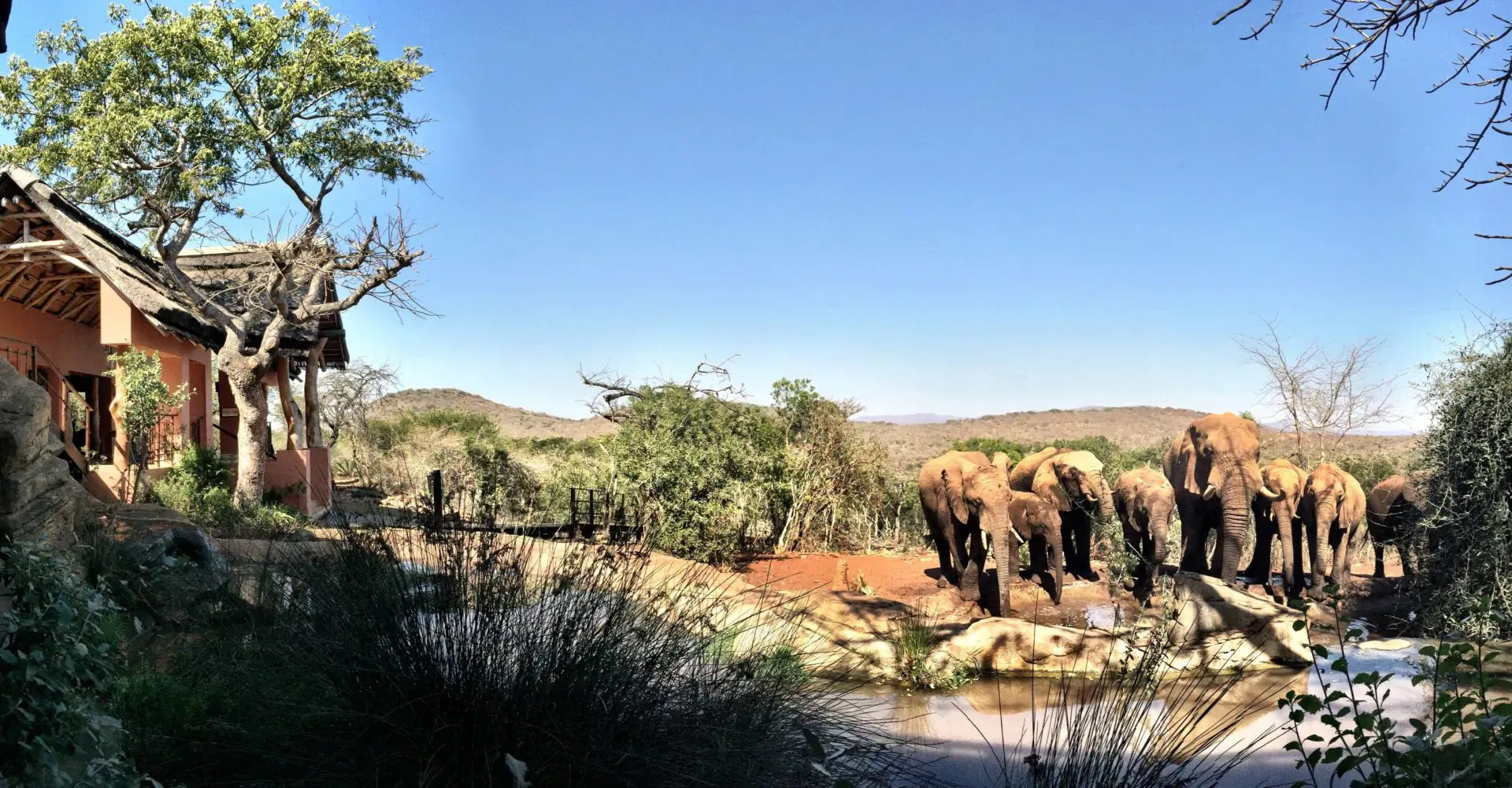
Yet this terrain was once thin—overgrazed, parched, bearing the scars of misuse. Two decades ago, a radical collaboration emerged between conservationists, lodge owners, and South African National Parks. The goal was simple and audacious: return the land to its original strength. Today, 23,000 hectares of restored wilderness stretch outward—mountain slopes, bushveld mosaics, thornveld savannas, riparian forests. Elephant herds have returned; lions carve new territories; rhinos trace dusk horizons in quiet silhouettes. Marataba remains unfenced from the greater park, allowing wildlife to roam freely across ancient pathways.
Structures That Bow to the Earth
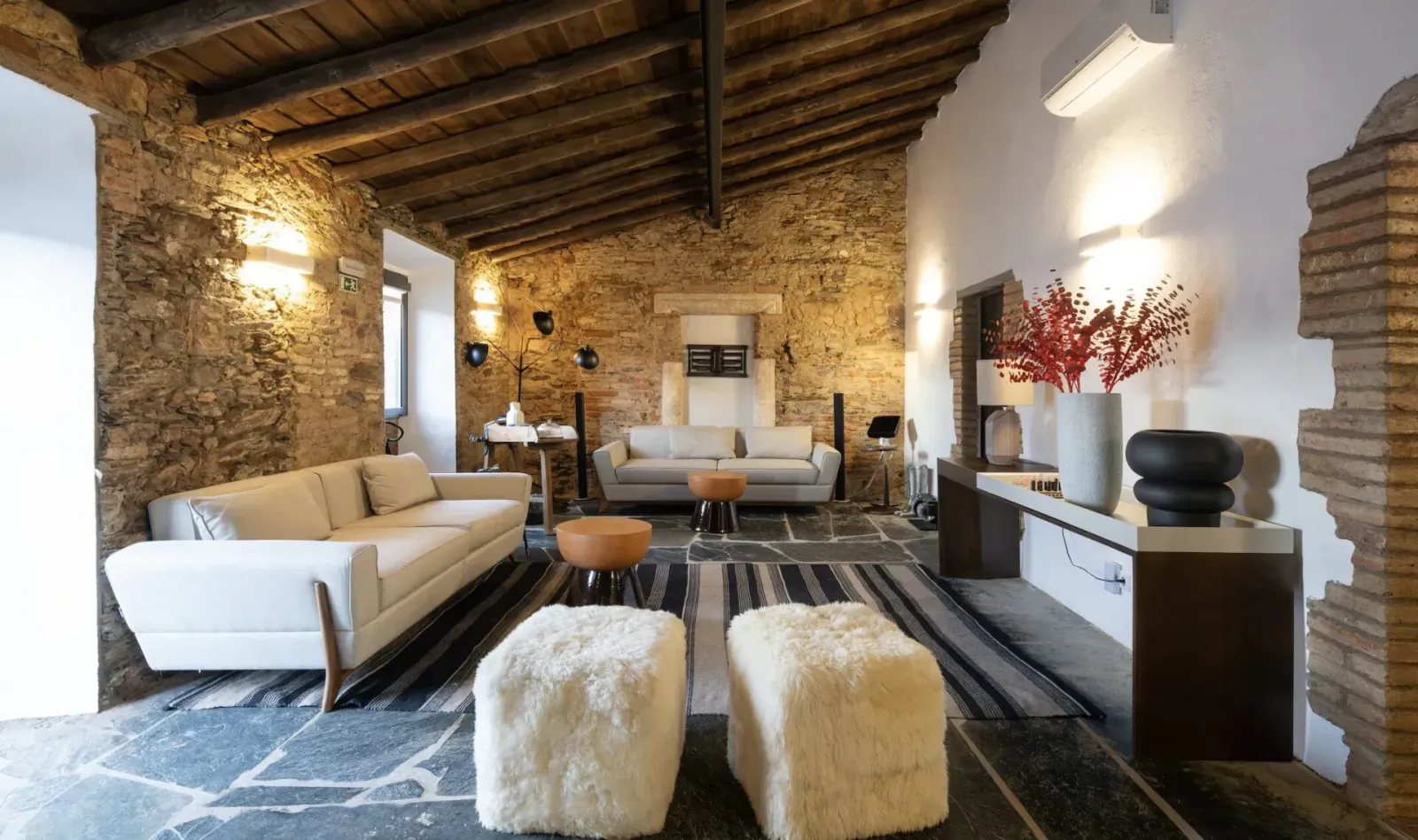
The architecture at Marataba doesn’t attempt to conquer the land. It leans into it. The main safari lodge sits beneath rose-coloured escarpments that rise like cathedral walls. Timber, stone, and canvas blend into the earth in flowing curves and conical towers inspired by Tswana heritage. The effect is both primal and modern—traditional forms rendered with contemporary gentleness. Tent flaps breathe softly in the wind. Copper lanterns glow along the walkways as dusk settles. At night, the lodge becomes a constellation of warm light tucked against the darkened cliffs.
Across the valley, Mountain Lodge offers a more remote sanctuary—only five eco-suites elevated above the bush on timber platforms. The suites are quiet tributes to restraint: expansive glass walls, pale wood, linen the colour of sand, solar power humming softly out of sight. Everything is designed to hold comfort without disturbance, presence without intrusion.
Between the lodges lies a philosophy: that true luxury submits to the wild, listens to it, adapts to it. Nothing is louder than the land itself.
When the Dawn Stirs
Morning at Marataba unravels gently. First comes a thin shimmer of gold on the ridgeline. Then the shapes of fever trees sharpen, the calls of francolins roll through the air, and the sky washes itself clean of night. Guests wake wrapped in blankets, stepping onto their decks where the smell of woodsmoke mingles with brewing coffee.
The first game drive begins in the soft blue hush of early light. My Field Guide, Jacks—born from this soil— read spoor as if decoding a familiar poem. Lion tracks pressed deeply into the dust. The neat algorithms of zebra hooves. The dragging etch left by a porcupine’s tail. “Male lion,” he said, pointing toward the riverbank. “Probably moving to patrol. The mane leaves a deeper shadow on the print.” Tracking here is not a checklist; it is a conversation between Field Guide, land, and the invisible stories carried on the wind. As the sun climbs, Marataba reveals its cast. Giraffes stretch their long lashes toward umbrella thorns.
Elephants toss dust like ink into the sky. Rhinos lumber through riparian thickets. In the cliffs above, Cape vultures rise on thermals, their enormous wingspans blotting out slices of sun. This colony—the second largest in the world—circles overhead as steady and ancient as myth.
Walking in the Wild
To understand Marataba fully, you must step out of the vehicle. Safari walks begin at first light, when the bush is cool and the shadows long. On foot, the land feels more intimate, almost confessional. You notice the small things: the sweet smell of crushed wild basil, the geometry of a spiderweb strung with dew, the distant bark of baboons ricocheting across the valley. Field Guides instruct you how to read the wind, how to move safely, and how to observe without disturbing. You learn why buffalo tracks look like crescents, how termites shape ecosystems, and how each plant holds medicinal or ancestral meaning.
Often, when returning to the Lodge, you’ll see impala grazing casually on the lodge lawns, unhurried, elegant, moving with the rhythm of a place that does not need to fear. They pause, assessing you with soft eyes, then flick their tails and vanish back into the brush.
A River that Remembers
Around midday, the Miss Mara riverboat drifts along the Matlabas River. The current is unhurried, the water a reflective ribbon of sky and cliff. Hippos rise and sink like slow-breathing boulders. Crocodiles sun on the banks, jaws agape in prehistoric stillness. Bee-eaters flit from reeds in brilliant strokes of colour. The river holds an older stillness—the sense that life has gathered here for millennia and will continue long after.
Exquisite Food, Firelight Evenings
If the wilderness nourishes the spirit, the cuisine at Marataba nourishes the senses. Meals are crafted by Chef Thabo—who also maintains a separate kosher kitchen—with a reverence equal to the land itself. Breakfasts unfold with warm pastries, seasonal fruits, rich coffees, and eggs cooked over open flame. Lunches might appear beneath towering jackalberry trees or on sunlit terraces—fresh salads crisp from the garden, roasted vegetables drizzled with herb oils, local cheeses, and chilled wine that tastes of green apples and mineral earth.
Dinner is a religious experience. Lanterns glow beneath a cathedral of stars. Fires crackle. Aromas rise— potbrood baked in cast-iron pots, slow-braised lamb infused with rooibos, impala fillet grilled over hardwood coals, citrus sorbets that cool the tongue after spice. Each dish feels both rooted and refined. Conversation rolls gently between guests, untethered from the rush of ordinary time.
Nights of Stars and Story
For guests at both Mountain Lodge and Safari Lodge, the Thabametsi Treehouse is a dream suspended above the plains. A wooden platform lit by lanterns, a soft bed beneath open sky. As night settles, a different world stirs. Hyenas whoop in the distance. Owls call in soft interrogation. The deep, seismic rumble of lions carries far across the valley. Above you, the Milky Way spills in extravagant clarity—each star a cold, brilliant seed of light.
Conservation Woven into Every Breath
Marataba is not a fenced preserve but a living instrument of conservation. Through the Marataba Conservation Project, Field Guides and ecologists track animal movements, manage vegetation, restore habitats, and confront the ongoing crisis of rhino poaching. Guests are invited to participate—joining patrols, helping record sightings, or learning how scientific monitoring guides every decision.
Tourism here is not consumption. It is a contribution. Every stay fuels anti-poaching units, habitat restoration, staff development, and community uplift. The model is intentional, small-scale, and deeply rooted: limited suites, low vehicle density, experiences built around depth rather than checklist abundance. It is tourism as stewardship.
Seasons of Fire and Silence
The Waterberg’s seasons are dramatic actors. In the summer months (November to March), thunderstorms crack open the sky. Lightning stitches itself across the cliffs. Valleys fill with green, bursting with new life. Frogs sing at night; butterflies rise in clouds at dawn.
Winter (May to August) brings a different beauty—clear skies, crisp mornings, grasses bleached to gold, animals gathering at shrinking water sources. The air feels sharpened, distilled, the light brittle and luminous. Through all of it, the wilderness hums with ancient patience.
Crossing the Threshold
One evening, standing on your deck, you watch the plains inhale the last light. A lion roars—a sound that is both warning and benediction. In that moment, you understand Marataba’s gift: a place where the wild still speaks in its own voice, unsoftened, unedited.
When you finally drive away, the dust rises from your tyres like memory. The Field Guide’s wave fades in the mirror. Yet something clings to you—the pulse of hooves, the heat of the fire, the slow wisdom of the land.
In time, it reminds you that goodness is not rare—only protected—and that the wild endures wherever human kindness holds the line.
W: Marataba
Written by Cindy-Lou Dale for Luxuria Lifestyle International