A Table Built for Sharing: Emma Blunt Spends an Evening at Vori, London
There was a moment, somewhere between the first smoky spoonful of aubergine and the heat from the fresh pitta warming my fingers, when the whole restaurant seemed to settle around me in the best possible way. The kind of settling you don’t clock immediately. You just notice that your shoulders have dropped, that the bread is already half gone, that the table has quietly become the focus of the evening.
It happened at Vori, on an otherwise unremarkable London night, which made the contrast all the more obvious.
Greek food has always worked like this for me. You don’t sit down and formally begin a meal so much as find yourself already in the middle of one. Plates appear, stay longer than planned, and get nudged closer to the centre. You stop thinking in terms of courses and start thinking in terms of reach. One more piece of bread. A different dip this time. That bite again, actually.
The logic of the table shifts without anyone realising.
Vori leans into that instinct completely. From the start, it’s clear the table is meant to be shared. It fills quickly and stays that way. Nothing arrives with instructions. Nothing feels designed to be eaten in isolation. The food behaves like it expects to be shared. It wants to be tasted next to something else, returned to, reinterpreted mid-conversation. It subtly changes how you eat. You taste more. You linger. You stop guarding your plate.
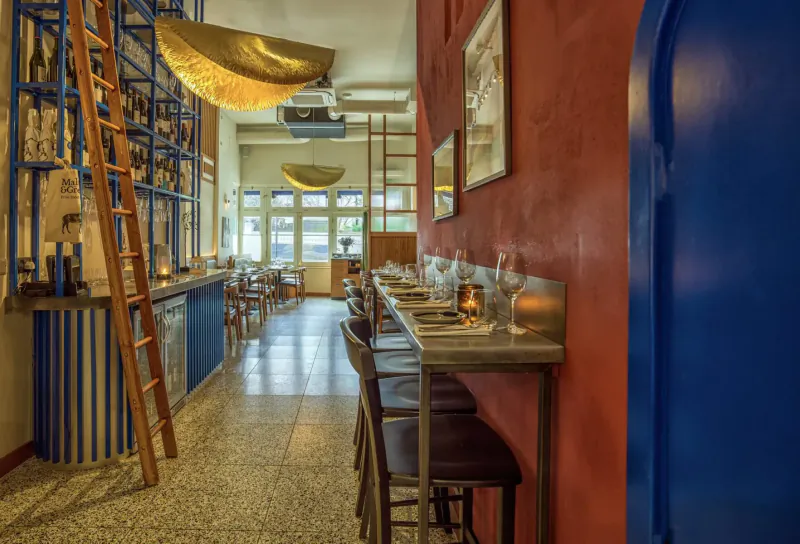
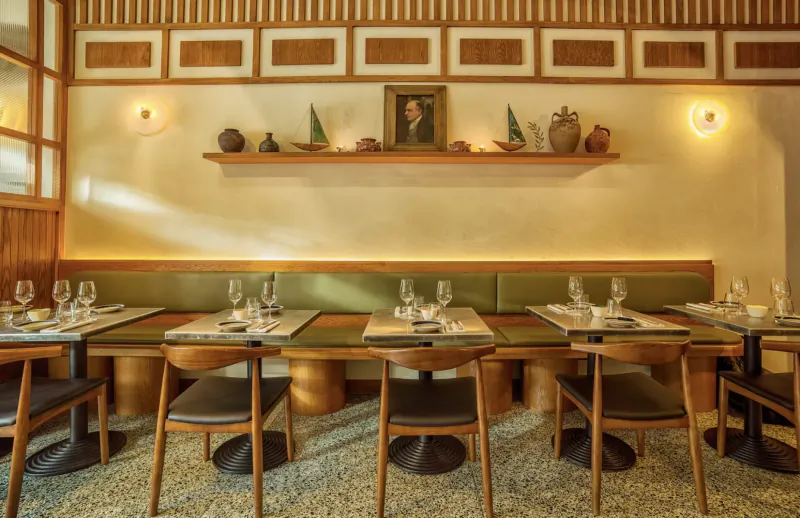
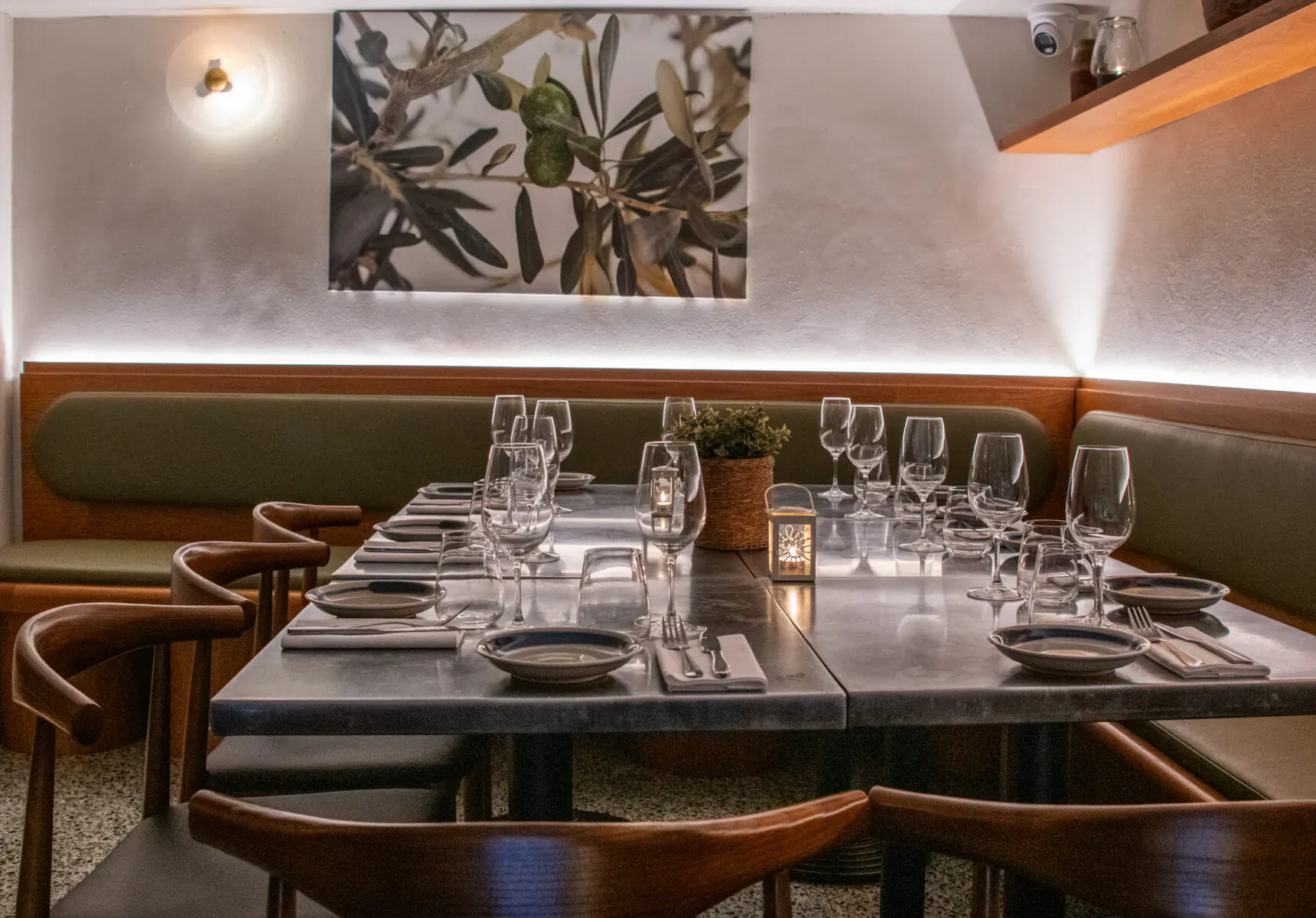
The room plays along. An open kitchen that’s clearly in use rather than on display. Shelves are stacked because things are needed, not because they’ve been styled. Staff moving with the calm efficiency of people who know the space well enough not to over-explain themselves. It’s the kind of room you don’t have to work out.
The aubergine came first. Melitzanosalata – roasted, smoked, blended with red pepper and marjoram – soft without collapsing, smoky without bitterness. The pitta followed, still hot, passed around instinctively. Hot bread has a way of reorganising a table very quickly, turning it from polite to functional. Conversation paused. Bread was torn. Someone burned their fingers slightly. No one minded.
This is always the test for me: how quickly does a table stop behaving like a place to eat and start behaving like a place to sit?
Alongside it came tzatziki that tasted reassuringly of garlic and a beetroot salad with walnut skordalia that felt grounded and generous. The flavours were clear and separate. Nothing competed for attention. Everything seemed comfortable doing its own job. That sense carried through as the table filled.
At some point – and this is usually a good sign – the conversation shifted away from the food itself and started orbiting it instead. Which bite worked better after something else? Whether the aubergine was better left alone or scooped up alongside a swipe of tzatziki. How beetroot behaves differently once bread gets involved. These are the conversations Greek food is particularly good at encouraging.
Later, when I spoke to the team, they described their cooking in terms that felt refreshingly straightforward. Most dishes, they said, are built around two or three exceptional ingredients. Salt. Extra virgin olive oil. Lemon. Herbs, when they belong. Greek cooking, for them, isn’t a fixed set of recipes but a way of thinking about food. Knowing when to step in. Knowing when to stop.
That way of thinking was everywhere on the table.
The mushroom stifado arrived quietly and then refused to be forgotten. Mushrooms cooked slowly, soaking up sweetness from petimezi and depth from onion and spice. It tasted resolved, as if it had been given enough time to figure itself out. The kind of dish that doesn’t need explaining and would probably resent it if you tried. The team later spoke about ladera – the olive-oil-braised dishes that sit at the heart of Greek home cooking – and this felt very much in that spirit. Patient food, cooked with confidence rather than flourish.
The octopus followed, tender and composed, resting on smooth Santorini fava with capers and onions, doing exactly what they were supposed to do. Nothing dramatic. Nothing corrective. It tasted like something cooked by people who know octopus well enough to leave it alone.
By now, the table had reached that comfortable stage where plates start overlapping, and more bread appears without discussion. Someone went back to a dish they’d already decided was their favourite, just to check. It still was.
Then came the carrots. Karota (a favourite of mine). Charred, sweet, smoky, paired with feta, chilli oil and apricot jam. It was playful without being fussy. Sweetness met heat, salt pulled everything back into line. When I later learned that the carrot tops are reused elsewhere in the kitchen – turned into salsa, soup, garnish – it felt entirely in character. This is a place that doesn’t throw flavour away, or make a song and dance about not doing so.
The prawns arrived baked with orange, cloves, garlic and chilli, the aroma reaching the table before the plate did. Orange can dominate if left unchecked; here it behaved. The prawns stayed tender, the sauce warm and fragrant, and the bread situation escalated accordingly. Someone suggested ordering more. No one objected.
What became increasingly clear was that the pleasure of the meal had nothing to do with hierarchy. No one asked what the “main” was. No one waited for a defining dish. The enjoyment came from accumulation – from tasting widely, from returning to things, from noticing how flavours changed depending on what came before them. The table worked as a whole rather than a sequence.
This, the team later said, is exactly how they think about Greek food. There isn’t one dish that defines them. The meaning sits in the collection – in the table, in the act of sharing, in eating with friends and family over wine and conversation that drifts and loops back on itself.
We shared a bottle of Orealios Gaea ‘Truth’ Organic Robola 2024 from Cephalonia – earthy, minerally, softly aromatic, with enough structure to sit comfortably alongside everything on the table. The wine list here is entirely Greek, which felt less like a statement and more like continuity – the food and the wine clearly used to being in the same conversation.
As the evening wore on, the pace softened. Plates lingered. Glasses stayed fuller for longer. Time stretched without anyone paying it much attention.
That’s when the Kanella Espressotini appeared – Vori’s Greek take on an espresso martini, made with aged tsipouro, cinnamon liqueur and Catalyst Coffee espresso. A brief aside, because context matters: I’m part of a WhatsApp group dedicated entirely to rating espresso martinis around the world. We have criteria. We have opinions. We have debates about foam that go on longer than they should.
This one did well.
It kept the shape of the original while leaning into warmer notes. The cinnamon added depth rather than sweetness, the tsipouro gave structure, and the espresso tasted properly of coffee. Balanced, thoughtful, and very drinkable. It felt like it belonged on the table rather than turning up as a novelty act at the end.
As the night wound down, I started noticing the quieter details. Lemon wedges are placed with intent. Sea salt is used confidently. Extra virgin olive oil is doing steady, structural work throughout the meal. When the team mentioned these were the ingredients they wished diners paid more attention to, it made sense. They had been there all evening, shaping everything gently without demanding credit.
Their sourcing follows the same logic. Anything that needs to be Greek is Greek – olive oil, olives, cheeses, pulses, pita, wine (supplied by long-standing partners Maltby & Greek, who have worked with the team for over a decade). Ingredients that benefit from being closer to home are sourced locally. Their suppliers share the same values: small producers, sustainable practices, and long-standing relationships. Lidgates Butchers provides meat from small UK farms, and James Knight supplies sustainably caught fish and seafood. Root-to-end cooking isn’t framed as a virtue; it’s simply how the kitchen functions.
Walking back out into the cold afterwards, I wasn’t replaying a single dish in my head. I was thinking about the table. About how easy the evening had felt. About how rarely meals encourage you to stop looking for a highlight and just enjoy the whole thing.
Greek food, at its best, understands that variety is the point. That sharing isn’t a format but a philosophy. That sometimes the most satisfying meals are the ones where no single plate insists on being remembered alone.
Vori builds evenings around that idea. Around tables that fill up properly. Around food that knows when to speak and when to let the conversation carry on without it.
You come for dinner. You leave thinking about the table.
Written by Emma Blunt for Luxuria Lifestyle International