Cape Town’s Kalk Bay: Where Suider Ster Hunts the Horizon
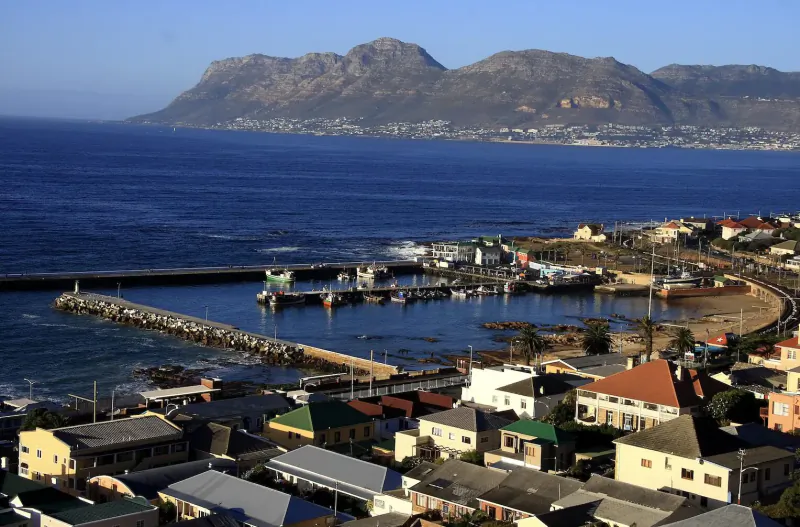
If you ever want to visit a place where geology, history, and human stubbornness have conspired to produce something improbably charming, go to Kalk Bay. Wedged — almost accidentally — between a mountain that scowls like a Victorian schoolmaster and a sea that shrugs with ancient indifference, it is a village that smells exactly as a fishing village should: salt spray, drying kelp, and — delightfully — fresh cinnamon bread. It’s the sort of place you wander into, fall hopelessly in love with, and then write Instagram posts about it with shameful romanticism, probably while eating a pastry the size of your head.
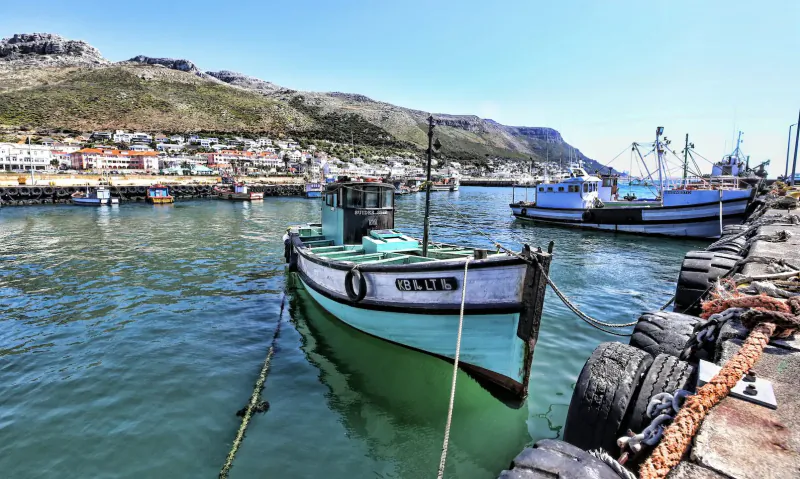
I didn’t merely arrive in Kalk Bay; I was delivered into it by Jules Mulder, a young woman who knows the village the way a seasoned captain knows the sea — instinctively, affectionately, and with a faint air of ownership, as if she personally installed half the staircases. Walking beside her is like being led through the director’s cut of the place: fishermen wave, bakers nod with floury approval, boats bob with familiarity. She gestures at a peeling wall and effortlessly unspools a century of stories; she greets a fisherman and murmurs conspiratorially, “Best snoek smoker in the Cape — don’t let’s encourage his ego.” And it is Jules who leads me down to the harbour, to the Suider Ster, resting in her berth like an ageing champion who still wins every match.
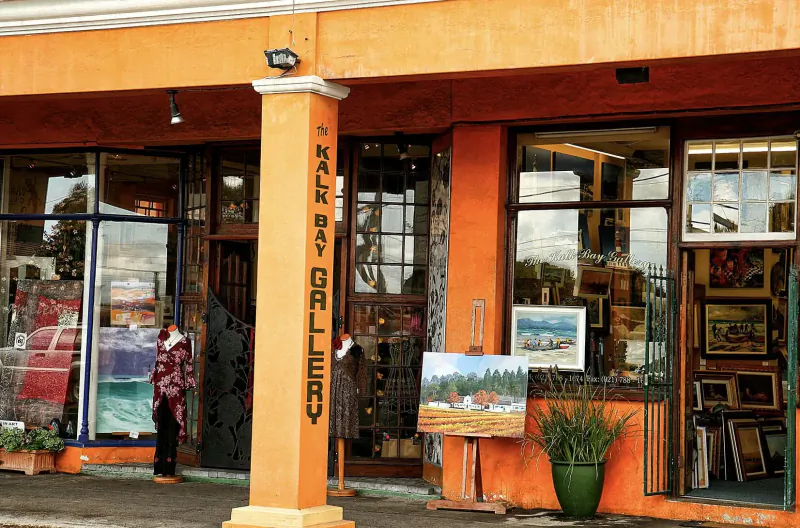
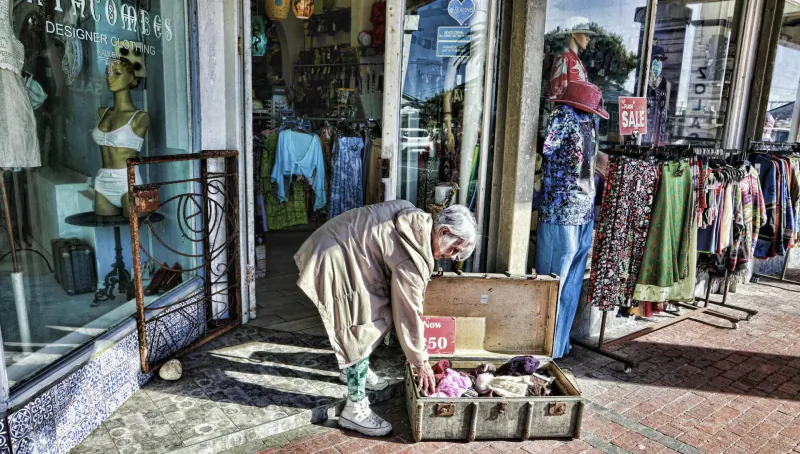
But before the sea, there is the glow. Kalk Bay greets you with whitewashed cottages gleaming as though dusted in powdered starlight. The brightness isn’t vanity — it’s limewash, a centuries-old blend of slaked lime and crushed seashells (the kalk in Kalk Bay), a kind of sunscreen for houses. From there, Main Road snakes through the village like an exuberant spine. Surf shops flash their boards like neon punctuation. Art studios spill seascapes and sketches into the street. Antique bookshops still dream, fragrantly, of the nineteenth century. And cafés exhale steam, conversation, and a gentle invitation to sit down and surrender your day.
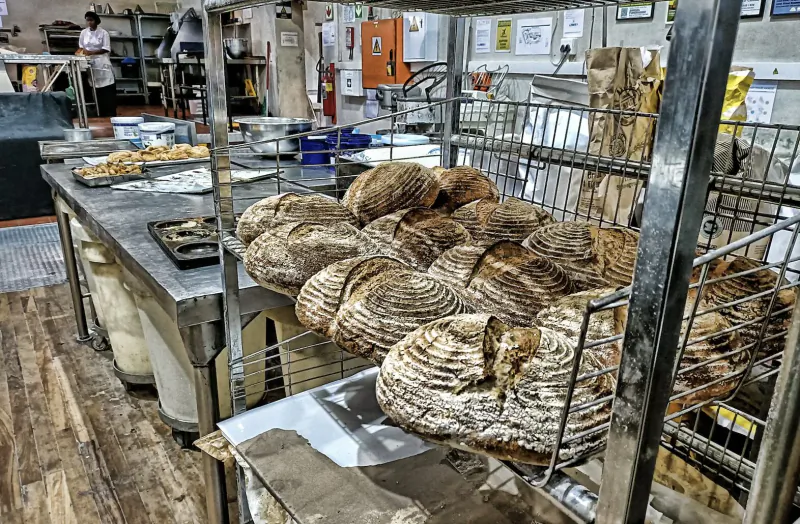
The true monarch of the morning, however, is Olympia Bakery, which Jules described, not inaccurately, as “a warm loaf disguised as a building.” Arrive scandalously early, breathe in cinnamon and promise, and listen for the occasional pianist who elevates dawn to an art form while trays of pastries appear like newly hatched wonders.
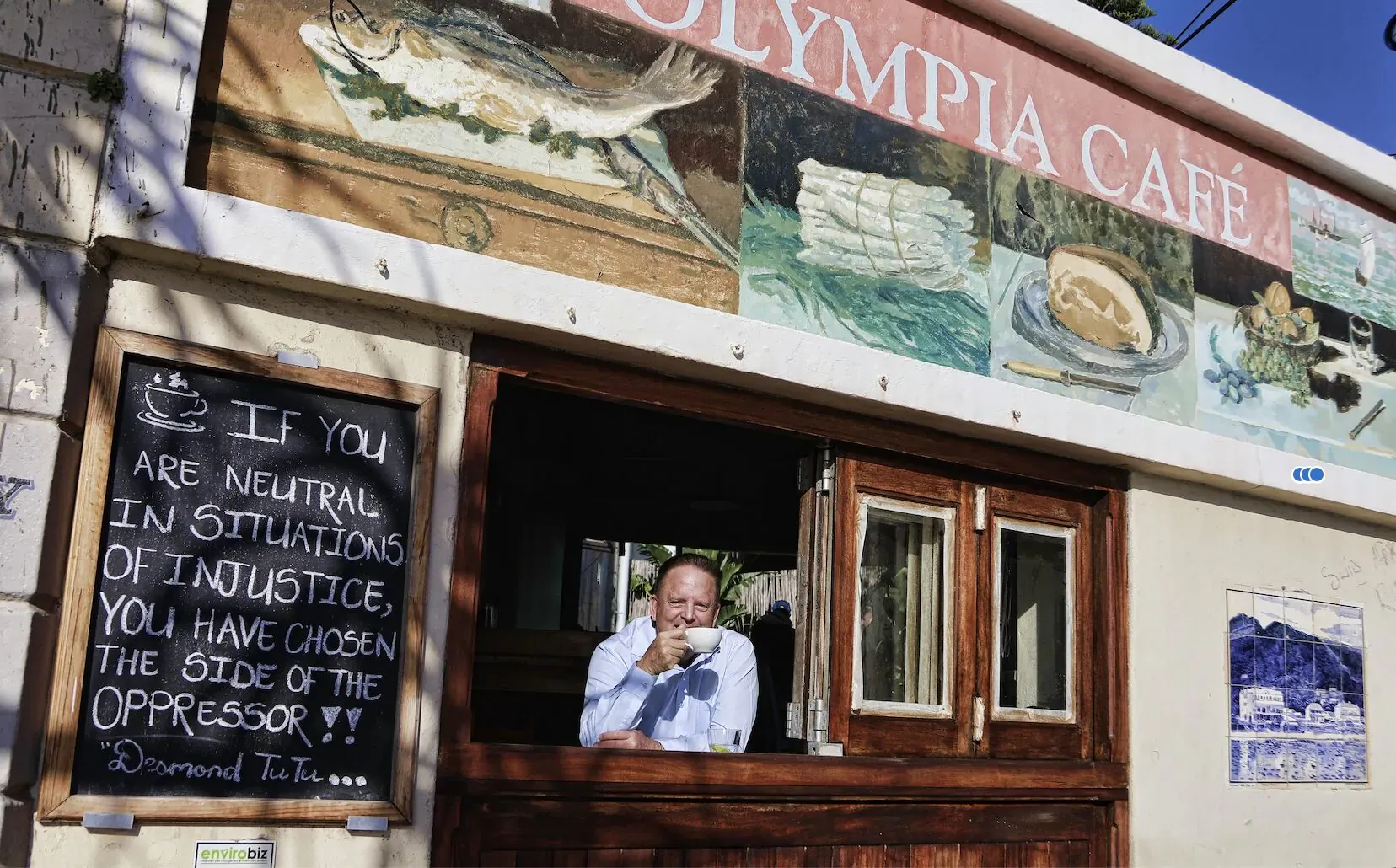
Then there are people like Masixole, lounging on the deck of the Suleiman, letting the sun warm his face, his laughter drifting across the harbour and mingling with the clink of anchor chains. From the jetty, the Main Road rises in a kaleidoscope of colour. At Ska, there is Isabel, arranging a collection of garments — bohemian, bright, unmistakably radiant. She floats through the shop pairing fabrics and stories as though both were meant to be worn. The Bagel Bar spills its warm, toasty scent onto the pavement; Mandy, at Olympia Café, directs the morning rush with the efficiency of a ship’s captain steering through fog, croissants emerging like golden cargo. And on the pavement stands Chief Kingsley, wrapped in his signature hessian, carrying bundles of sage, rosemary, and wild mint — herbs that smell like the earth telling secrets. Nearby, Ilona of Satori serves an Aperol Spritz that could make Italy slightly nervous. And at Sirocco Café, Hassan blends juices that seem less like beverages and more like small spells — ruby, emerald, amber swirling into glass.
Kalk Bay is not merely a village to visit — it is a place to ramble, scramble, dip, linger, photograph, and accidentally spend an entire day without noticing. Just beyond the harbour lie tidal pools carved by the sea itself: still, shimmering, and deeply inviting. Early swimmers glide through glassy water while children crash around them like joyful weather systems. Occasionally, a seal pops up — usually to supervise or gently mock.
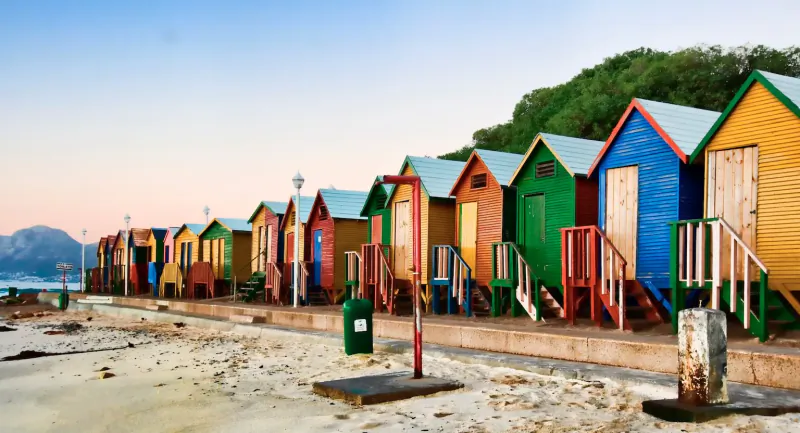
Close by is the village’s tiny beach, adorned with brightly painted bungalows that look like a row of cheerful toy houses awaiting high tide. Photographers adore them. Toddlers adore them. Even the waves seem pleased.
Behind Main Road, steep stairways pull you upward between pastel houses and spiky succulents until you reach Boyes Drive — one of the Cape’s most cinematic viewpoints. From there, False Bay unfolds in vast blues and golds, the harbour becomes a colourful model village, and the mountains cast long theatrical shadows. Many painters have tried to capture the view; none have succeeded in doing it justice, but that hasn’t stopped them from trying heroically.
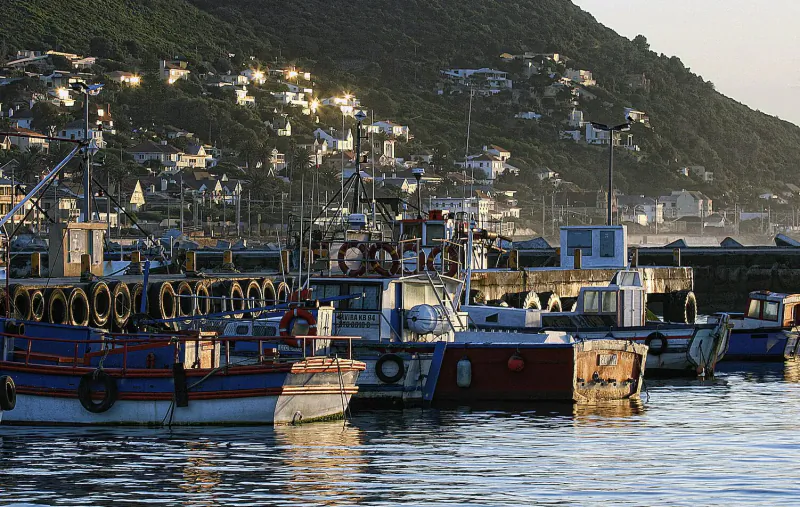
The village is a feast for anyone with a camera: harbour water that mirrors boats and clouds with perfect accuracy; pastel houses stacked like an artist’s palette; the Suider Ster and her neighbours providing daily lessons in colour, rope, rust, and endurance; and mountain light so dramatic it turns iron hooks into sculpture. In Kalk Bay, you cannot take a bad photograph. Only dozens of good ones.
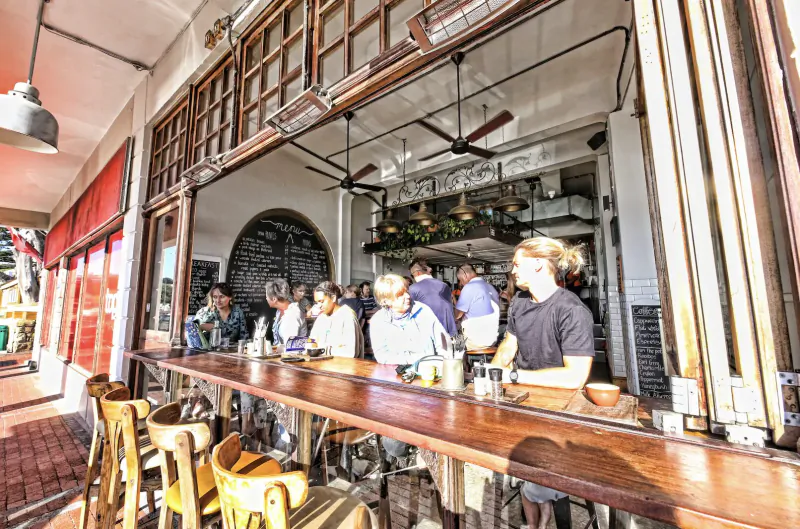
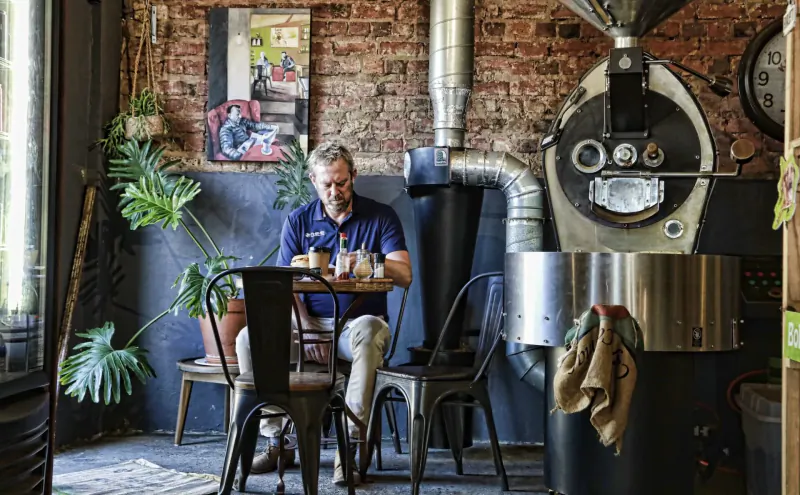
At some point, inevitably, you will sit down in a café. Because here, cafés are not merely caffeine dispensaries — they’re theatres of everyday life. Order a koesister (sticky, spiced, coconut-dusted magic) and a flat white, and watch the world drift past at Cape-paced speed — slower than hurrying, faster than loitering, with an undertone of sunlit contentment. People greet strangers. Dogs greet everyone. And time, wonderfully, stops taking itself so seriously.
Eventually, the land ends and the harbour begins: a place where the past hasn’t retired so much as settled into a comfortable rhythm. Nets hang like intricate lace. Ropes coil with quiet authority. Boats bump together like old men muttering at a social club. And at the heart of it all lies the Suider Ster — Kalk Bay’s living legend.
Built decades ago in the hardy Cape commercial style, she is not a museum relic but a vessel with salt in her veins. She has survived storms fierce enough to terrify modern sailors and worked the bay in an era before GPS, ergonomic hopes, or any luxury beyond survival. At dawn, alongside her companions, she wakes with a low, gravelly rumble — an old lion stretching — and her crew moves around her with unspoken precision: checking lines, gauging wind, reading the sea like scripture.
By mid-afternoon, she returns, baskets heavy with snoek, yellowtail, and the hard-won shimmer of the sea. Watching her glide into the harbour is like seeing a champion enter a stadium: steady, proud, unembarrassed by admiration. “That boat has seen more sunrises than most people see cups of coffee,” Jules says. The Suider Ster seems to agree.
As daylight softens, the village exhales. The sea turns copper, then violet, then a quiet silver. Harbour lights blink awake. Fishermen lean on railings and exchange stories whose accuracy wanes delightfully with each telling. Café windows glow like lanterns. Woodsmoke drifts lazily through the air. It is in this hour that Kalk Bay reveals its secret: it is not a place frozen in time, but a place in conversation with it — a dialogue of tides and memory, nets and stories, waves and waiting.
In Kalk Bay, life is stitched together by sea spray, colour, scent, and the gentle hum of community. Every character, every wave, every loaf of bread becomes part of a living tapestry — bright, weathered, deeply human. If you stay long enough, you’ll be woven in too.
W: Cape Tourism
Written by Cindy-Lou Dale for Luxuria Lifestyle International