Inside AngloThai Restaurant: Emma Blunt Tastes a Creative Seasonal Symphony
Winter was edging its way into London when I visited AngloThai – the kind of week when the air sharpens and the evenings arrive earlier than expected. Inside the restaurant, though, the shift in season felt different. The menu had quietly turned its own corner just days before, and there was something exciting about arriving at the moment of change – the sense that we were stepping into a new chapter of the kitchen’s thinking, still fresh, still settling into itself. It felt intimate, almost like catching a favourite band just as they debut a new song – familiar yet full of possibility.
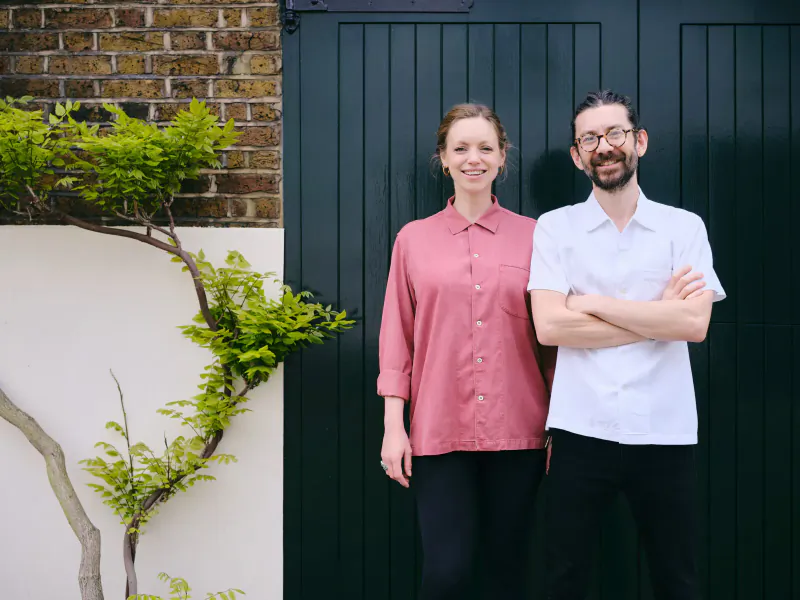
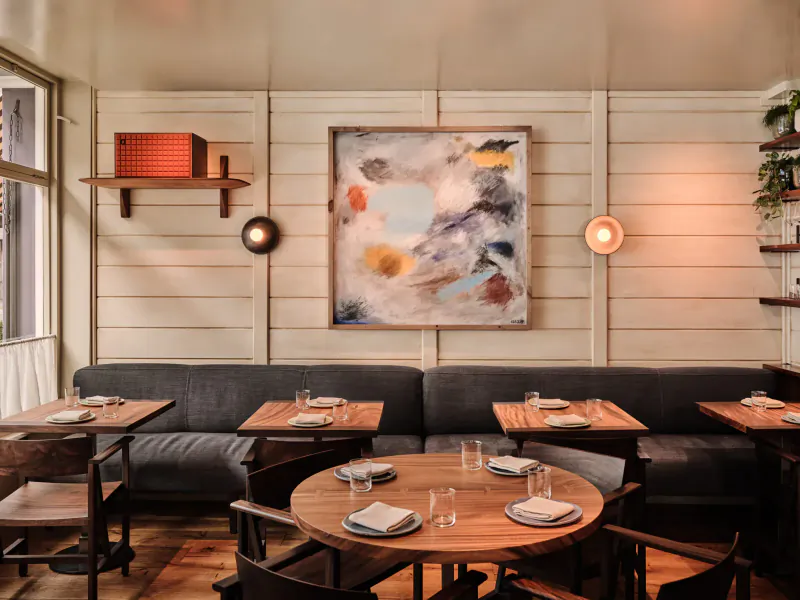
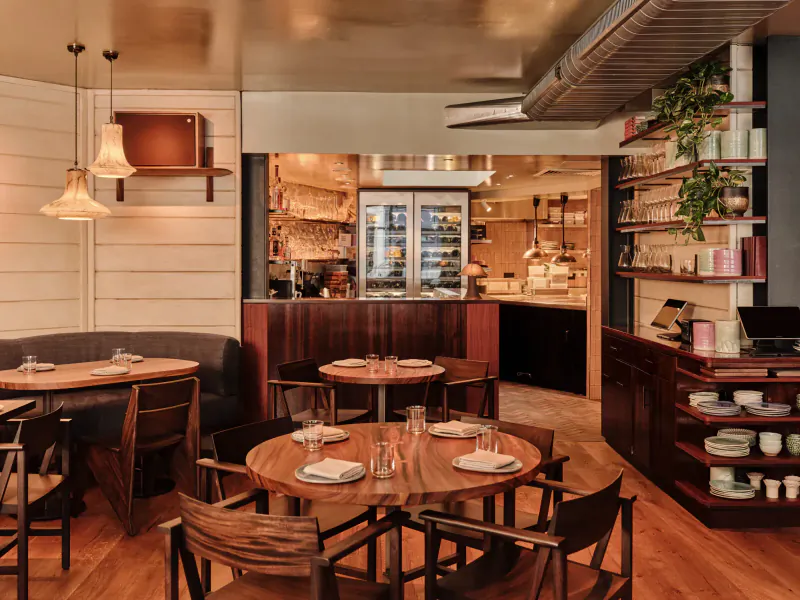
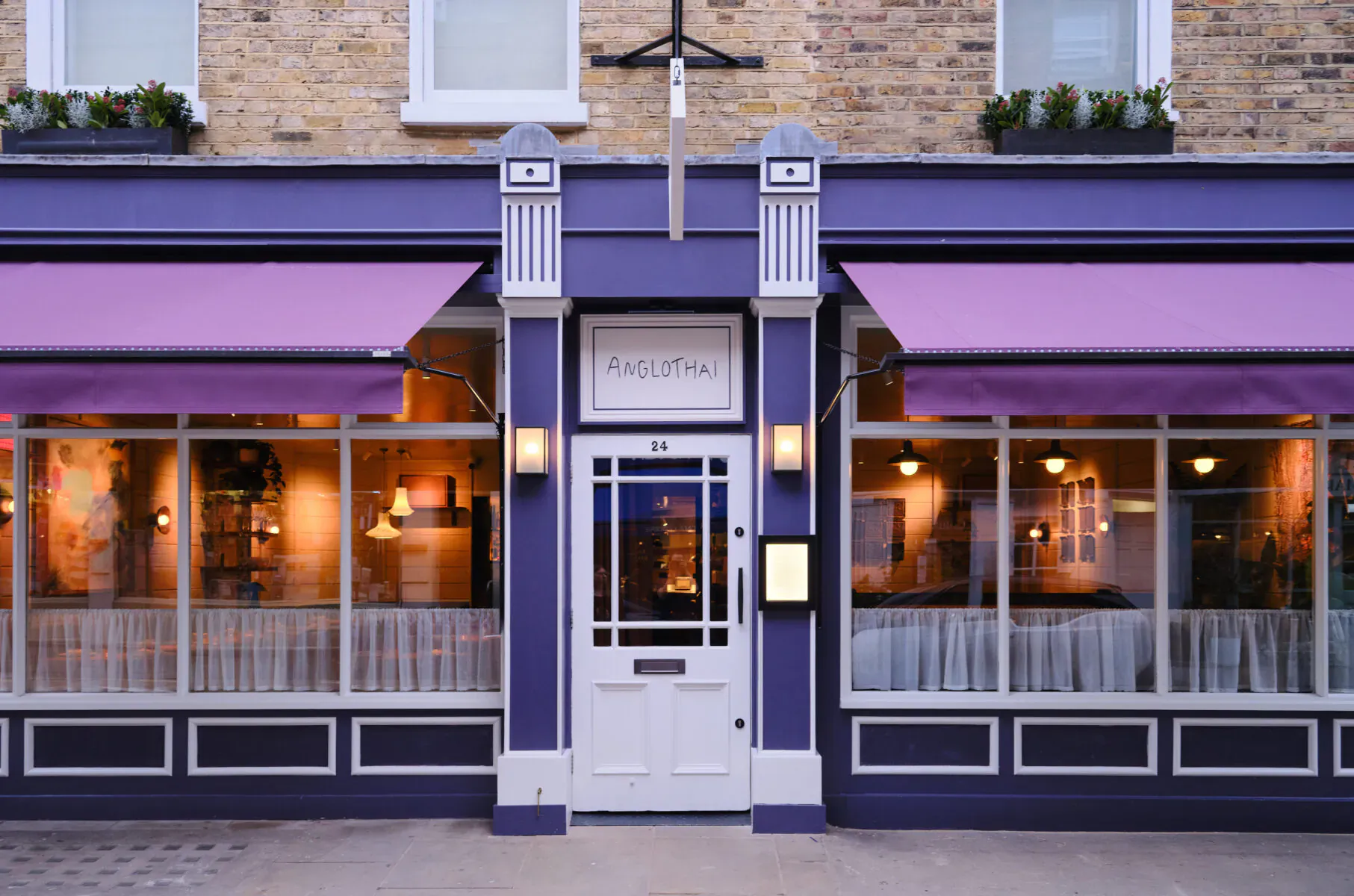
The soft glow of brass lighting, the mellow crackle of vinyl, the warmth of chamchuri wood — everything about AngloThai feels lived-in rather than composed for effect. It’s the kind of space where someone has thought about how light falls on a table, how sound moves around a room, and how to make strangers feel as though they’ve stepped into a place that recognises them. And that makes sense, because AngloThai is the creative partnership of chef John Chantarasak and his wife, Desiree – two people whose worlds of food, design, music and wine have gradually woven together over the last decade into something unmistakably their own.
This restaurant is not a project they built; it’s one they grew – slowly, deliberately, through pop-ups, residencies, and years of shaping their shared vision of hospitality. This long, winding path found its permanent home in late 2024, and within just a few months, AngloThai was awarded its first Michelin star – a recognition that feels like a quiet acknowledgement of the years they spent building something deeply personal. That history lives in the room before a single plate arrives.
John’s journey to the kitchen began in music – years spent writing, playing, travelling, searching for something that felt like home. He talks about that period with a sort of fond pragmatism; it was creative, unpredictable, and full of learning, but never quite the place he was meant to land. Cooking, he explains, offered a different kind of expression – one rooted in instinct, memory and place rather than performance. “Anything creative starts with inspiration,” he tells me. “For me, it begins with the season – usually with plants, because they shift so much more than proteins. I follow what they’re doing, filter that through my Thai palate, and let the dish form naturally from there.”
You can feel that intuitive, season-led approach immediately – not in a conceptual way, but in the way dishes carry a kind of emotional logic that only becomes clear once you’re already halfway through eating them. John’s grounding in Thai cooking, shaped over more than a decade in kitchens in both Thailand and Britain, sits quietly behind each decision, from how he balances heat to how he builds umami. His food isn’t trying to replicate anything; instead, it exists at a meeting point between memory, heritage, and the land he cooks from now.
And then there is Desiree – the quiet conductor of everything around the plate. Her background in graphic design and her deep love of wine have shaped AngloThai’s identity as much as John’s food. “Our wine list is deeply personal,” she says. “It grew from those early pop-up days when we fell in love with European wine bars. The relationships we built with small growers – and the energy of cool-climate wines – are now woven through AngloThai as our own narrative thread.” Her selections aren’t about prestige or performance; they’re about people, craft, land, and the kind of energy that matches John’s dishes beat for beat. You sense immediately that wine isn’t an accessory here – it’s a language the restaurant speaks fluently.
So let’s eat lunch at AngloThai…
The food arrives in movements rather than courses. I always think the first bite in a tasting menu sets the tone for everything that follows, and at AngloThai it was immediate – that quiet internal click when you realise you’re in safe hands. The Lovita plum arrived looking almost understated, but the flavour was the opposite: autumn fruit wrapped around delicate acidity and that unmistakable hint of rapeseed richness. It grounded me instantly, like the menu was saying: start here, slow down, pay attention.
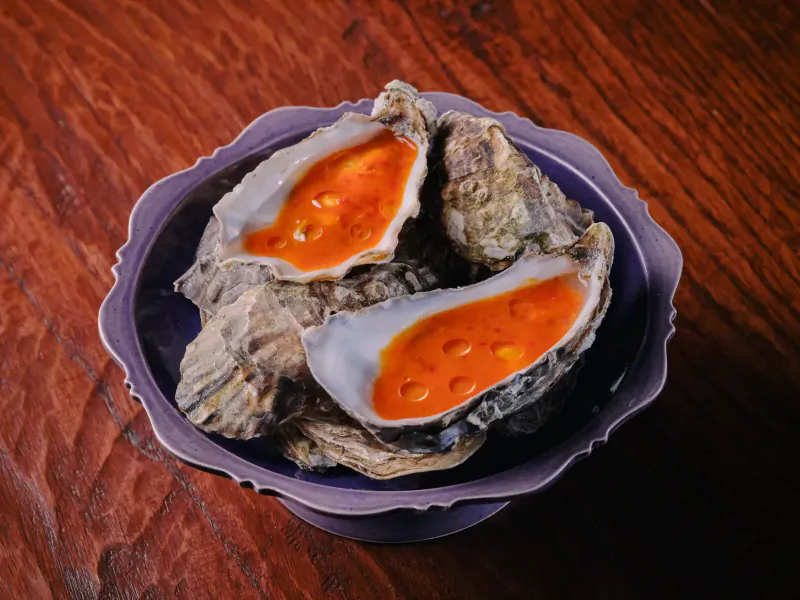
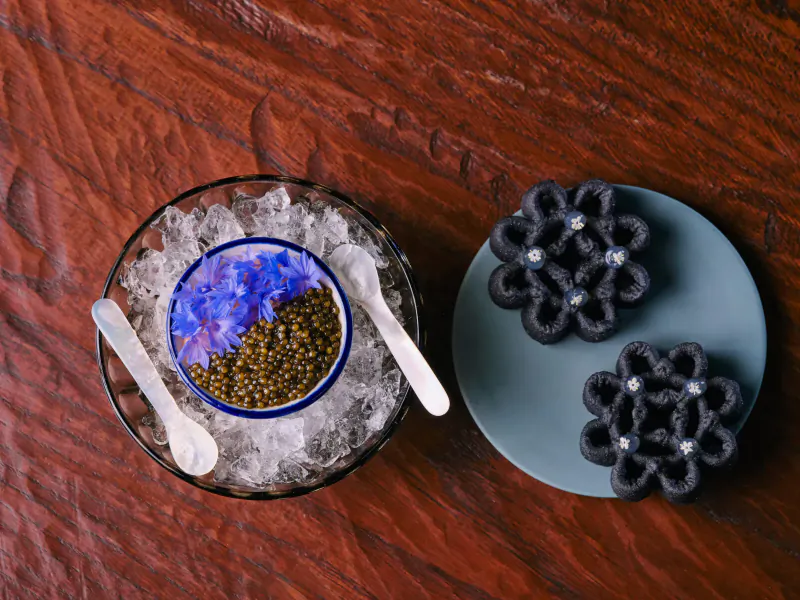
The Carlingford oyster sharpened that awareness – clean, cold, threaded with green chilli and pine, like stepping briefly outside into winter air before returning somewhere warm. And then the crab: soft, sweet, crowned with Exmoor caviar and anchored by that charcoal-dark coconut ash cracker. It was the dish that made me lean back slightly, the way you do when something lands emotionally before you’ve had time to analyse why. It tasted like memory and instinct, and I found myself trying to pinpoint what exactly made it feel so right.
Heat and smoke arrived with more insistence, curling through the dish of wok-fired shrub greens with mussels and yellow soybean. It reminded me of travelling – of markets and street-side grills – but filtered through the clarity of British winter produce. There was nothing heavy-handed about it; the flavour lingered but didn’t cling, smoke used like punctuation rather than decoration.
The stone bass with sweetcorn and long peppercorn green curry felt like a conversation – not simply between ingredients but between ideas. There was something almost introspective about this dish – as if the bass and the curry were having a conversation rather than competing for your attention. The sweetcorn brought a gentle golden warmth, while the curry wrapped around the fish with a slow, compelling heat. It was the dish that made me realise how collaborative the AngloThai kitchen really is – you can feel the presence of different hands and minds in its balance.
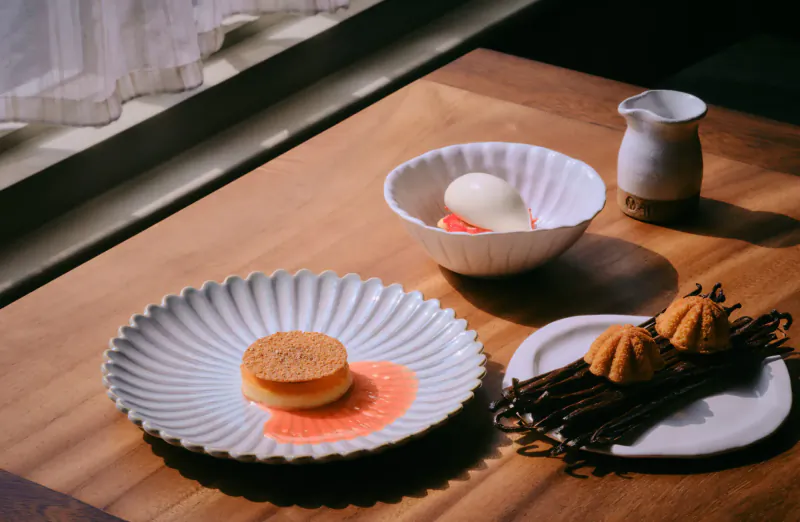
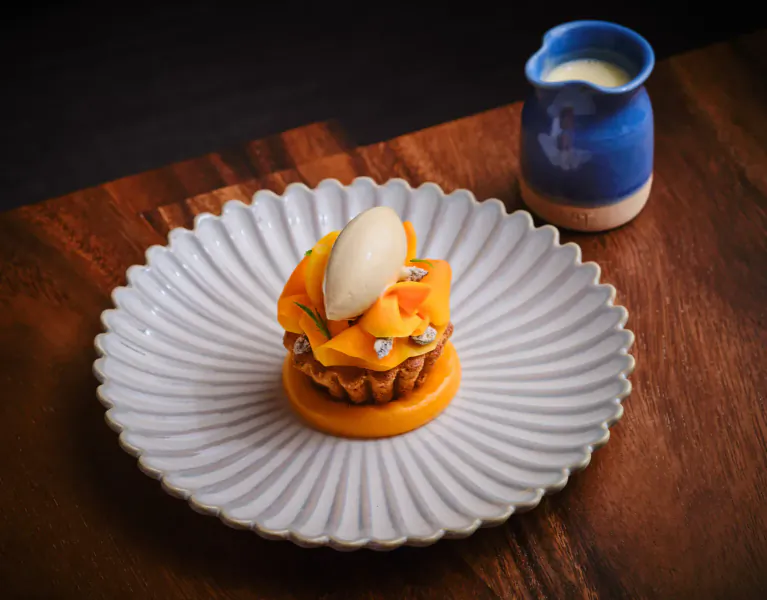
Dessert didn’t feel like a finale so much as a soft landing. The apricot, jasmine and heritage seed krayasat offered texture and fragrance without sweetness taking over, while the Thai tea with buckwheat and milk arrived like a gentle reminder of the meal’s overarching theme: memory, reimagined; comfort, reframed. It ended the meal with sincerity rather than spectacle – a choice that felt perfectly in tune with the restaurant itself.
What strikes me most at AngloThai is how deeply its values sit beneath everything: the growers John speaks about with real affection; the belief that ingredients taste best in their own time and place; the decision to substitute Thai staples with British produce not out of restriction but out of respect; the intention to use whole plants because waste, here, is not an option but an opportunity. You taste it in the details – holy basil grown for them in east London, sea buckthorn offering acidity where lime or tamarind once might, British heritage grains stepping in for rice, even outer cabbage leaves used instead of banana leaf. And threaded through it all is John’s connection to the people behind those ingredients – the farmers, growers and fishers whose work shapes the menu as much as his own memories do. He distils it simply, and powerfully: “You can’t be authentic to a place you’re not in – but you can be honest about where you are.”
And honesty is everywhere – in the music that drifts between decades, in the ceramics from Lampang, in the woven copper installation, in the textures of the private dining room, Baan, which mirrors their own Battersea home. The space feels less like a restaurant design and more like an invitation into the couple’s shared creative world.
By the time we step back out into the chill of the winter afternoon, I feel sharpened, warmer somehow, as though the experience has gently recalibrated something. It is rare to encounter a restaurant that is not trying to be two things at once, but instead is entirely, comfortably itself. AngloThai isn’t a fusion. It isn’t a concept. It isn’t trying to perform identity.
It is simply the life and creative language of two people – expressed through fire, flavour, craft, and sound.
As Desiree puts it, with gentle certainty: “AngloThai is what happens when you stop choosing and start creating.”
W: AngloThai
Written by Emma Blunt for Luxuria Lifestyle International