Tasting the Wild: An Evening at De Tafel
The evening begins in the quiet green hush of a garden, the kind of place where even the air seems engaged in polite conversation. Outside, the smell of rain-soaked earth mingles with wild rosemary; inside, candlelight quivers against the dark wood of an old Cape Manor, as though the house itself were breathing. From the kitchen comes a mysterious sizzle — possibly seaweed, possibly something far stranger — which feels entirely appropriate for a place devoted to the edible eccentricities of the Cape.
At De Tafel, chef Gregory Henderson cooks like a man attempting to translate a very old, very local dialect spoken only by mountains, tides, and wind. His plates arrive as miniature landscapes — moss greens, mineral greys, sun-washed golds — each arranged with the calm assurance of someone who knows exactly where the story begins. To dine here is not merely to eat; it is to taste the region itself: the Atlantic’s cold breath, the hush of a forest’s understory, the shy rhythm of soil after rain.
A House in the Trees
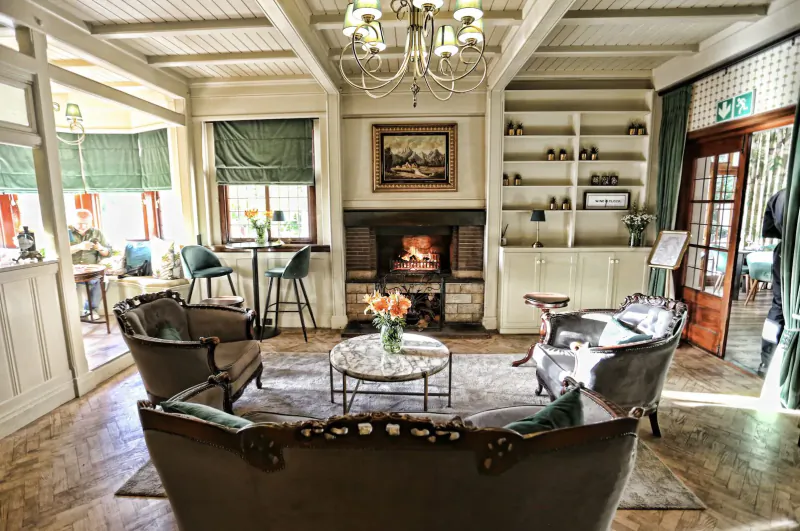
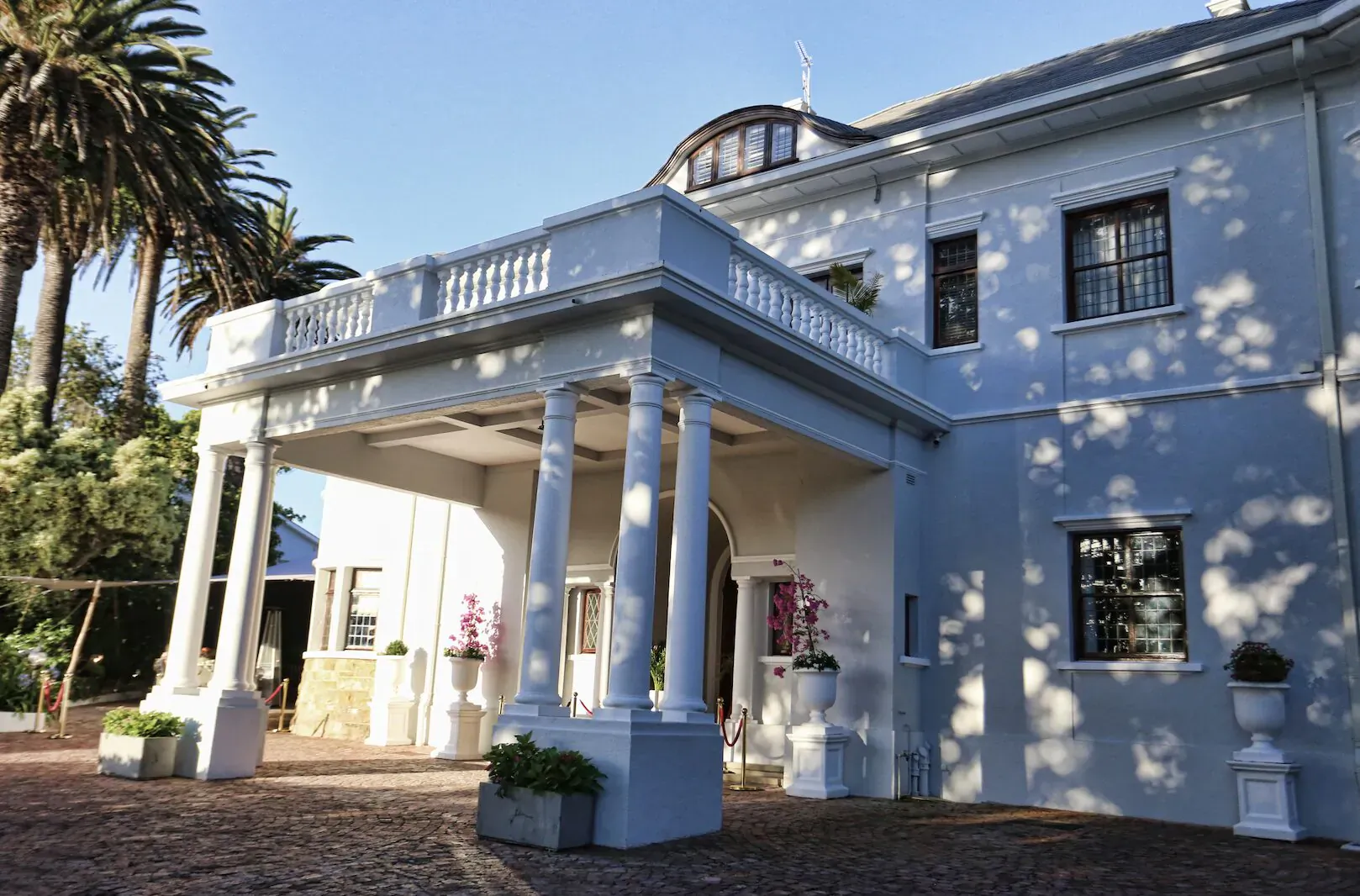
Beyond Wynberg’s tall wrought-iron gates lies the Palm House Boutique Hotel — an Edwardian manor so serenely wedged beneath oaks that one suspects it might vanish altogether if the trees decided to reclaim it. De Tafel feels like its woodland annex: a dining room disguised as a clearing, where city noise dissolves into birdsong and the faint rustle of leaves.
Inside, the décor murmurs rather than declares — polished brass, pale wood, wallpaper patterned with birds in mid-flight. As dusk filters through stained glass, the room turns amber and conspiratorial. Shadows lengthen, and conversations lower to the shaded hush one adopts in libraries or holy places. Linen gleams like still water. Everything encourages slowness, the better for flavour to stretch its legs.
The Forager-Chef
Gregory Henderson begins his days not in the kitchen but outside — often on some slope or shoreline where sane people in sensible shoes rarely wander. Locals call him the forager chef, a title he accepts with the good-natured shrug of someone who knows worse things have been said.
His pantry is the sprawling mood of the Cape: Table Mountain’s crags, the brackish edges of False Bay, the salt-stung strandveld. Here he gathers herbs, flowers, seaweed, and fungi that travel to De Tafel still carrying their native accents.
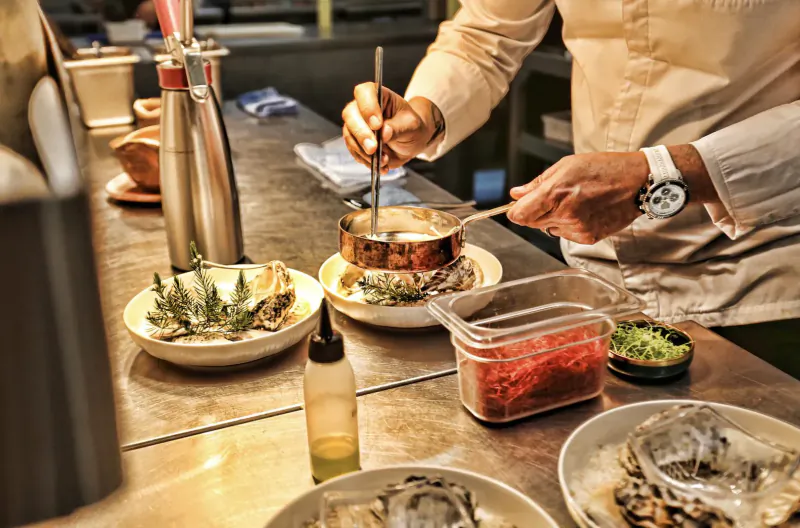
In the kitchen, Henderson cooks with the curiosity of a field biologist and the restraint of someone who knows better than to improve on nature. His menus obey the whims of weather, tides, and season — nothing forced, nothing squandered.
The Journey of a Dinner
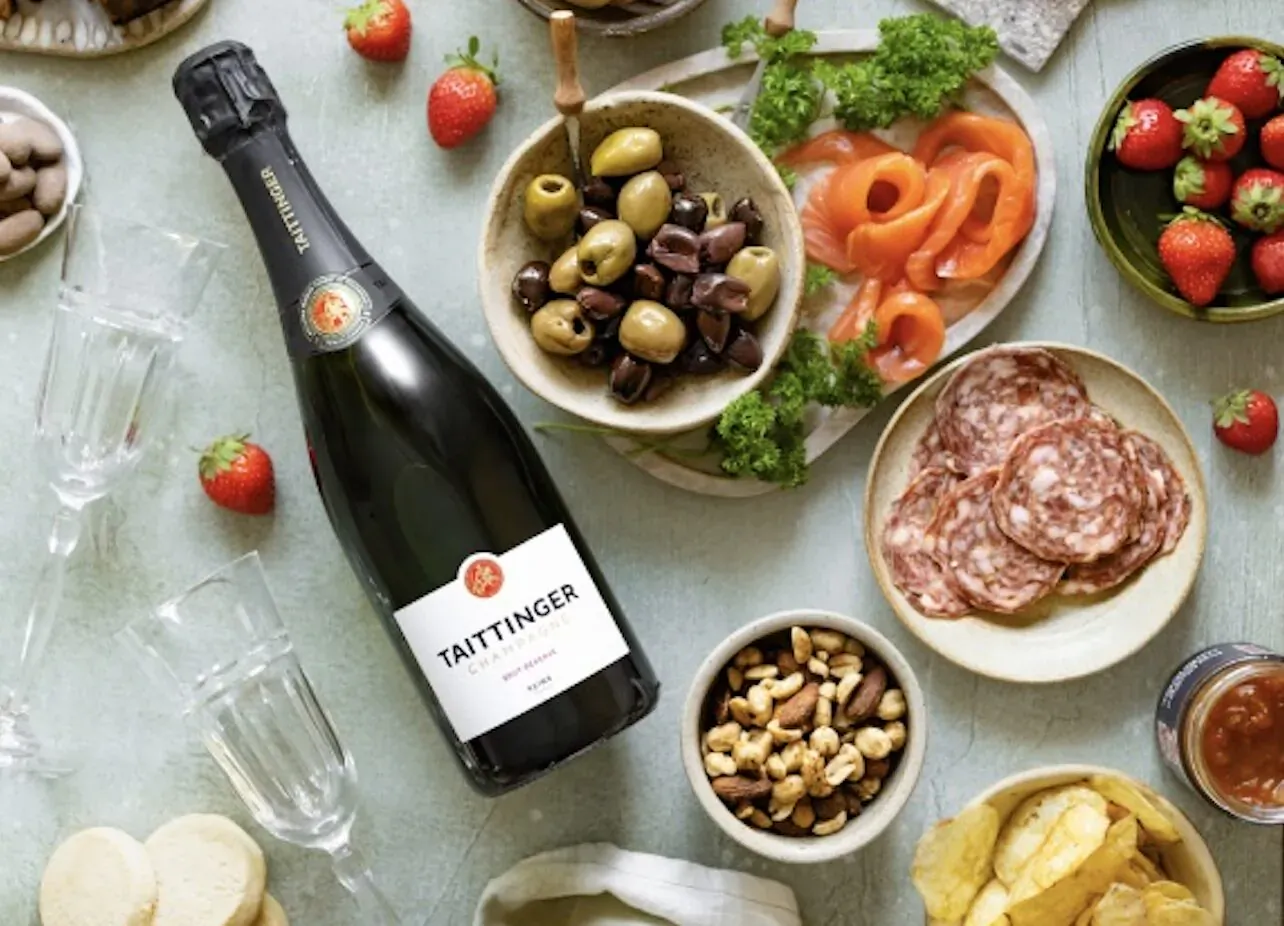
De Tafel opens only for dinner, Wednesday through Sunday, which lends its evenings the anticipation of a small, recurring festival. Diners choose four, six, or eight courses. The ritual begins with Cape sparkling wine or a wild-herb aperitif, followed by sourdough so warm and fragrant it seems morally questionable not to tear into it immediately. The butters — whipped with fynbos honey, seaweed salt, or smoked buchu — set the tone: simple, but with the sort of “simple” that actually means “secretly complicated.”
What follows is a procession of the Cape’s many moods. Depending on Chef’s finds, it could be Saldanha Bay oysters brushed with smoked mayo, buchu gremolata, and bokkom — a single delicious argument for the existence of tide pools. Maybe a Sewejaartjie salad, where beetroot petals and sweet-potato terrine masquerade as wild blossoms. Then scallop with sea lettuce, fennel foam, and pelargonium oil — a subtle debate between mountain herb and ocean mineral. A heartier interlude may bring duck breast glistening bronze beside root vegetables and a shard of seaweed candy that snaps like frosted glass. Dessert might arrive as “Bioclimate” — fynbos-honey panna cotta with honey-buchu crème glacée, melon, pollen, and a brittle so delicate it seems a single exhale might erase it.
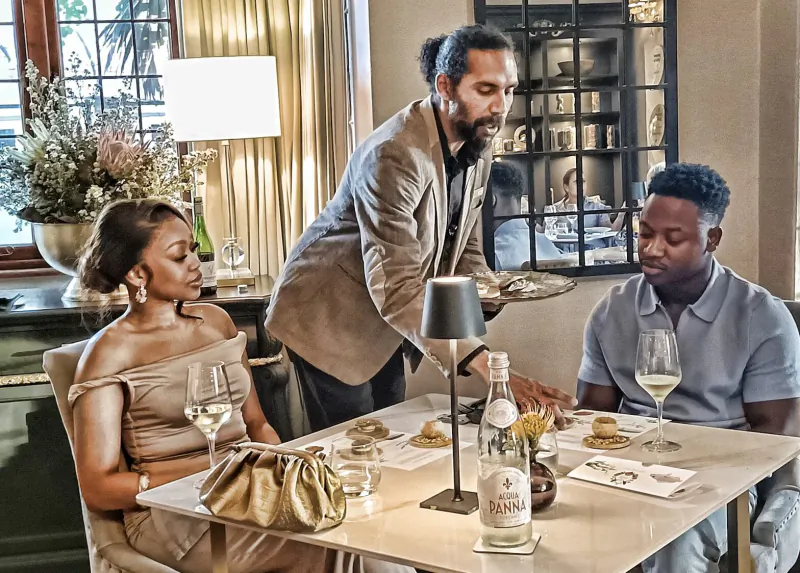
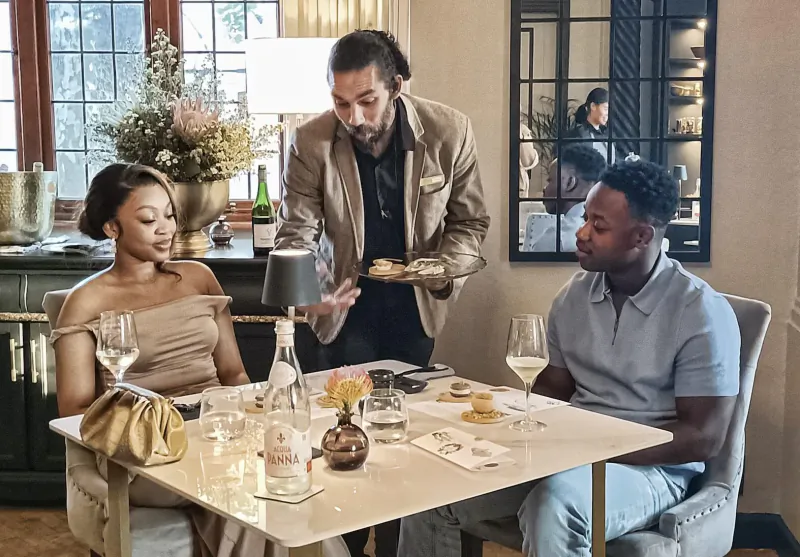
Each plate carries a story. Servers map the route from land to table; occasionally Chef appears with a foraging anecdote that suggests the man has spent a remarkable amount of time either knee-deep in seaweed or eye-level with lichen. Wines, selected by the sommelier, come from small Cape estates — crisp Chenins tasting of warm stone, herbal Pinots reminiscent of a forest floor at twilight.
A Sense of Place
Dinner at De Tafel feels like walking through a landscape without ever leaving your chair. Sounds are gentle: the chime of glass, the whisper of linen, the murmured geography of the next plate. Between courses, the silence has its own texture. You may notice the smell of rain drifting in through an open window or a faintly resinous note rising from a sprig of kapokbos.
One dish evokes a mountain trail after drizzle, another, the brine of a kelp forest at low tide. Courses shift like ecosystems — dune to forest, estuary to field. Even the staff move like weather: light-footed, unobtrusive, rarely disturbing the ecology of the room. Henderson’s philosophy extends beyond flavour to ethics — composting, minimal waste, deep respect for the Cape’s fragile abundance.
De Tafel is both raw and refined: wildness wearing a pressed shirt. Its art lies not in embellishment but attentiveness, in letting soil, salt, and leaf speak for themselves. Each flavour feels like a translation of terrain — mountain wind rendered edible, ocean breath turned liquid, earth’s pulse captured in texture.
The Wilderness Symphony
Henderson composes courses the way a musician arranges movements. Notes of smoke, mineral, citrus, bloom: they return and evolve, rippling through the menu like a theme. He plays as much with memory as taste. One bite may recall a childhood picnic; the next feels like encountering a plant you’ve never seen but instantly recognise.
He doesn’t overwhelm; he persuades. His cooking suggests someone who knows that the land is generous if approached with curiosity and care. Food becomes dialogue — between diner and earth, between restraint and exuberance.
Leaving the Table
When dessert dissolves and wineglasses surrender their final glints of candlelight, stepping outside feels a bit like returning from an expedition. The night air is cool and perfumed with jasmine and damp soil. Behind you, laughter lingers like leftover warmth.
You leave carrying more than the memory of flavour. You carry something quieter: the sense that if you listen gently to a place, it will tell you how to eat, how to tread, how to belong.
That is the quiet magic of De Tafel — and Gregory Henderson’s craft. His food doesn’t just nourish. It rewilds, reawakens, and reminds you that the real chef here is the Cape itself; he is simply its translator, taking dictation from wind, water, and root.
W: Cape Tourism
W: De Tafel / Palm House
Written by Cindy-Lou Dale for Luxuria Lifestyle International