Where Spice Meets Sea: The Living Legacy of the Cape Malay District
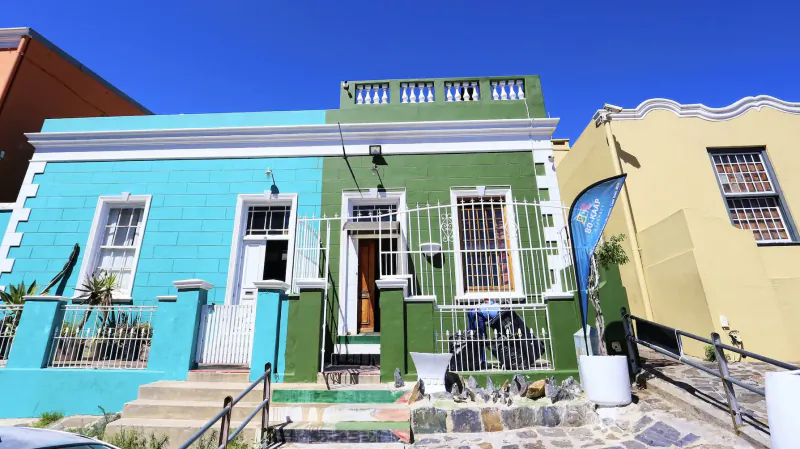
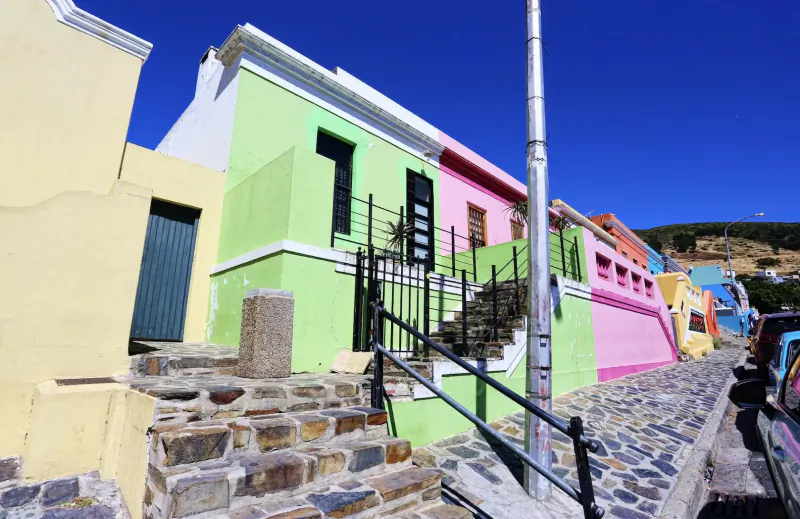
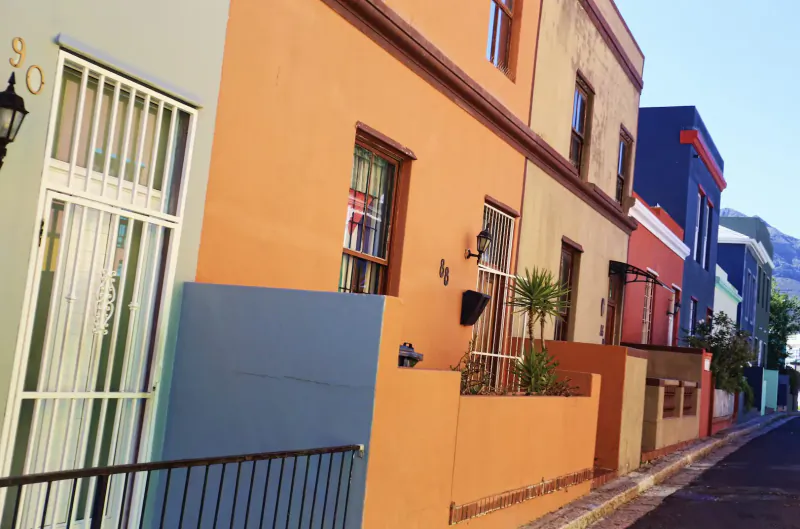
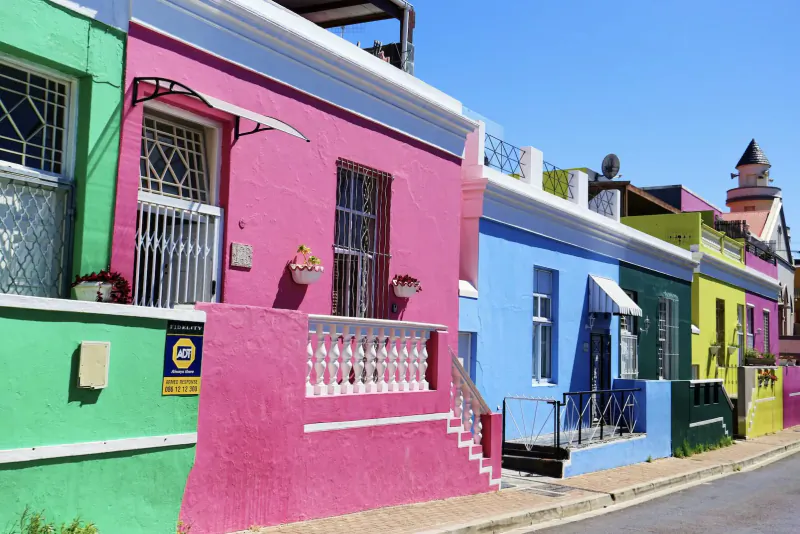
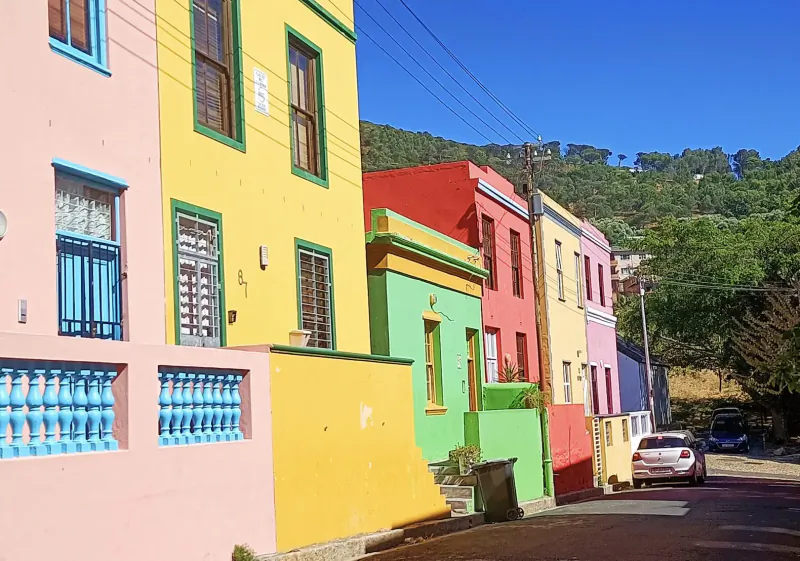
In the soft gold light of early morning, Cape Town begins to stir. Table Mountain still wears its veil of mist, and the scent of the Atlantic drifts inland — cold, briny, and ancient. But in the Bo-Kaap, the city’s oldest surviving residential quarter, dawn breaks with something more intimate: the echo of the muezzin’s call to prayer and the warm perfume of spice drifting through kitchen windows of homes painted in colours of sherbet and sunrise.
The cobblestones hold centuries of footsteps; the colourful facades hold centuries of stories. And at the heart of this place — perched on the slopes just below Signal Hill — lives South Africa’s enduring, resilient culture contained in the Cape Malay district: a people born of displacement yet rooted today in a community as vibrant and singular as any in the world.
A Diaspora Unlike Any Other
The story begins in the 17th century, when Dutch ships carved their routes around the Cape from the Indian Ocean, carrying with them not only spices and textiles, but human lives uprooted from Malaysia, India, Sri Lanka, Madagascar, and the far-flung Indonesian archipelago. Political exiles, skilled artisans, scholars, enslaved labourers — all were folded into the early fabric of the colony that would become Cape Town.
Though the Dutch called them “Malays,” many were not from Malaysia. What unified them was the Malay language — the trade tongue of the Dutch East Indies — and the Islamic faith carried across oceans. With them came stories of kings and courts, poetry and philosophy, calligraphy and cuisine. These early arrivals built mosques, established schools, and quietly cultivated a cultural identity so tenacious that even the brutality of slavery, colonial rule, and later apartheid could not extinguish it.
They became the only cultural group of its kind anywhere in the world — a community shaped by loss, resilience, shared language, and unshakable faith. Over time, their creolised presence helped seed the Afrikaans language itself, forming the backbone of what scholars now call “kitchen Dutch,” the earliest common version of the tongue.
The Walk Toward Freedom
When slavery was officially abolished in the 1830s, many freed families chose to remain near their places of worship — especially the mosques that had become anchors during generations of hardship. They settled in what became known as the Bo-Kaap: a neighbourhood of tight lanes, steep hills, and brightly coloured homes that today stand as Cape Town’s most vivid postcard.
Here, Islam took deep root. Teachers, imams, and spiritual leaders brought from the East — many of them political prisoners — helped the new community establish schools and religious centres. One of the most revered was Tuan Guru, a prince from Tidore who spent thirteen years imprisoned on Robben Island.
There, he copied the Quran entirely from memory — an astonishingly accurate manuscript now treasured in Cape Town’s Islamic heritage. When he was released, Tuan Guru helped found the first mosque in South Africa, laying the foundation for the vibrant Muslim community that thrives today.
A Culture Carried in the Kitchen
But if there is one aspect of Cape Malay heritage that has touched every South African household, it is the cuisine. Aromatic, vivid, and layered with memory — the cuisine is a living testament to the journeys of its creators. Saffron-yellow rice dotted with raisins. Slow-simmered curries fragrant with cardamom and cinnamon. Sweet-and-sour slow-cooked lamb stew called denningvleis. Triangle-shaped samoosas that crackle between your fingers. Glossy koeksisters, glistening, spiced and syrup-soaked.
These dishes are not simply meals; they are archives, carrying within them the movements of people across continents, the mixing of cultures, and the endurance of families separated and reunited by time. The flavours are unmistakably Malaysian, Indonesian, Indian — yet wholly South African, shaped by centuries of adaptation.
And nowhere does this living tradition feel more immediate than in the kitchens of the Bo-Kaap.
Cooking With Love: Inside Chef Faldela’s Kitchen
Morning in the Bo-Kaap begins like a slow breath rising from the city’s lungs. As the sun lifts, washing the terraces in tones of apricot and rose, a slender ribbon of toasted cumin snakes through Wale Street. It drifts past doorways where children pull on uniforms, past men pausing in prayer, past women sweeping their stoops with nimble, practised strokes.
The purple house at No. 109 Wale Street is Chef Faldela Tolken’s home, and where, in her kitchen, she prepares for another day of sharing the heart of Cape Malay culture — not through lectures or museum exhibits, but through the simplest and most powerful form of storytelling: food.
Her studio, Cooking With Love, is small, warm, and alive with colour. Glass jars packed with turmeric, coriander seeds, star anise, and masala powders line the shelves like a spice orchestra waiting for its conductor. Copper pots gleam under the window light. A bowl of fresh coriander sits like a green crown on the counter.
Faldela ties her apron — patterned with hibiscus flowers — and laughs with the soft confidence of someone who has lived her passion for so long that every movement has become second nature.
“Cape Malay cooking,” she says, “isn’t measured in teaspoons. It’s measured in memory.”
Origins in a Childhood Home
Ask her about her earliest memory of food, and she pauses, eyes distant.
“It was my grandmother,” she says. “Always my grandmother. She cooked barefoot, humming old Malay songs, her hands stained yellow from turmeric. I watched her roast spices in a pan until they came alive — that moment when cumin starts to sing. That’s when I knew cooking was more than food. It was history.”
In her childhood home, spices were not stored in jars — they were kept in stories. The kitchen was a classroom, a sanctuary, a place where the past became present with every sizzling onion and every turn of the wooden spoon.
The Essence of a People
To someone tasting Cape Malay cuisine for the first time, Faldela describes it as “sweetness meeting fire, comfort meeting adventure.”
“It’s a crossroads,” she says. “Our flavours come from everywhere: India’s warmth, Indonesia’s depth, Africa’s earthiness. But somehow, together, they became one voice. Our voice.”
She teaches her students that Cape Malay food isn’t meant to overwhelm the palate; it’s meant to embrace it — a conversation between spice and softness, between memory and creation.
The Dish That Feels Like Home
Every cook has a dish that carries them back to their roots. For Faldela, that dish is bobotie — a richly spiced mince baked beneath a golden custard-like topping.
“It was the Sunday meal of my childhood,” she says. “The smell of bay leaves and cloves drifting through the house — that’s home. That’s comfort. Even today, when I lift a spoonful to my lips, I see my grandmother again.”
Lessons From the Heart of the Bo-Kaap
Her cooking classes are not simply instructional. They are immersive journeys into a living cultural landscape. Students grind spices by hand, listen to stories of exiles and saints, and fold samosas with laughter and clumsy fingers. They learn that turmeric can stain a wooden spoon forever — and that no true Cape Malay curry is ever rushed.
“What do I want them to feel?” Faldela smiles. “Welcome. Connected. Like they’re stepping into a home they didn’t know they had.”
Spices That Hold Her Soul
Ask which spices she cannot live without, and she answers without hesitation: cardamom, cinnamon, and cumin.
“Cumin is my grandfather’s voice,” she says softly. “Cardamom is my grandmother’s perfume. Cinnamon is in every celebration we have ever had.”
These spices are her lineage, carried down through generations, each pinch a quiet act of remembrance.
The Next Generation
Faldela sees hope in the young people of the Bo-Kaap, many of whom come to her determined to protect the traditions their parents and grandparents fought to preserve.
“They’re curious,” she says. “Hungry for their roots. They want to learn the old ways — not because they’re old, but because they’re ours.”
A Moment of Connection
Of her many students over the years, she recalls one tourist from Canada who began the class shy, hesitant, and unsure. As they cooked, he began to share stories of his own displaced ancestors — people who had crossed oceans, seeking belonging.
“When he tasted the curry he helped make,” Faldela says, “he cried. Not because it was spicy — but because he tasted something familiar. Something human.”
For her, that moment proved what she has always believed: food is the most universal language of memory.
A Final Lesson
If she could leave her students with one message, she says it is this: “Cooking is an act of love. And love is never wasted.”
A Culture Preserved in Colour, Sound, and Spice
As late afternoon settles over Cape Town, the Bo-Kaap blushes in hues of amber, coral, and deepening rose. Children race home across cobblestones warmed by the sun; women lean through open windows sharing gossip; men step from mosques, their footsteps soft against the stone.
Through the open door on 109 Wale Street, the scent of frying onions, cinnamon, and coriander drifts out like a benediction. Inside, Chef Faldela sets down a bowl of curry so fragrant it feels alive with history. Cape Malay cooking, she says, is the language of belonging. Each dish carries the migrations of the Indian Ocean, the scars of exile, the warmth of family, and the resilience of a community that has shaped South Africa itself.
For travellers, a visit to the Bo-Kaap is not simply a journey through a brightly coloured neighbourhood. It is an initiation into a story still being written — one stirred by hand, passed from heart to heart, tasting of love, memory, and home.
Written by Cindy-Lou Dale for Luxuria Lifestyle International