The Elephant Camp – Zimbabwe’s ultimate luxury canvas lodge
When in Africa, you’ll often hear passing references to Zimbabwe’s famed hospitality, and there’s nowhere that you’d appreciate it more than at the iconic World Heritage Site of Victoria Falls. Everyone smiles warmly and greets you like an old friend — genuinely delightful people, living in such magnificence.
A 15-minute drive in an air-conditioned minibus transported me from Victoria Falls Airport to The Elephant Camp, Zimbabwe’s ultimate luxury canvas lodge. It’s exclusive, peaceful, and very high-end, located in a private wilderness concession within the Victoria Falls National Park.
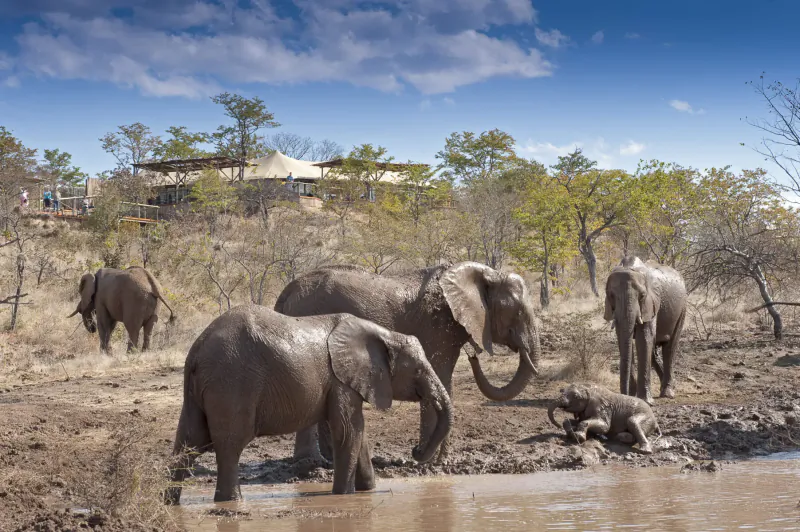
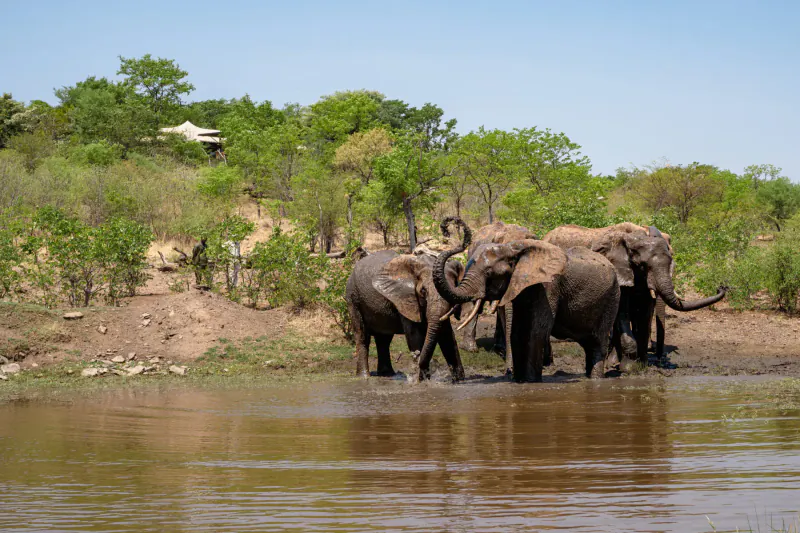
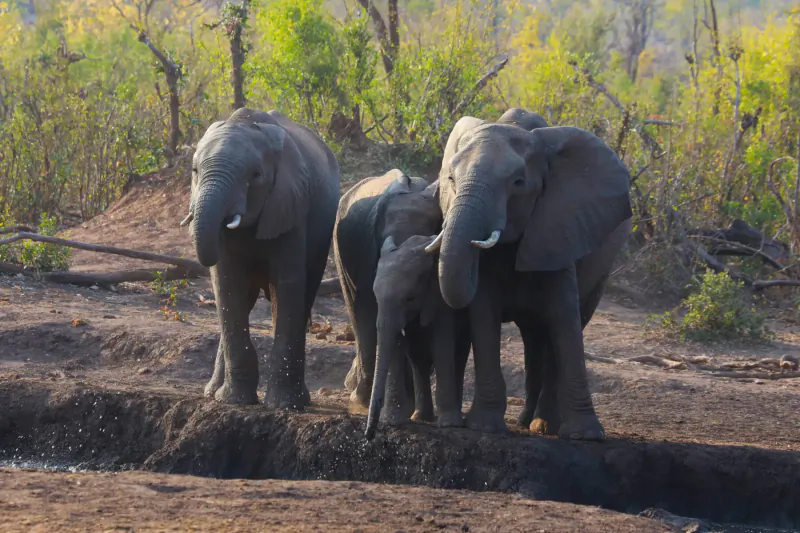
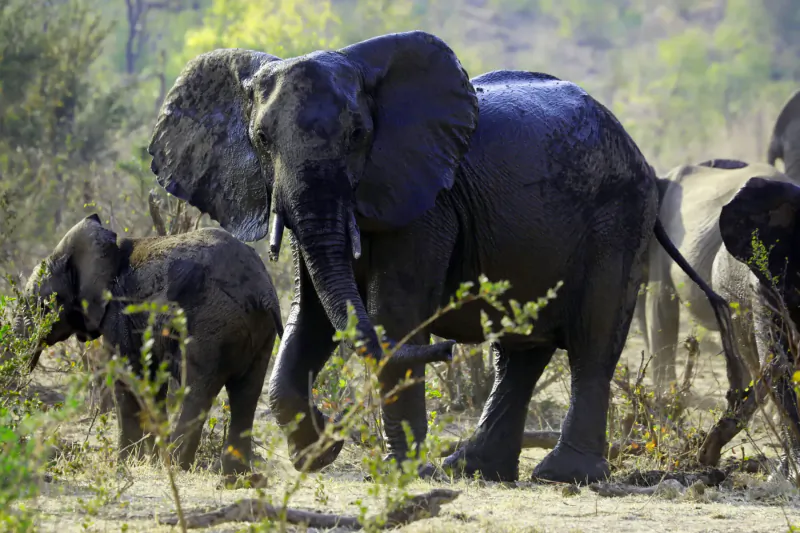
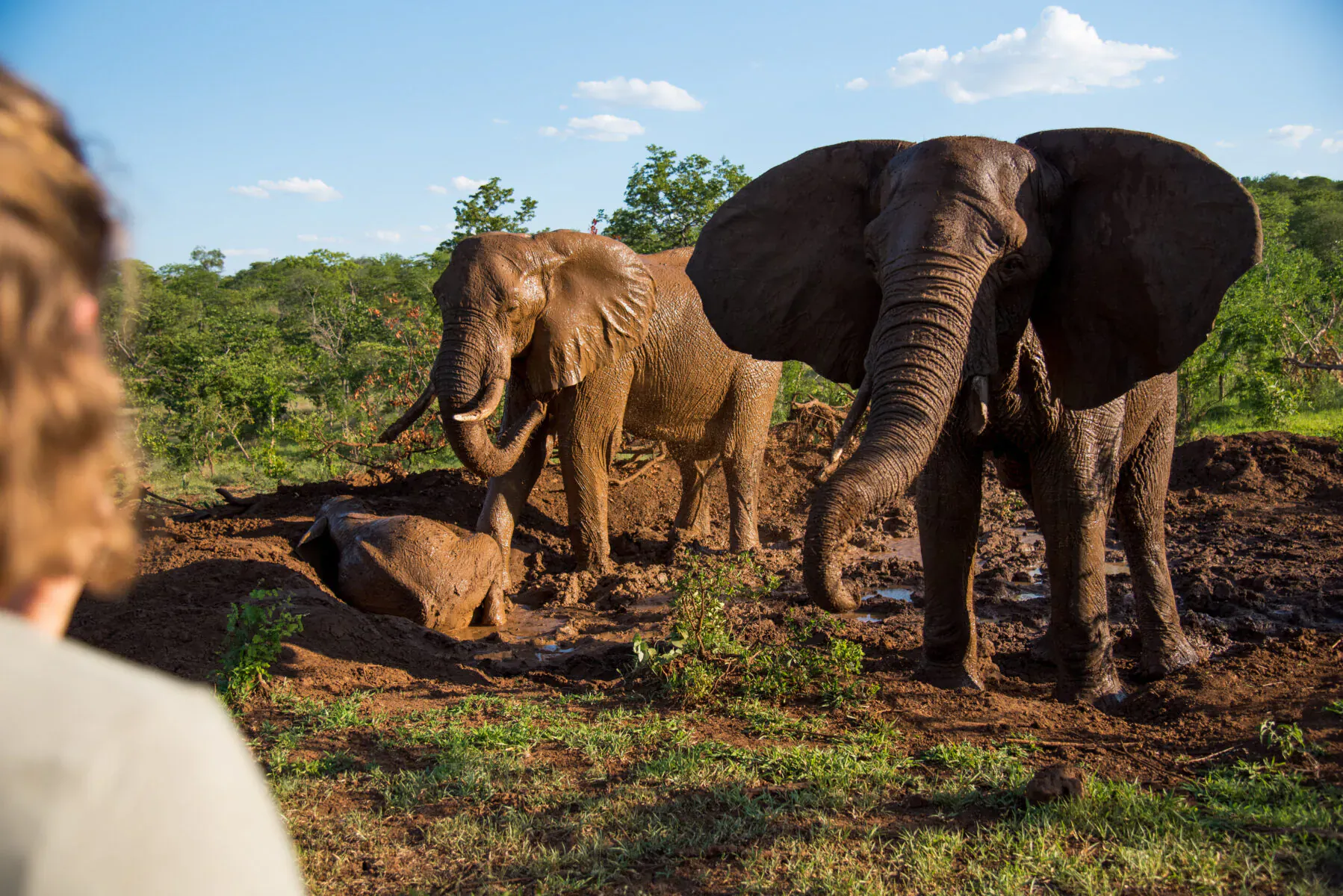
Next to Botswana, Zimbabwe has the second-largest population of elephants in the world.
The camp itself is exquisite. There are 16 luxury tented suites, each looking onto the cliffs that plummet to the boiling Zambezi River below. In the distance, the silver-grey spray of Victoria Falls presents an impossibly majestic backdrop to the definitive African adventure.
On arrival I gratefully accepted a refreshing eucalyptus-doused towel and cold welcome drink, then let my eyes take it all in.
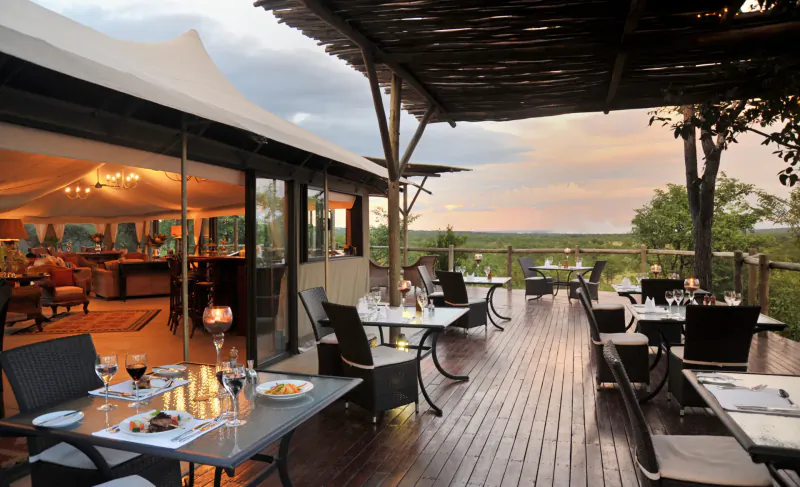
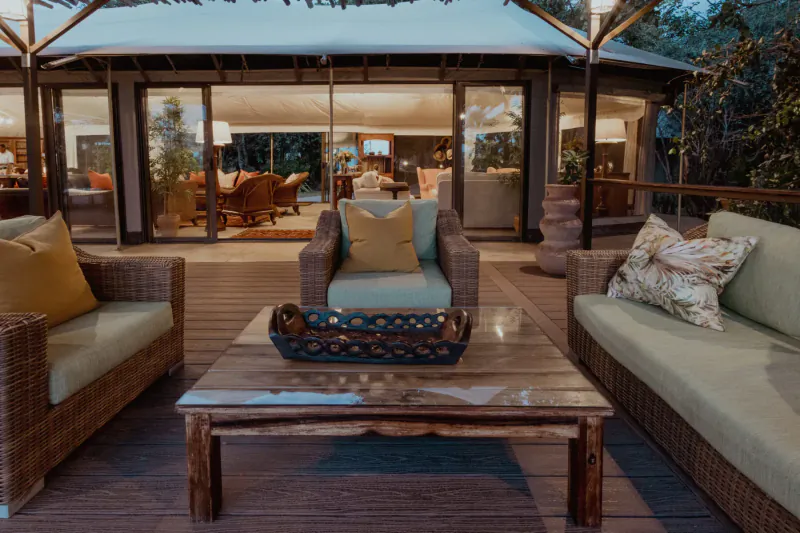
The main communal tent holds The Elephant Camp’s sumptuous lounge and dining area. Modern luxury in no way detracts from the true safari experience. The white tented roof, wooden decks, and African artefacts mirror nature’s paprika-coloured soil, the dark chocolate hues of tree trunks, and crisp white clouds. Think crystal glasses, leather luggage, wooden trunks, canvas, shining brass chandeliers strung from a cathedral ceiling, casting a soft gold light over Victorian sofas, chairs, and detailed finishes — complete with a lofted deck to take in the grandeur of Africa and the waterhole. They’ve surpassed all levels of modern luxury and conjured up an era of Victorian frontier camping.
The Elephant Camp was nominated as Zimbabwe’s Leading Tented Safari Camp.
Walking into my accommodation (Room 12), I felt the presence of a genuine bygone colonial Africa. A giant four-poster bed with cascades of mosquito netting, a footed and deep-set Victoria & Albert bathtub, a private viewing deck, a stone-floored outdoor shower, a plunge pool, and a bed under the stars on a raised platform — all with panoramic views of the cliffs of the Zambezi Batoka Gorge and the Milky Way. Modern technology is carefully hidden, with USB charging ports on either side of the bed and fibre optic Wi-Fi throughout the camp.
Within easy reach of Victoria Falls yet secluded on its own game reserve, The Elephant Camp offers community and conservation-focused activities including an elephant experience and a visit to the Victoria Falls Wildlife Trust. There are boundless photographic opportunities, plus game drives at dusk and dawn.
Before sunrise I was driven to a lookout point and stood at the edge of a precipice — an enormous, deeply carved crevice torn into the earth’s crust, exposing the raging Zambezi River 120 metres below. Witnessing the incredible power of nature so blatantly displayed was mesmerising.
On the way back, my guide brought the vehicle to an abrupt halt. He had spotted something in the sand — a large lion footprint. He was an expert tracker who could spot a fly at a thousand yards, reading the ground like the history of all the animals that had passed that way.
Baobab trees like fat red ballet dancers, bigger than buses and older than Christ, clung to the edge of the ravine.
Following a late afternoon waterhole visit, when the edge of Africa’s heat dissipates and the shadows of the mopane trees lengthen, my guide found a picturesque sundowner spot. I settled into a camping chair and watched the sun slowly sink below the horizon, stars creeping into the crimson and tangerine sky long before it descended. This was the perfect location for contemplating the majesty of the magnificent giants I’d been watching.
Once darkness set in, we returned to camp for a fine-dining Afrocentric taste journey that was both wild and exciting. After dessert, diners gravitated to the sunken firepit and swapped captivating safari stories around a blazing fire.
It’s more than opulence or the linen’s thread count. Here it’s about Zimbabwean hospitality, seclusion, and exclusivity — all of which have no measure. When you leave The Elephant Camp, a big piece of your soul will stay behind.
Africa’s Medicine Man
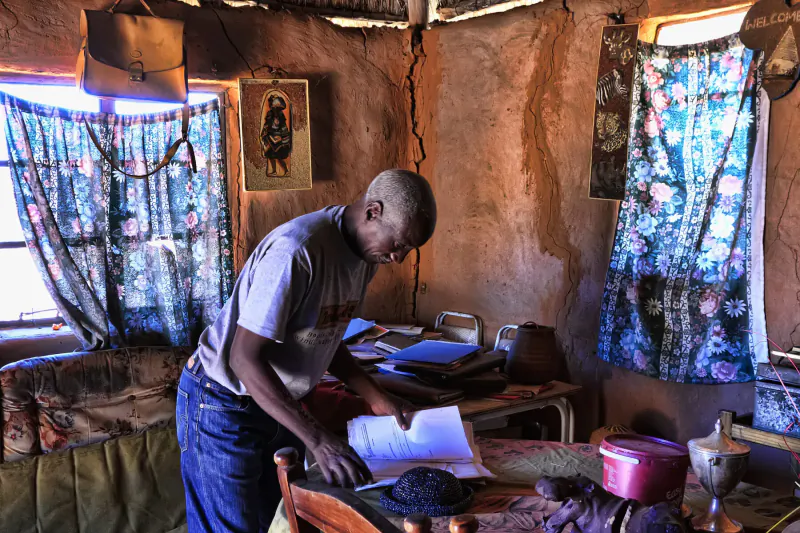
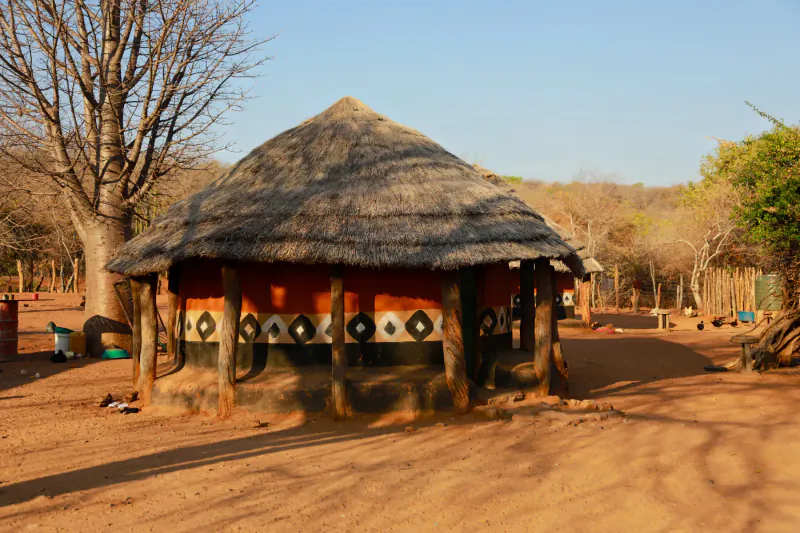
The heat is intense. So too are the many faces sitting outside the tiny, thatched hut in Mpisi Village, on the outskirts of Zimbabwe’s Victoria Falls. No one appeared discouraged by the queue. They’re waiting to seek a cure for their ailments with Melusi Mpisi Ndlovu — a proud Ndebele tribesman and one of the world’s most distinguished traditional healers.
The ‘Chief’, as Ndlovu is commonly referred to, is surrounded by wooden bowls filled with an assortment of herbs, twisted plant roots, and strips of tree bark. The elderly gentleman in front of me had a cut that wouldn’t heal, someone else had a swollen ankle, and a lethargic child complained of headaches.
For poor Zimbabweans, there’s nowhere else to go. Traditional medicines are their first and last defence against diseases that wreak havoc on their lives. Even though Western medicine is recognised in Africa, it has not substituted but rather supplemented the ethnic health approach. Practitioners like Ndlovu remain central to the lives of many.
Ndlovu is a charismatic and distinguished medicine man known throughout Africa as a traditional healer, and internationally famed in the alternative medicine field. His wisdom has been sought twice by the late Queen of England and the British House of Lords. He regularly consults with major British and American pharmaceutical companies on cancer cures, yet also opposes their attempts to patent traditional African herbal medicines.
Prestigious universities send PhD students to learn of his snakebite cures; the Red Cross called on him to remedy a cholera epidemic in central Africa; and he regularly hosts specialist doctors and associate professors who stay in the humble village of Mpisi for weeks, discussing herbal remedies and learning his methods.
Ndlovu has no formal education, yet he is sophisticated. Sharp-witted but without malice. There’s a gentleness about him that I’d almost forgotten could exist in a man. You’d guess his age to be around 45. Yet on enquiry, I learned he was born in 1944. “Here, in Mpisi,” he says, “the average villager lives to see the age of 100. Currently, our most senior citizen is 119.”
He explains that before the arrival of modern medicine, traditional treatment once protected and restored the health we all enjoyed. It plays an important role in the developing world, with many cancer patients using old traditional remedies as primary therapy.
“Traditional herbal medicine,” he continues, “is found in naturally occurring plant and animal-based substances, which have minimal to no industrial processing. People consult traditional healers whether or not they can afford modern medicines. It’s a belief system, integral to the lives of most Africans.”
“People forget all the indigenous knowledge we have, and now they’re enslaved to civilisation — the same civilisation that planted these healing roots, yet they don’t extract from them. God will judge me if people are suffering. It is my duty to capacitate them so that they can heal themselves, so that they can have a good life, a healthy life, and a long life.”
As is the case with Ndlovu, knowledge of traditional medicine has been passed down through generations, mainly orally, and largely without substantive documentation.
For the next hour he speaks of anticancer agents found in plants: Taxol (bark extract) for the treatment of breast, ovarian, and lung cancer; Vincristine (rose periwinkle) for leukaemia and lymphoma; Etoposide (mayapple plant) for testicular, prostate, bladder, and lung cancer; Irinotecan (tree stem) for colon cancer; and Topotecan (tree bark) for cervical cancer. Ndlovu explained his preparations and how they are administered — depending on the plant and the parts used, sometimes as an ointment, taken orally, inhaled, mixed with food, or macerated into a drink.
“There is only one time of absolute silence: halfway between the dark of night and the first light of day. All animals and crickets fall into profound silence as if pressed quietly by the deep blackness of night. This is when unnatural sounds startle you awake. This silence is how I know it is not yet dawn — this is the place of no-time, when all things sleep most deeply and when their guard is dozing. And this is when I collect my plant medicines.”
Ndlovu’s face becomes folded and deep. “There are some things Western medicine cannot fathom. Doctors who train in Western sciences focus only on the biomedical causes of disease. We traditional healers have a holistic approach. Some divine the cause of an illness by throwing bones and listening to the channelled curative advice of dead ancestors. Whilst others, like me, have in-depth knowledge of plant materials and their various healing powers.”
Before daybreak I tiptoed out of my hut and stood quietly for a while, trying to read the mist-smudged darkness. In the distance a shape drifted silently out of the bush — it was Ndlovu, returning from his predawn plant gathering, laden with baskets containing herbs, roots, tree bark, and possibly the cure to someone’s cancer.
We said farewell and shook hands in the traditional African way — first like Westerners do, then switching by grasping hold of each other’s thumbs — two movements instead of one. Ndlovu turned his head to the sky. “Today is a good day to be African.”
Written by Cindy-Lou Dale for Luxuria Lifestyle International