Where Time Tastes of Wine: A Day at Groot Constantia
Morning mist slides down Table Mountain in a cool, silvery spill, as though the great flat-topped giant has exhaled in its sleep. The Constantia Valley receives the mist the way an old friend accepts a shawl — comfortably, without fanfare. The air smells of damp soil, oak leaves, and the faint promise of sunshine. Somewhere, a bell rings with the purposeful clank of a place that has been keeping time for centuries. This is Groot Constantia, the oldest wine estate in South Africa, and arguably one of the only places on Earth where history is not preserved in books but bottled and corked.
A Manor Suspended Between Centuries
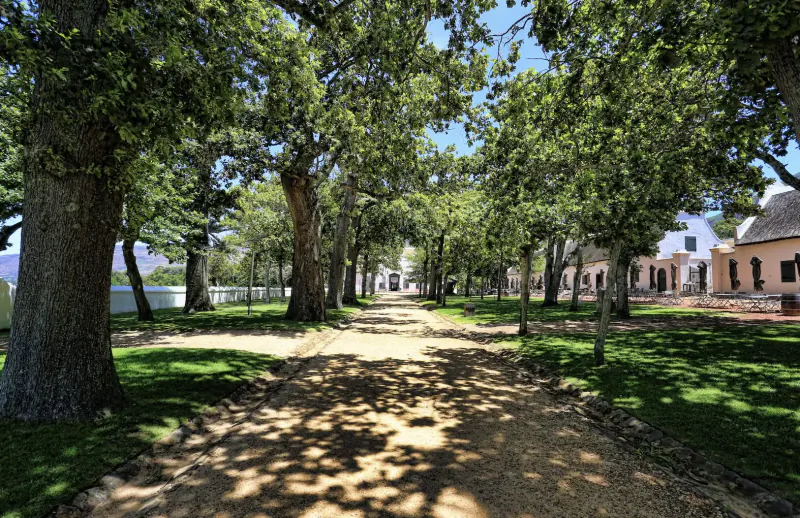
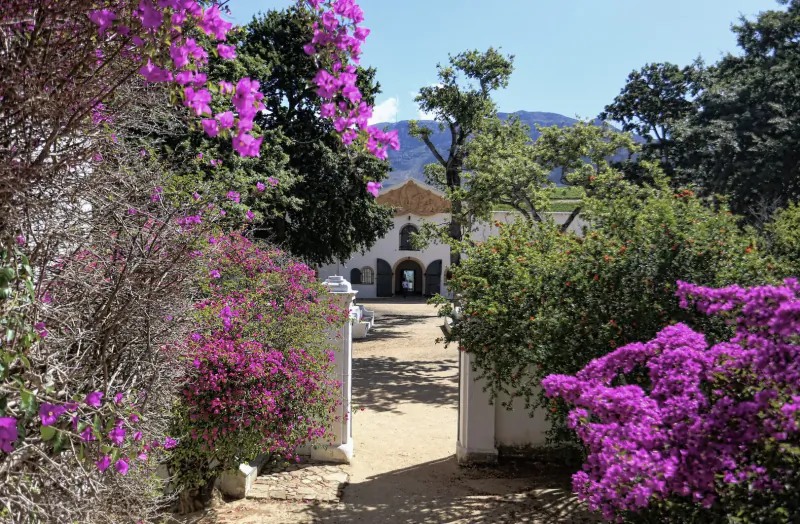
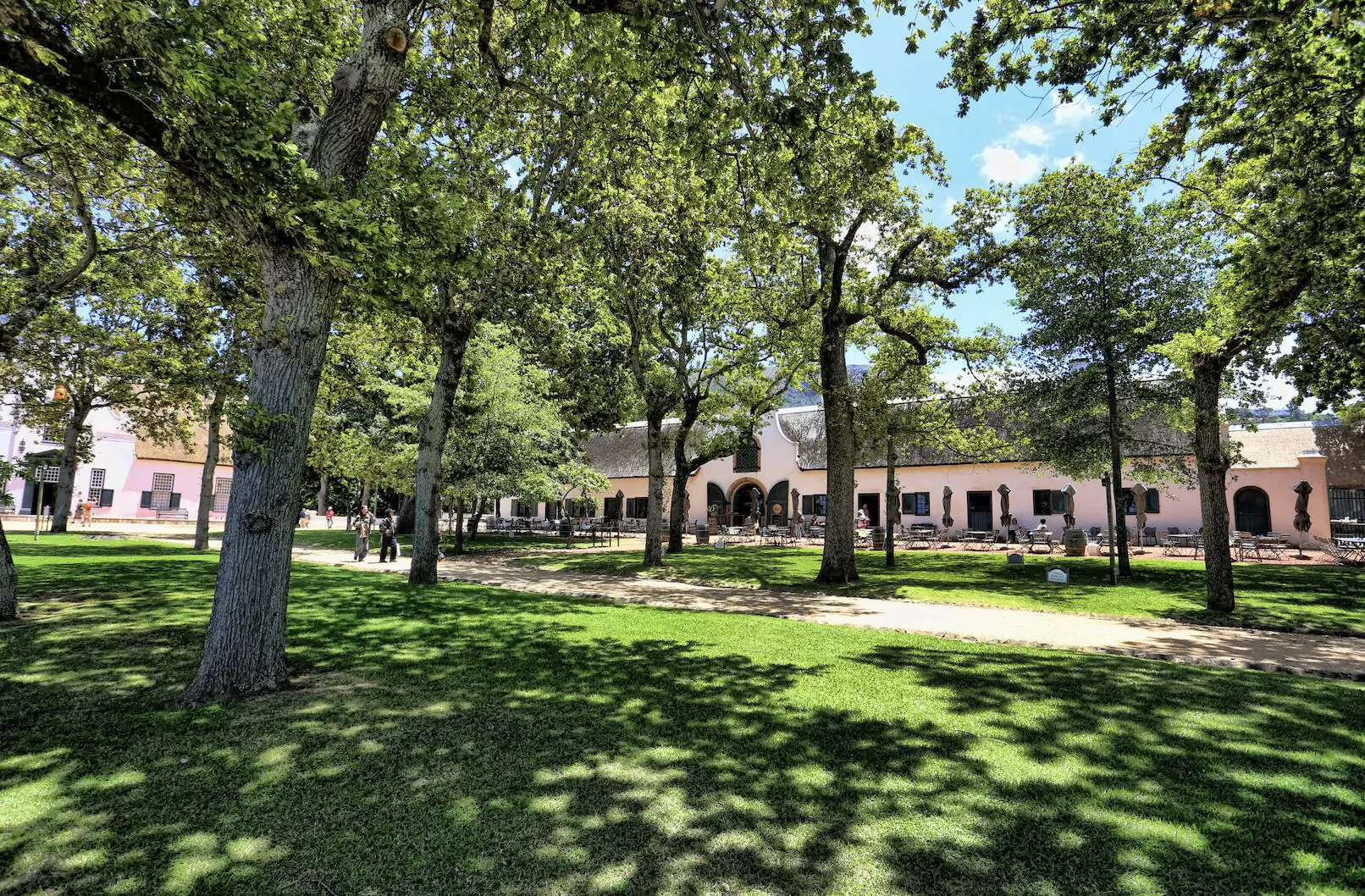
You arrive beneath an avenue of ancient oaks that arch overhead like the ribs of a green cathedral. Their branches sift the light into little flakes of gold that dance across the gravel path. Ahead rises the whitewashed, gracefully curved gables and thatched roof of the manor house — the architectural equivalent of a polite bow.
Step inside and the temperature drops as though you’ve crossed some invisible historical membrane. The wooden floors creak in a tone that suggests they have seen everything and are frankly a bit tired. The air hangs thick with beeswax, old wood, and the faintly smug expression of antique furniture that has outlived empires.
Portraits of Dutch governors and merchants line the walls, their powdered faces peering out with that peculiar expression of people who had no idea photographs would one day be invented.
In a side room, a gleaming black table reflects the flicker of a chandelier like a pool of midnight. Here, guides recount Simon van der Stel’s founding vision — his delight in granite soils, cooling sea breezes, and slopes so perfect for vines they may as well have been designed by a celestial agricultural planner. They speak, too, of Constantia’s legendary sweet wine: once poured for Napoleon in lonely exile, admired in European courts, and recommended by Jane Austen as a balm for heartbreak. Not many beverages can claim such a résumé.
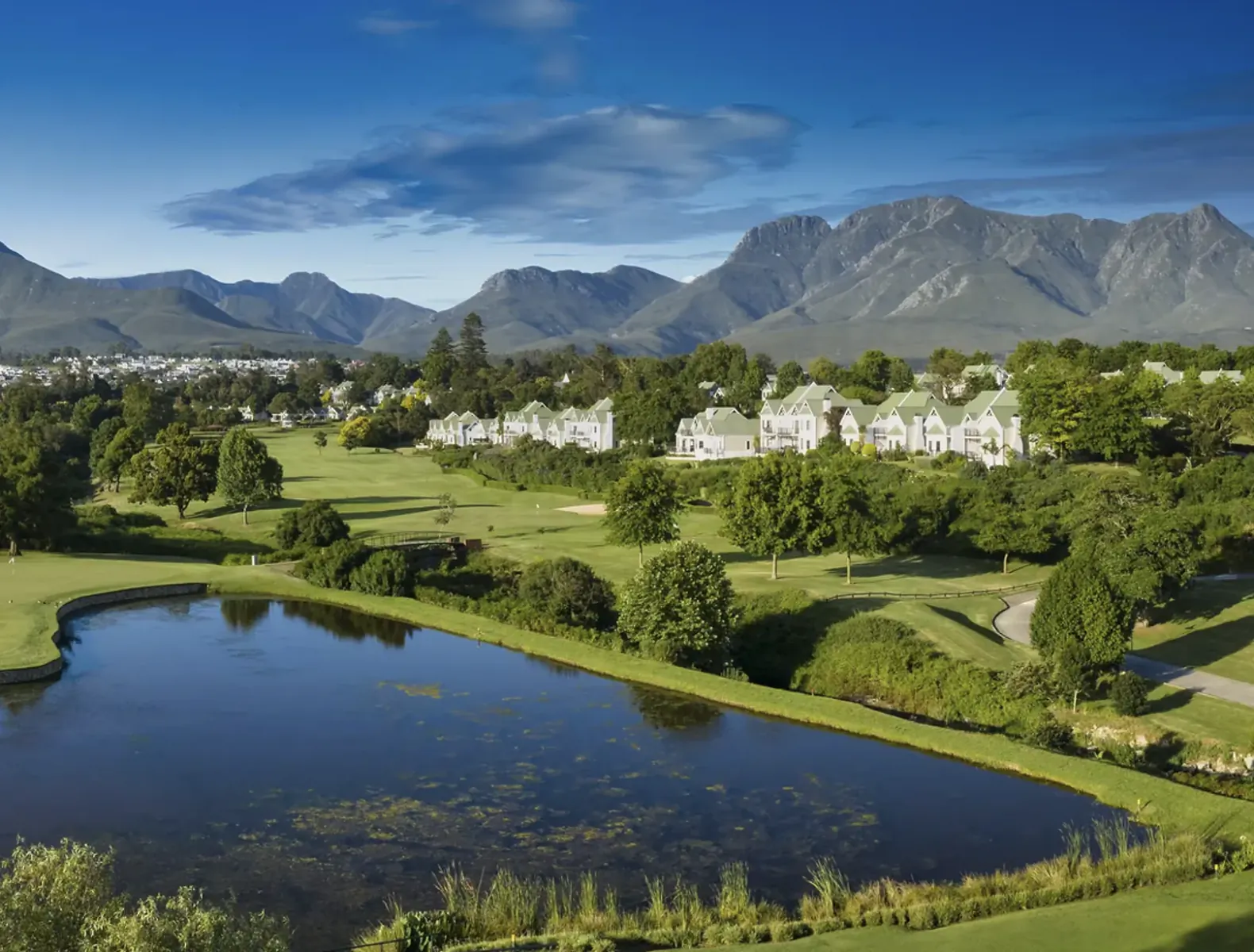
Outside, rows of vines lead down toward False Bay in neat, disciplined ranks. Viewed from the manor, the landscape looks layered with invisible footnotes: ox carts, harvests, barrels, ships — and always, the relentless sun that ripens the grapes and paints everything in forgiving light.
The Cellar: Cool Air and Slow Time
Follow the gravel path downhill, and you’ll enter the cellar — a cool, stone-arched chamber where time seems to compress and deepen. The air smells of oak, fermentation, and that pleasant whisper of dust that suggests important things are happening slowly.
Olivia Fowler, the estate’s public-relations guru, appears with the serenity of someone who has memorised not only the estate’s history but also, quite possibly, the secret hopes of the vines themselves. She gestures through the cellar like a conductor coaxing music from invisible instruments. Fermentation, racking, blending — all described in a voice that gives the sense these are not winemaking procedures, but sacred rites performed to appease the gods of agriculture.
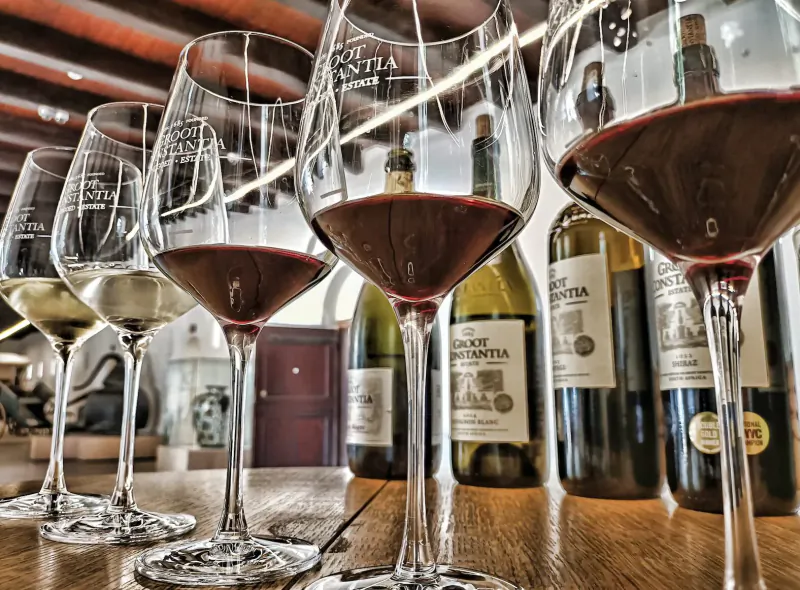
Then she shares one of Groot Constantia’s most extraordinary stories — one rarely given the space it deserves. In the 18th century, the estate was inherited by Anna de Koningh, a woman of colour born in Batavia to an enslaved mother. Through determination, intelligence, and a strategic marriage to explorer Olof Bergh, she rose through the rigid colonial ranks to become mistress of this very estate. Her story sits quietly in the archives, like a bottle placed on a high shelf — waiting for the right hands to take it down. In the amber glow of the tasting room, Olivia pours the estate’s jewel: Grand Constance, the sweet wine that once travelled to Napoleon’s lonely table and drifted through the pages of Dickens and Austen. Swirl it, and you taste sunlight, sea wind, and the small triumphs and large follies of a few hundred years.
A Lunch of Theatrical Proportions
Directly beside the Manor House is Simon’s Restaurant, which can only be described as the lovechild of Cape Dutch heritage and Liberace’s favourite dressing room.
Mirrors shimmer. Chandeliers drip what appear to be crystalline tears of joy. Gold accents wink from every angle. There is even a grand piano that looks ready to burst into song.
And then, almost shockingly, the food arrives — humble, precise, deeply rooted in South African land and sea.
The famed kingklip appears on a plate with the kind of confidence only a truly good fish can muster. Its flesh is alabaster white, flaking delicately beneath a brush of lemon-fynbos butter. It tastes of the ocean and the windy cliffs: clean, simple, unpretentious. A quiet dish served in a room that could host the Oscars.
Between Earth and Light
After lunch, the estate drifts into its drowsy afternoon glow — the kind of mellow warmth that makes you consider abandoning adulthood altogether. Somewhere behind the vines, a tractor hums contentedly, like a well-fed bumblebee. A butterfly flutters past, performing the sort of meandering, unhurried detour only a creature with no responsibilities can manage. And then, in a scene straight out of a children’s book, a flotilla of plump white Pekin ducks waddles toward the path, giving visitors the unmistakable impression that they have never, in their entire lives, been fed, despite looking like feathered ottomans who have enjoyed many hearty meals.
In the small shop, bottles gleam like geological specimens: rubies, ambers, topaz. You choose one not just for the wine but for its promise — that someday, far from here, you’ll open it and be transported back to the oaks and the salt-scented breeze of the valley.
By mid-afternoon, the light grows long and honeyed. The courtyard smells of crushed grapes. You linger where the manor’s shadow falls across the grass — a reminder that buildings, like people, age more gracefully when surrounded by vineyards.
Beyond the estate lies Cape Town’s normal bustle: traffic, voices, modern life. But here, for a moment longer, time holds still.
The vines stretch as far as the eye can see, each row a perfect demonstration of nature cooperating with human persistence — or perhaps the other way around.
Groot Constantia isn’t simply a vineyard. It’s a living archive — a slow, generous conversation between land, people, and the centuries that shaped them both. And as you leave, the manor glows white against the sky, a patient witness to everything that was and everything that will be — its roots deep, its branches wide, and its wine forever steeped in the long memory of the earth.
W: Groot Constantia
W: Cape Tourism
Written by Cindy-Lou Dale for Luxuria Lifestyle International