Ultra-Luxury Wildlife Guide: 5 Journeys to the World’s Wild Places
Wildlife journeys have become one of the most sought-after forms of luxury travel, although not because of extravagant lodges or oversized suites. Increasingly, the appeal comes from reaching places that few people ever experience, accompanied by expert guides who know the landscape intimately.
One trip may involve stepping ashore among thousands of king penguins after crossing the Southern Ocean. Another begins in a cool mountain forest, following fresh gorilla tracks before the morning mist has lifted. Comfort still matters, though these journeys are defined just as much by access, exceptional guiding and conservation. For travellers prepared to venture farther, these destinations remain among the most rewarding wildlife experiences anywhere in the world.
Antarctica and South Georgia: Polar Expeditions at the World’s Edge
Booking an acclaimed South Georgia expedition cruise is less about reaching a destination quickly and more about the experience of travelling through one of the world’s most remote oceans. Days at sea are broken up by seabirds following the ship, wildlife briefings from expedition leaders and the growing anticipation of the first ice-covered peaks appearing on the horizon.
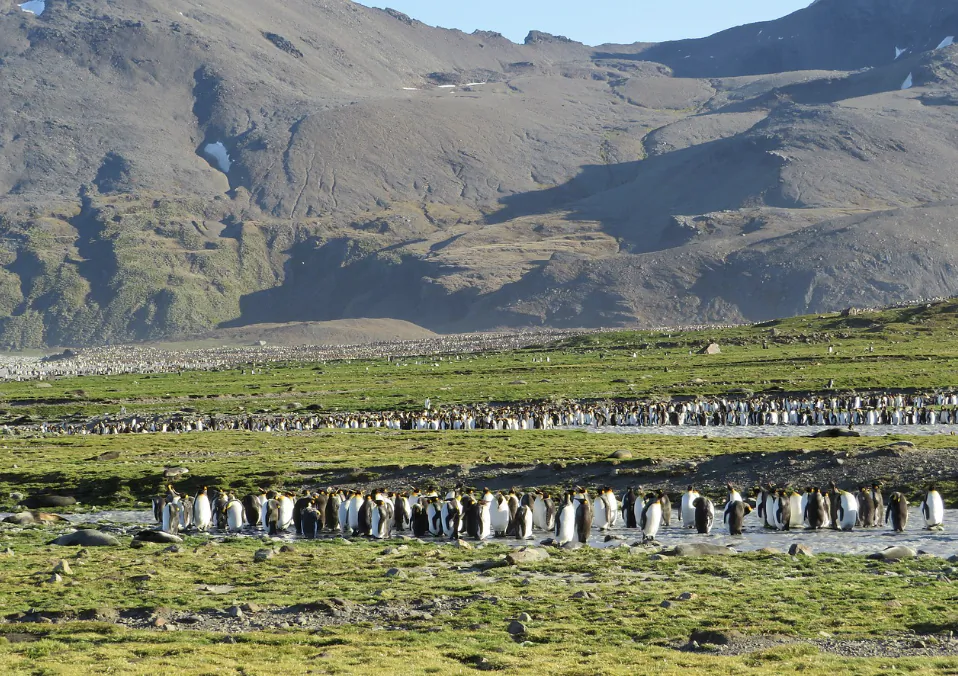
South Georgia does live up to expectations. Salisbury Plain and St Andrews Bay support enormous colonies of king penguins, while elephant seals crowd the beaches during the breeding season. Fur seals become surprisingly bold at certain times of year, so guides regularly remind guests to give them plenty of space before every landing.
Modern expedition ships keep passenger numbers ashore carefully controlled. Zodiac landings reach places larger vessels simply can’t access, and naturalists remain alongside guests throughout every excursion, pointing out wandering albatrosses nesting high above the shoreline or Antarctic terns darting across the bays.
By the time the voyage reaches the Antarctic Peninsula, humpback whales often surface close to the ship, gentoo penguins gather on rocky beaches, and towering glaciers dominate the horizon.
Rwanda’s Volcanic Highlands: Mountain Encounters in the Forest Mist
The drive towards Volcanoes National Park passes small villages, terraced hillsides and roadside produce stalls before the volcanic peaks begin dominating the skyline. By the following morning, most visitors are already standing at park headquarters while trackers share updates collected before dawn.
Finding a habituated gorilla family isn’t guaranteed to follow the easiest path. Some treks last a little more than an hour, while others climb through thick bamboo forest and muddy volcanic slopes for considerably longer. Good walking boots quickly prove their value.
The reward comes quietly. A silverback may be sitting only a few metres away, juveniles wrestle among the undergrowth, and mothers continue feeding with barely a glance towards the small group of visitors. Conversation usually fades on its own.
Luxury here comes from outstanding guiding, strict conservation rules and the privilege of spending a carefully managed hour with one of the world’s rarest primates. It’s difficult to think of another wildlife encounter that feels quite so personal.
Tanzania’s Serengeti: The Great Migration Across the Plains
The Serengeti changes with the seasons, which explains why experienced safari travellers rarely visit only once. Conditions in one part of the park may look completely different a few months later as wildlife follows fresh grazing across the plains.
The Great Migration is often the highlight of outstanding Tanzania luxury safari vacations, and seeing it in person easily explains why. Watching thousands of wildebeest gather along a riverbank before finally committing to the crossing remains one of Africa’s defining wildlife spectacles. Guides often wait patiently for hours because nobody can predict the exact moment the movement begins.
Private game drives make it easier to adapt each day according to recent sightings. One morning may revolve around a coalition of cheetahs scanning the grassland, while another focuses on lion cubs hidden beneath acacia trees or elephants gathering around a seasonal waterhole.
Several luxury camps also arrange sunrise balloon flights. Looking across the plains as the first light reaches the grassland reveals just how immense the Serengeti really is.
The Galápagos for Volcanic Islands and Undisturbed Nature
Very few places allow people to observe wildlife from such close distances while still respecting strict conservation rules. The Galápagos has managed that balance remarkably well.
Landing sites remain tightly controlled, and certified naturalist guides accompany every excursion ashore. Marine iguanas stretch across volcanic rocks beside the paths, blue-footed boobies continue their courtship displays within easy view, and sea lions regularly occupy jetties before visitors arrive each morning.
Luxury expedition yachts keep guest numbers low while allowing access to several islands during the voyage. Española introduces waved albatrosses during the breeding season; Fernandina supports large colonies of marine iguanas and flightless cormorants, while Santa Cruz provides opportunities to observe giant tortoises wandering through the greener highlands.
The pace of each landing depends entirely on the wildlife. If a sea lion decides to rest across the boardwalk, everyone simply waits.
Namibia’s Desert Wilderness for Rare Wildlife and Deep Solitude
Namibia feels different from almost anywhere else in Africa. Wildlife survives in landscapes where rain can remain absent for months, yet elephants, lions, giraffes and black rhinos continue adapting to conditions that appear impossibly harsh.
Etosha National Park rewards patience more than constant driving. Waterholes become gathering points throughout the dry season, and it’s common to spend an hour watching different species arrive one after another. Early mornings often bring the busiest wildlife activity before temperatures climb.
Farther west, the scenery changes again. Desert-adapted elephants follow dry riverbeds through Damaraland, while oryx move confidently across gravel plains beneath enormous open skies. Scenic flights over the Skeleton Coast reveal shipwrecks, shifting dunes and a coastline that looks almost untouched.
Many luxury lodges include private guides, astronomy evenings and carefully planned wildlife drives tailored to guests’ interests. Having that flexibility often changes the entire experience.
Which wild encounter would you choose first?
Luxury wildlife travel has become less about ticking famous animals off a list and more about spending meaningful time in places where nature still dictates the day. Expert guides, carefully managed visitor numbers and strong conservation programmes all contribute to experiences that feel genuinely exclusive without placing unnecessary pressure on the wildlife.
Antarctica, Rwanda, Tanzother around mountain forests, while others unfold across grasslands, volcanic islands or desert landscapes. Choosing between them depends less on the accommodation and more on the wildlife people hope to spend time with. For those fortunate enough to visit even one of these destinations, the privilege comes from witnessing nature continuing exactly as it should. The Galápagos and Namibia each approach that idea differently.