The New Face of Australian Luxury Living
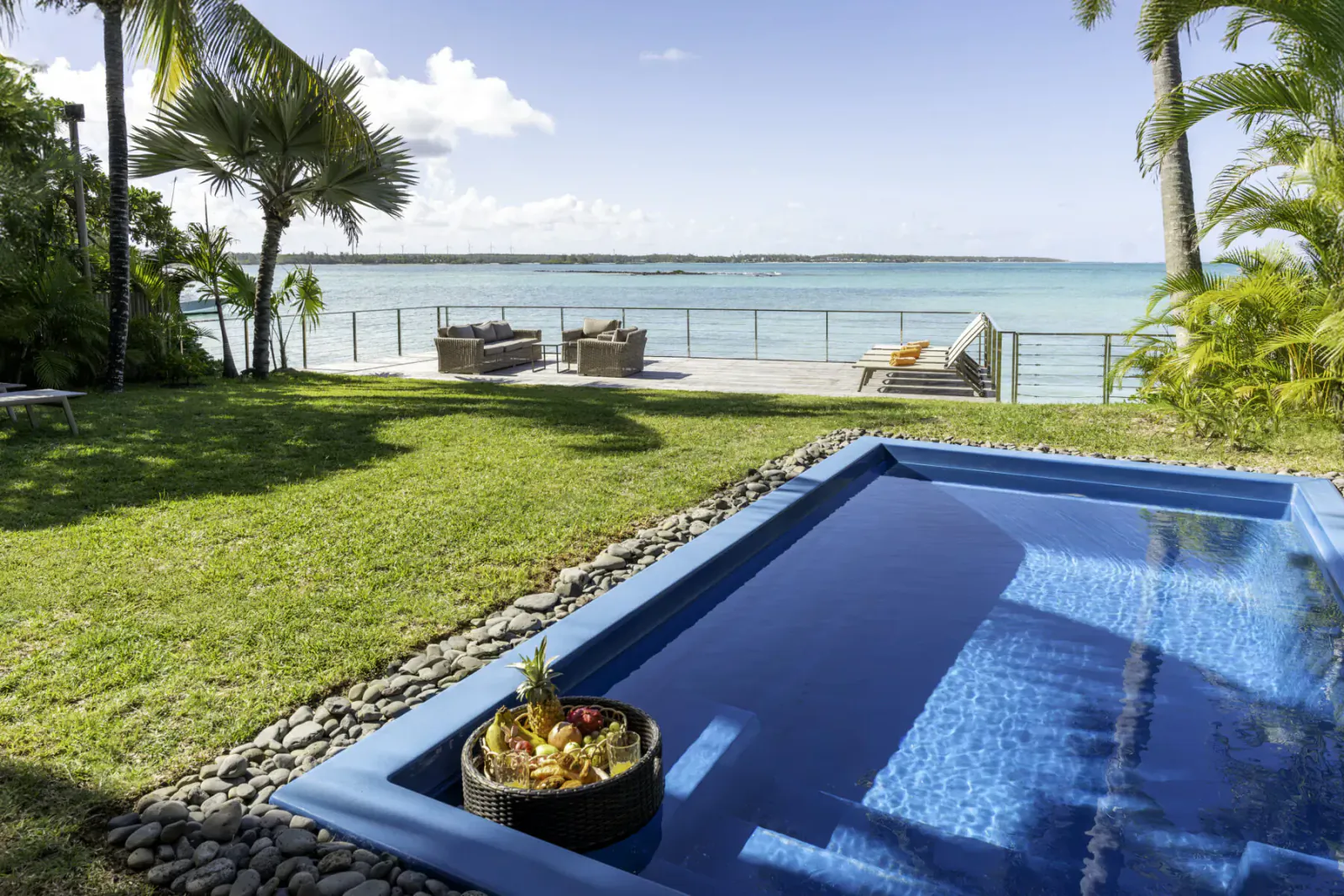
Australia has entered an era where luxury is no longer measured by sprawling estates alone, but increasingly by the rarity of space itself.
As affordability pressures transform housing patterns and structural changes reshape markets, the traditional markers of prestige have undergone a fundamental recalibration. In major cities where detached homes often command premiums that place them out of reach for first-home buyers and many upgraders alike, owning a full house with land has transcended aspiration to become a defining statement of affluent living.
The Australian Luxury Residential Real Estate Market, worth USD 30.80 billion in 2026, is growing at a CAGR of 7.80% to reach USD 44.80 billion by 2031, yet this prosperity masks a deeper shift in what constitutes exclusivity.
More than half of all upcoming retirement village developments are vertical or mid-rise buildings, marking a major shift from traditional sprawling, ground-level communities, and the trend extends far beyond retirees.
Apartments play an increasingly large role in the Australian property market, housing more than 2.6 million people, with apartments accounting for 31% and 16% of occupied dwellings in Sydney and Melbourne, respectively in 2021. As vertical density becomes the norm, horizontal living with dedicated outdoor space represents the new pinnacle.
The Vertical Shift and the Rise of House-Based Affluence
Australia’s residential landscape has transformed dramatically over the past decade.
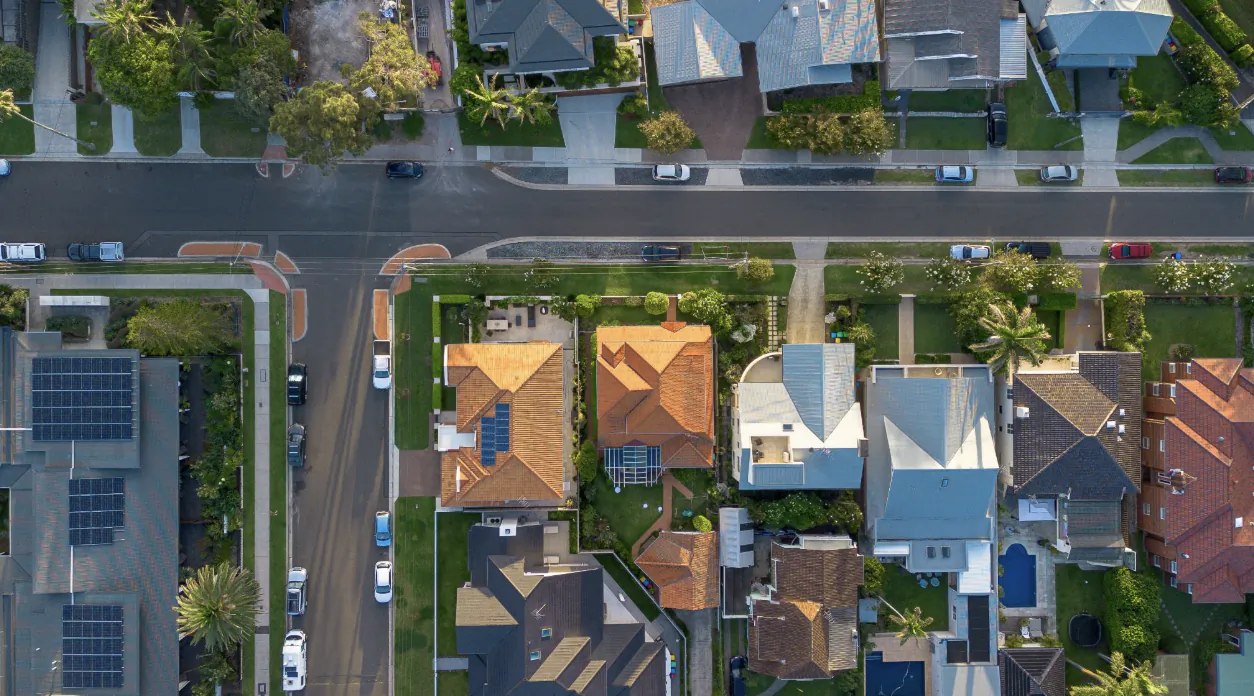
High-density housing has caught on, with vertical greenery, internal atriums and landscaped communal terraces becoming standard in apartment developments across Brisbane, Sydney and Melbourne. This architectural evolution reflects economic reality rather than pure preference.
Apartments increasingly represent the only realistic entry point into capital city markets, as the choice is no longer between a house and an apartment, but rather between buying an apartment or remaining locked out of ownership altogether.
Understanding this context reveals why securing a detached dwelling has become such a powerful luxury signal.
There were 10,852,208 private dwellings counted in the 2021 Census, with 70 per cent being separate houses, 13 per cent townhouses and 16 per cent apartments. Within premium segments, however, the proportions tilt dramatically. Those who command space in tightly constrained urban markets occupy a rarefied stratum of privilege that previous generations took for granted.
Garages, Carports, and the New Definition of Spacious Living
When a standalone house itself becomes exceptional, the presence of dedicated vehicle storage elevates the property into another category entirely.
Structures that provide weather-protected parking for multiple vehicles represent more than utilitarian convenience. Neat carports signal land abundance in cities where every square meter carries premium value.
Custom-designed steel structures with gable or skillion roof profiles and COLORBOND finishes integrate seamlessly with architectural visions while serving functional needs.
These additions demonstrate that the property footprint extends beyond habitable rooms to encompass lifestyle infrastructure once considered standard but now marking genuine affluence.
The capacity to accommodate boats, trailers or recreational vehicles on private land underscores freedom from the spatial compromises apartment dwellers navigate daily.
An estimated 1.26 million low-income households were in financial housing stress in 2024-25, and housing affordability is an ongoing challenge for many Australians who are renting, seeking to purchase a home, or managing mortgage repayments. Against this backdrop, properties featuring multiple parking options and auxiliary structures represent not merely comfort but exceptional privilege.
International Perspectives and Domestic Implications
Luxury real estate globally has always centred on scarcity, whether waterfront vistas in Monaco or Central Park views in Manhattan. Australia’s version of this scarcity increasingly revolves around terrestrial space.
Apartments and Condominiums now offer expansive, house-sized layouts with premium finishes and exclusive amenities often commanding values in the several million range, while Villas and Landed Houses remain a cornerstone featuring grand designs and extensive private grounds with waterfront or prestige locations driving prices into the tens of millions.
The Australian Bureau of Statistics tracks these patterns through comprehensive housing data that reveals the scale of transformation.
Australia’s population is highly urbanised, with 3.5 people per square kilometre, half residing in the three largest cities, and remarkably, 75 per cent of Australians live on just 2.6 per cent of the country’s land mass. This concentration creates fierce competition for detached dwellings in desirable locations, fundamentally reshaping luxury hierarchies.
International buyers recognise this dynamic.
The market attracts international family offices seeking multi-generational wealth preservation, retired executives relocating for lifestyle and healthcare quality, and families pursuing elite education, with buyers from mainland China, Hong Kong, India and Singapore leading foreign investment in 2024, many acquiring properties as second residences or long-term family holdings.
These sophisticated investors understand that Australian houses with land offer something increasingly rare globally: genuine spatial generosity within stable, livable cities.
The Economic and Cultural Recalibration
The billionaire cohort is expected to expand by 77 per cent by 2031, with the number of UHNWIs forecast to rise by nearly 60 per cent over the same period, yet even ultra-wealthy buyers face supply constraints.
Sydney’s waterfront supply cannot be extended as planning law protects it, and the number of harbour-fronting addresses in Point Piper and Vaucluse has not meaningfully increased in decades. This immutable scarcity underpins the housing affordability challenges that ripple through every market segment.
The cultural implications extend beyond pure economics. Australian identity has long centred on the quarter-acre block, outdoor living, and spatial independence. As these elements become exclusive rather than normative, they acquire heightened symbolic weight.
Properties that still embody these ideals represent not just wealth but continuity with cultural heritage. The ability to maintain expansive outdoor entertaining areas, swimming pools, and dedicated storage for recreational equipment speaks to a lifestyle once broadly accessible but now increasingly reserved for the affluent.
Research from educational institutions examining urban development patterns confirms these trends extend across comparable nations, though Australia’s unique combination of vast geography and concentrated urbanisation creates distinctive pressures. The shift toward high-density living reflects global patterns, but the premium placed on retaining horizontal space in Australian cities carries particular cultural resonance.
Future Trajectories for Premium Properties
Looking forward, the Council forecasts that 938,000 new dwellings will be built over the Housing Accord period through June 2029, implying a shortfall of 262,000 dwellings relative to the 1.2 million Housing Accord target.
This ongoing supply deficit ensures that detached houses in desirable locations will maintain their premium status.
In December 2024, 50 per cent of median household income was needed to meet repayments for new mortgages, underscoring the financial threshold required for standalone property ownership.
Apartments and condominiums led with 64% of Australia’s luxury residential real estate market share in 2025, whereas villas and landed houses are projected to advance at a 9.0% CAGR through 2031, suggesting that while apartments dominate transaction volume, landed properties capture disproportionate value growth. This divergence reflects their increasing rarity and the intensity of competition among buyers who prioritise space above convenience or location compromises.
The integration of sustainable features and smart technology provides contemporary luxury homes with additional differentiation. Solar installations, battery storage, and advanced climate control systems align environmental responsibility with operational efficiency, appealing to buyers who expect both traditional spatial generosity and modern performance.
These technological enhancements complement rather than replace the fundamental appeal of land and square footage.
Redefining Aspiration in Contemporary Australia
The new face of Australian luxury living acknowledges that vertical development serves essential urban functions while recognising that horizontal living with generous land allocations has transitioned from standard expectation to aspirational achievement.
Properties featuring multiple structures, extensive outdoor areas, and room for vehicles and recreational equipment represent a lifestyle tier that stands apart in increasingly dense cities.
This recalibration affects how Australians conceptualise success and security. Previous generations measured prosperity through various lenses, with homeownership representing one component among many. Today’s market conditions have elevated the type of dwelling owned to a more significant indicator.
The distinction between apartment and house carries weight that transcends mere preference, reflecting financial capacity, long-term planning, and access to resources that facilitate such substantial investments.
The luxury segment will continue evolving as demographic shifts, regulatory changes, and economic conditions reshape possibilities. Yet the fundamental premium on space appears durable.
In a nation where vast unpopulated regions contrast sharply with dense urban cores, those who secure generous residential footprints in desirable locations have achieved something increasingly elusive: the traditional Australian dream, now reimagined as contemporary luxury rather than middle-class expectation.