Luxuria Lifestyle Reviews & Explores Cap St Georges Resort, Paphos, Cyprus
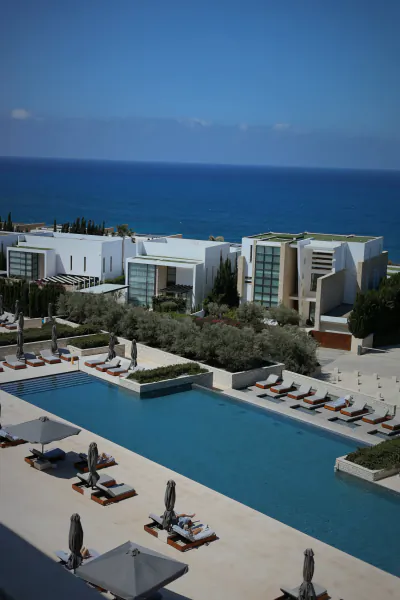
Cap St Georges is built upside down, which sounds like a criticism and isn’t. The reception sits at the top of the building, and everything — restaurants, pools, spa, beach — descends from there down the cliff face toward the Mediterranean, following the natural contours of the coastline. It means that the first thing you encounter when you arrive, before you’ve found your room or figured out the layout, is a 180-degree view of open sea through full-length windows, the kind of view that makes you stop mid-sentence and forget what you were about to say. There is a grand piano in the lobby. There are sofas arranged so that wherever you sit, you’re facing the water. It is an unusual thing for a five-star hotel to lead with its view rather than itself, and it sets a tone that the rest of the resort, more or less, keeps.
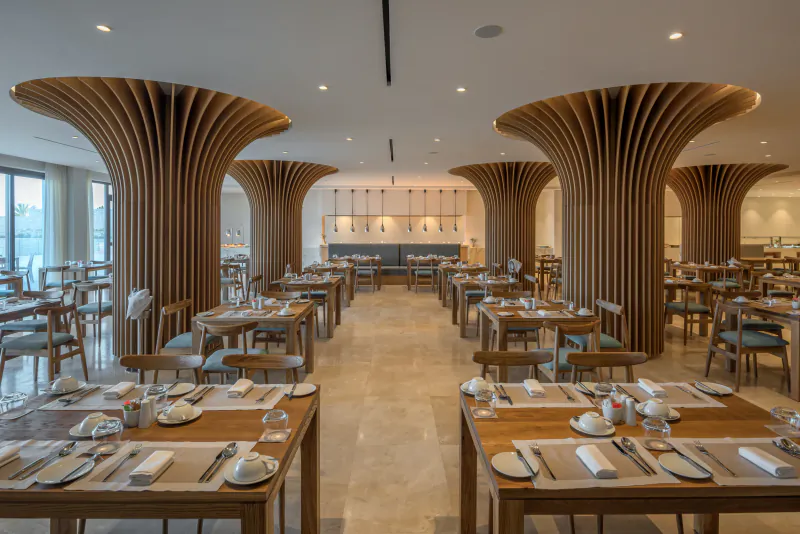
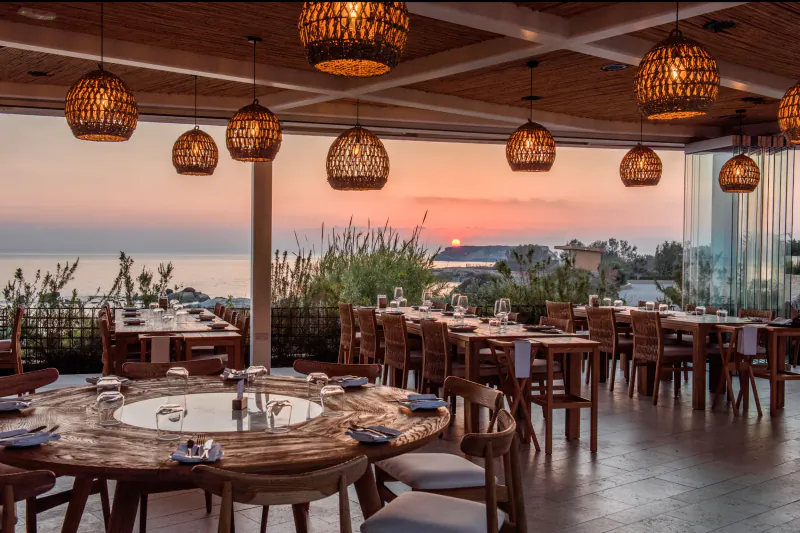
I arrived on a Thursday night, late, and didn’t really get my bearings until the following morning. The breakfast buffet at Yeronisos is one of the best I’ve eaten anywhere — properly sourced, genuinely local, eggs from the resort’s own chickens, fish caught that morning, produce from the Perivoli a few hundred metres away. Perivoli is the Greek word for garden, and the resort’s version covers 44,000 square metres and supplies the kitchens daily. I sat there both mornings longer than I needed to, looking out at the island in the window — a small flat-topped outcrop about a kilometre offshore called Yeronisos, after which the restaurant is named — and feeling no urgency to be anywhere else.
The story of that island came later, standing outside in the morning with a member of the team who told it the way you tell something you find genuinely interesting rather than something you’ve been asked to communicate. The belief, backed by serious archaeological work, is that Cleopatra stopped on Yeronisos on a voyage from Alexandria to Rome. She was travelling with Caesarion, her son by Caesar — a son Caesar had no particular interest in acknowledging. They stopped on the island. A school was built there in the boy’s name. Artefacts dedicated to Apollo were found. Cyprus has been claimed by almost everyone at some point — Greeks, Phoenicians, Ottomans, British — and has spent several thousand years absorbing all of it without quite losing itself. A story about Cleopatra stopping at that island on her way somewhere else feels completely in keeping. Of course she stopped.
The team at Cap St Georges has that same quality of layering. Drawn from across Cyprus and beyond, genuinely mixed in nationality and background in a way that reflects the island’s history rather than contradicting it. Cyprus has always been a crossroads — cultures moved through here for millennia and left traces of themselves behind — and the staff carry that range naturally. The kitchen has spent years training alongside visiting one- to three-Michelin-star chefs — a different chef arriving each month to run an evening at Sky Seven on the seventh floor, adults only, a menu that changes with whoever has flown in, always rooted in local ingredients and the culinary traditions of Cyprus. That commitment to excellence hasn’t gone unnoticed — at the Cyprus Tourism Awards 2025, Cap St Georges took home Platinum for Excellence in Luxury Hospitality alongside Gold and Silver across gastronomy, guest experience and sustainability, with further recognition at the Cyprus Estia Awards 2026 including Gold for Bonsai as Best International Cuisine Restaurant.
What I wasn’t expecting about the resort itself was how calm it felt. This is a place with 202 rooms, ten restaurants and bars, an Olympic-sized pool, one of the largest spas on the island, a horse ranch, a hairdresser, a games room, a waterpark under construction, tennis and padel courts, a golf driving range with Toptracer technology and a kids’ outdoor cinema. It should feel relentless. It doesn’t, and I think it comes down to the stone. The entire resort is built from Cyprus stone — the same pale warm material as the cliffs and landscape surrounding it — so your eye reads it as continuous with its setting rather than dropped into it. That and the layout, which is built around an Agora at its heart, a proper village square with restaurants around the edges, a gelato and patisserie in the middle, the outdoor cinema at one end where children can watch films in the evening while remaining in full sight of whoever is at dinner. I watched kids migrate from the table to their outdoor cinema and back again across an evening without it registering as an event, which is exactly the point. Halloumi-making classes happen every Friday afternoon under a wooden pergola nearby. The golf buggies run quietly through the grounds. The electric bikes sit ready for anyone who wants to go further, out into the Akamas beyond the resort’s boundary.
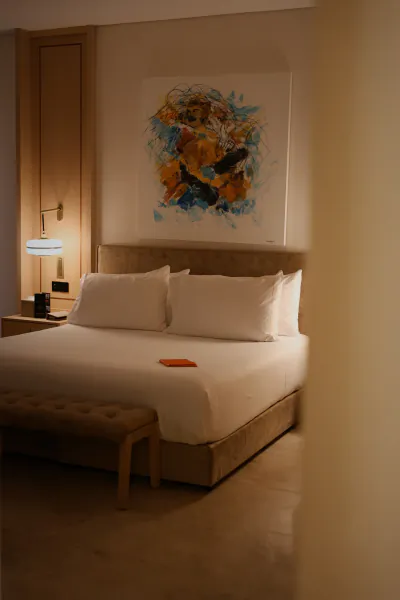
The Cleopatra Spa is one of the largest on the island, and it earns the space. Verde Guatemala marble throughout, low light, the kind of silence that isn’t enforced but simply exists. The Akamas Journey treatment — a full body scrub, then a clay mask wrap that pulls everything out of you, then a long massage — takes the better part of a morning. By the time the clay has been rinsed off and you’re finally horizontal, you’ve already half forgotten what day it is. I went in intending an hour and came out in the early afternoon, blinking, walking slowly, genuinely surprised by how much time had passed and not remotely bothered by it. My room had a west-facing balcony, a freestanding bath, warm wood throughout, local Cypriot artwork on every wall — all commissioned specifically for the property, which is why the rooms feel inhabited rather than assembled. Each evening a small treat on the pillow, a handwritten card with the following day’s weather. Minor things. But for me, these are the things that matter most.
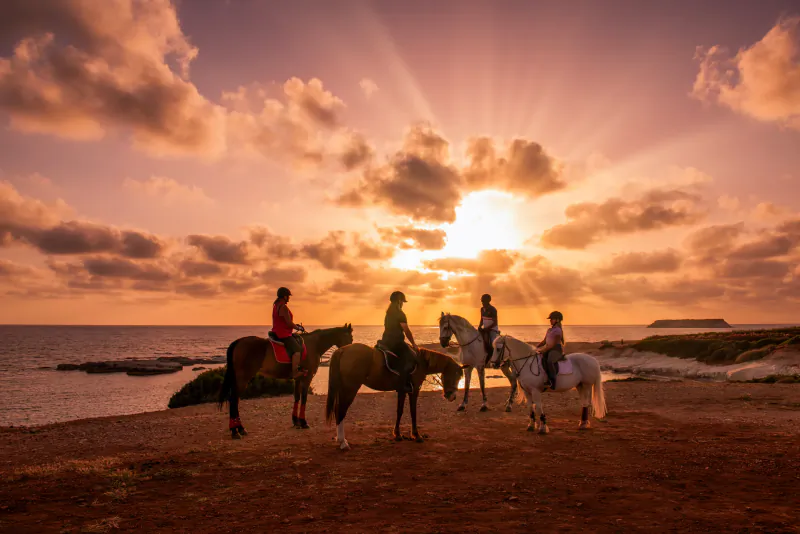
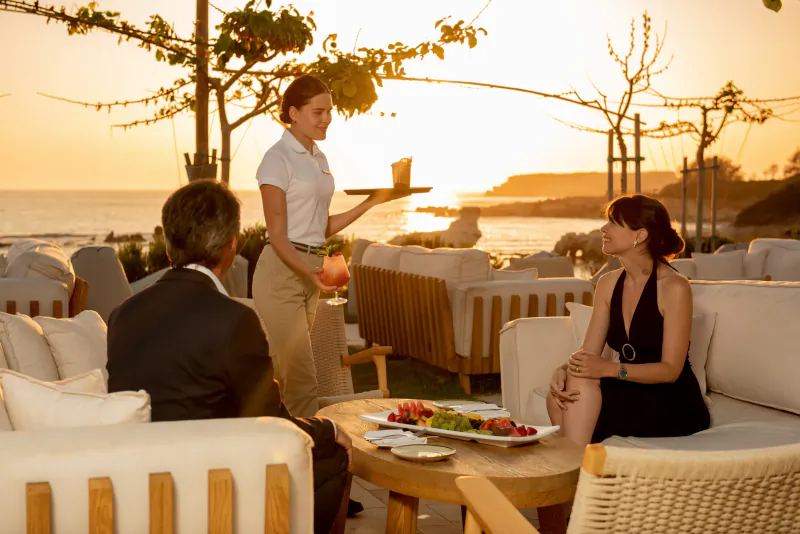
The founder of Korantina Homes, the developer behind Cap St Georges, has a passion for horses that long predates the hotel — he founded one of the first horse ranches in Cyprus, and it still runs on this land today. Over sixty horses, a sunset ride along the cliff edge above the Akamas coastline that I had been looking forward to from the moment I arrived. My horse was called Shakira, a large grey mare, and she had the particular calm of an animal that has done this route many times and found it worth doing. We moved along the cliff edge in the late afternoon, the sea below shifting from turquoise to deep gold as the sun dropped, white cliffs rising from the water on one side. There is a specific quality to that light on the western coast of Cyprus at that hour — warm and heavy and somehow unhurried — and being on a horse in it, above that water, with the Akamas stretching away to the north, made everything else feel temporarily irrelevant. Yeronisos sat on the horizon catching the last of it.
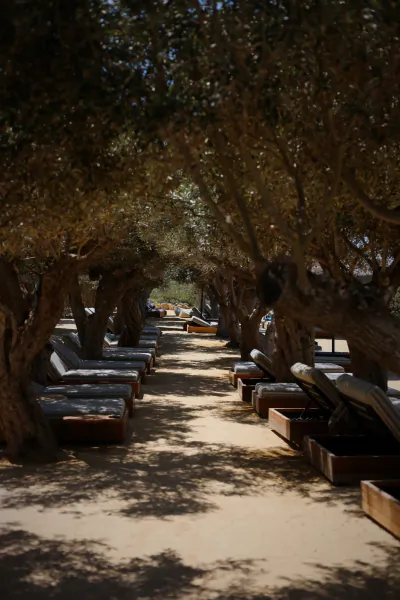
Dinner that night was at Kohili, the Mediterranean restaurant that sits below the main resort closer to the water — tables outside under centuries-old olive trees, a DJ who understood what the evening required, a Niçoise salad and a glass of something cold and the sea directly in front of me. The atmosphere was warm and easy and genuinely alive, which is harder to manufacture than it sounds and which Cap St Georges, by that point in the stay, had stopped surprising me with.
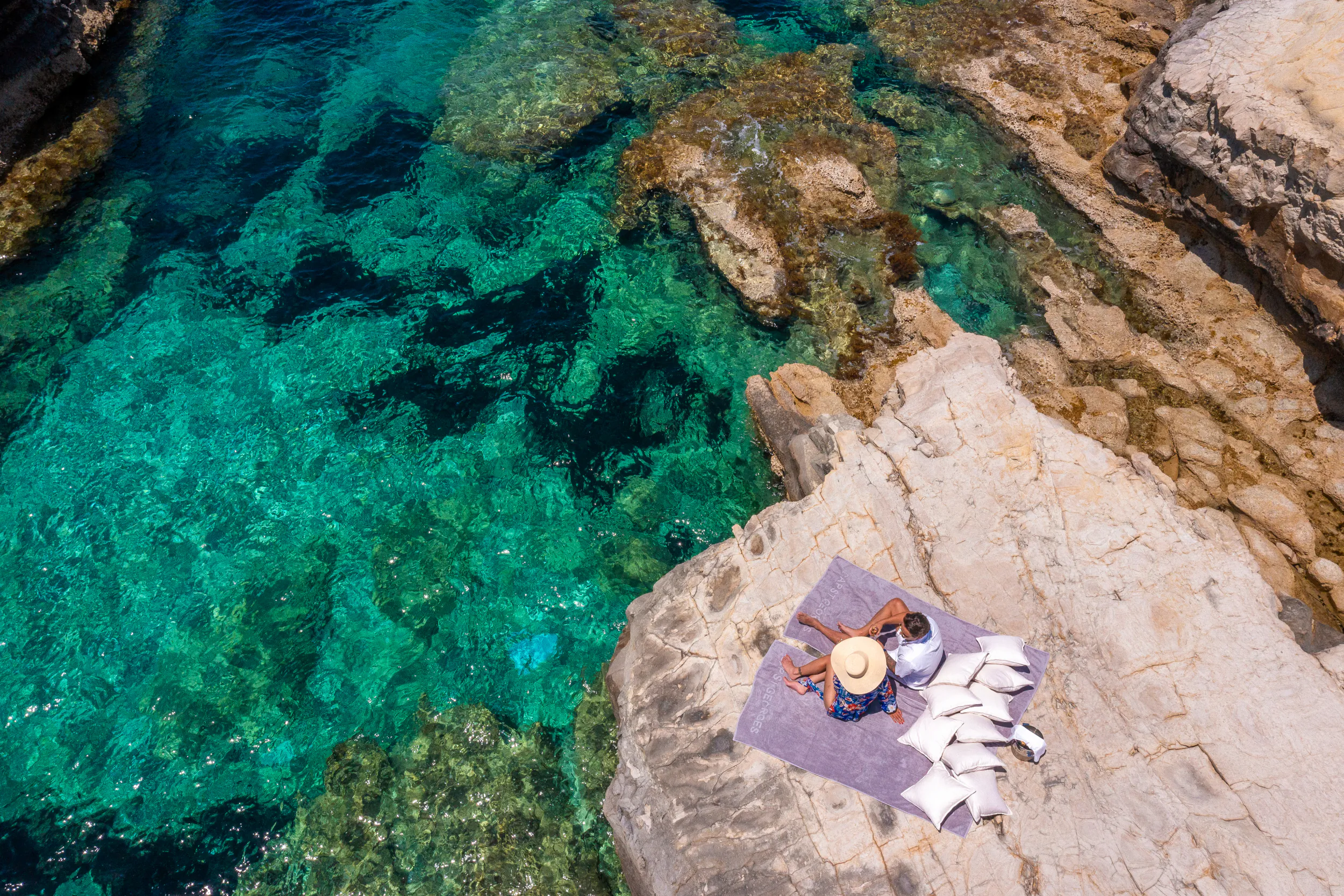
The next morning I walked the clifftop path above Kafizis Beach. The resort’s Blue Flag-certified beach sits below, water so clear it seems almost unfair — turquoise to deep blue within metres, the rock visible straight through to the bottom. Below the path, cut into the cliff face, the sea caves. Standing looking down at them, the Mediterranean monk seal story came into focus. Fewer than 600 of these animals remain in the wild globally — a number that is difficult to sit with when you’re looking at the place where some of them actually live. Solar-powered cameras have been installed inside those caves to monitor the seals at night without disturbing them, allowing the population to be tracked while keeping human impact to a minimum. Fishing restrictions during breeding season mean the seals can raise their pups without unnecessary disturbance. Last year, at a conference hosted at the resort, a rehabilitated Mediterranean monk seal named Panagis was released back into the waters of the Akamas — a small but significant marker of what sustained, genuinely committed conservation work can achieve.
The Green Key certification the resort holds is the internationally recognised standard for environmentally responsible hospitality, and the operation behind it is serious: solar panels heating water across the property, an EV fleet running on-site, LED motion sensors throughout, a comprehensive single-use plastic programme, the Perivoli supplying the kitchens, local farmers filling the gaps. It sits on the boundary of a Natura 2000 protected zone with monk seals in the caves below and the Akamas stretching away to the north, and it has built itself accordingly. Four years old, still finding its edges in some ways, already one of the most considered resorts on this coastline.
There’s a particular kind of travel that I find increasingly hard to justify — the kind where the place feels interchangeable with twenty others, where nobody you speak to seems particularly connected to where they are. Cap St Georges is the opposite of that. The stone it’s built from, the garden feeding the kitchen, the team whose backgrounds reflect the layered history of the island, the person standing on a clifftop talking about monk seals not because it’s on the itinerary but because they actually care. On the western edge of Cyprus, on the boundary of the last wild stretch of this island, that turns out to matter quite a lot.
Written for Luxuria Lifestyle International by Emma Blunt