Luxuria experiences Safari at 18 On The Hill, Greater Kruger
We found her in the road before we found her.
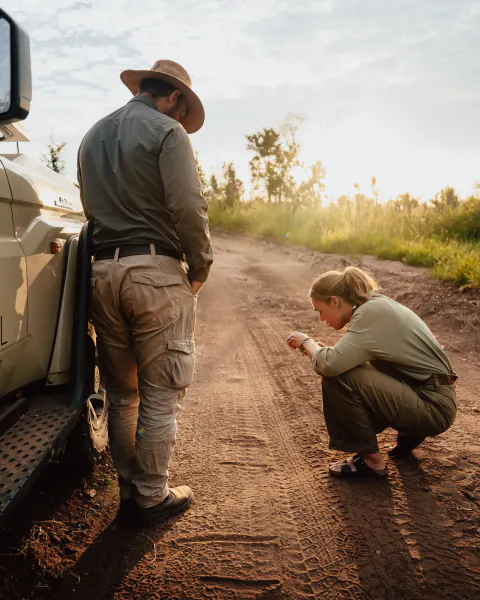
Not the leopard herself — she would stay invisible, as leopards tend to, and as leopards are entirely entitled to — but the story of her: two prints pressed into the red Limpopo dust, clean-edged, unhurried, the size of a spread hand. Dan (Head Guide at 18 On The Hill) was out of the vehicle before I’d properly registered what we’d stopped for. He crouched low, traced the outline without touching it, and looked up the track ahead with the expression of someone reading a sentence they haven’t quite finished yet.
“She came through here maybe an hour ago. Moving slowly. Not hunting.”
We followed the prints for perhaps 20 minutes, until the grass thickened and the trail dissolved into nothing. She was somewhere in there — watching, or not watching, entirely indifferent to our interest. We didn’t find her (not yet!). Dan noted this without apology, which felt correct. She found us that evening instead — just eyes in the dark of a bush, amber and still, before the rest of her slowly became visible.
“The bush is always telling a story,” he said. “Your job is to learn to read it — not to demand a particular ending.”
By the time we got back to camp for breakfast that first morning, I could identify the difference between a leopard’s print and a lion’s. Leopards retract their claws, so the pads sit clean in the dust without the claw marks above. I had also become what Dan cheerfully described as a ‘scat professor’ — better, if I’m honest, at identifying animal dung than tracks, which was not the safari skill I had anticipated developing, but which is apparently both legitimate and useful. Dan seemed genuinely pleased about this.
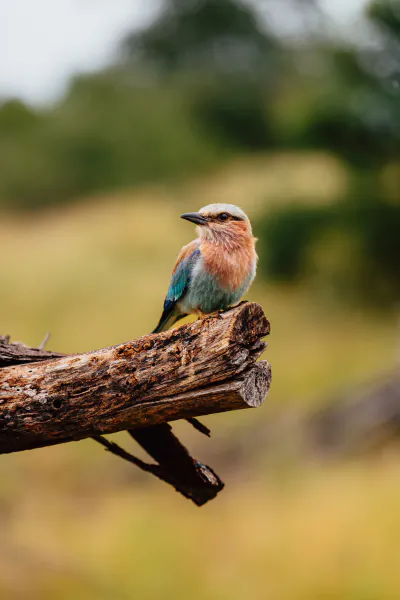
He stops the vehicle for things most guides drive past. A dung beetle navigating a crack in the road. A feather on the verge — which he picked up, turned in his fingers, and used to tell us which bird had passed and what it had been doing, a whole small story reconstructed from a single grey quill lying in the dust. A marula tree worth pulling over for: he picked up a fallen fruit and showed us how to eat it, sweet-sour and tangy, tasting of the specific afternoon it came from. I would have driven straight past all of it. It is partly Dan, and all the guides at 18 On The Hill, who have the rare ability to make every guest feel like the bush is revealing itself specifically to them, while also making it clear that the bush couldn’t care less about any of us — which is somehow both humbling and wonderful. Three days with him and the bush gets louder.
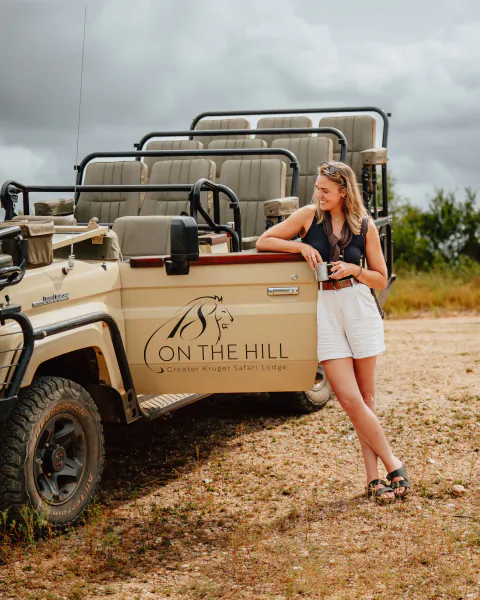
18 On The Hill sits in the Maseke Game Reserve, within the broader Balule Nature Reserve — which shares its unfenced borders with Kruger, meaning the animals cross freely and the distinction between managed reserve and national park is, for the wildlife at least, largely theoretical. The lodge opened in August 2025: nine luxury tented suites, and an upcoming villa, spread across a hillside with views that reach, on a clear afternoon, all the way to the Drakensberg. It holds three of Maseke’s 30 traverse leases, giving it vehicle access across a significant stretch of terrain, including an additional 1400 hectares of riverfront traverse where the Olifants River flows.
The name carries more than its origins. The vision was nine suites for 18 guests, on a hill — but in Hebrew, 18 also means life, and owners Ari Yuter, Jesse and Devorah (Dev) Lemmer will tell you they have come to think of it that way: the lodge as a celebration of exactly that. The conservation levy paid to Maseke is folded into the guest rate rather than itemised at checkout, because they decided early on that conservation shouldn’t read as a surcharge on top of the experience. It is the experience. The game is there because the land is protected. The land is protected because the levy gets paid. The lodge also contributes to Balule’s broader conservation work — rhino anti-poaching, ecology, the protection of endangered species — without making any of it a talking point. That restraint is its own kind of statement.
The reserve sits within a broader patchwork of community-leased land forming one of the most significant wildlife corridors in southern Africa. Maseke operates under a 50-year community lease structure, meaning the surrounding community earns income from the land annually — and the lodges within it, 18 On The Hill among them, contribute through levies that go back into conservation management and community benefit. It is a model that works when the people operating within it take it seriously. Here, they do.
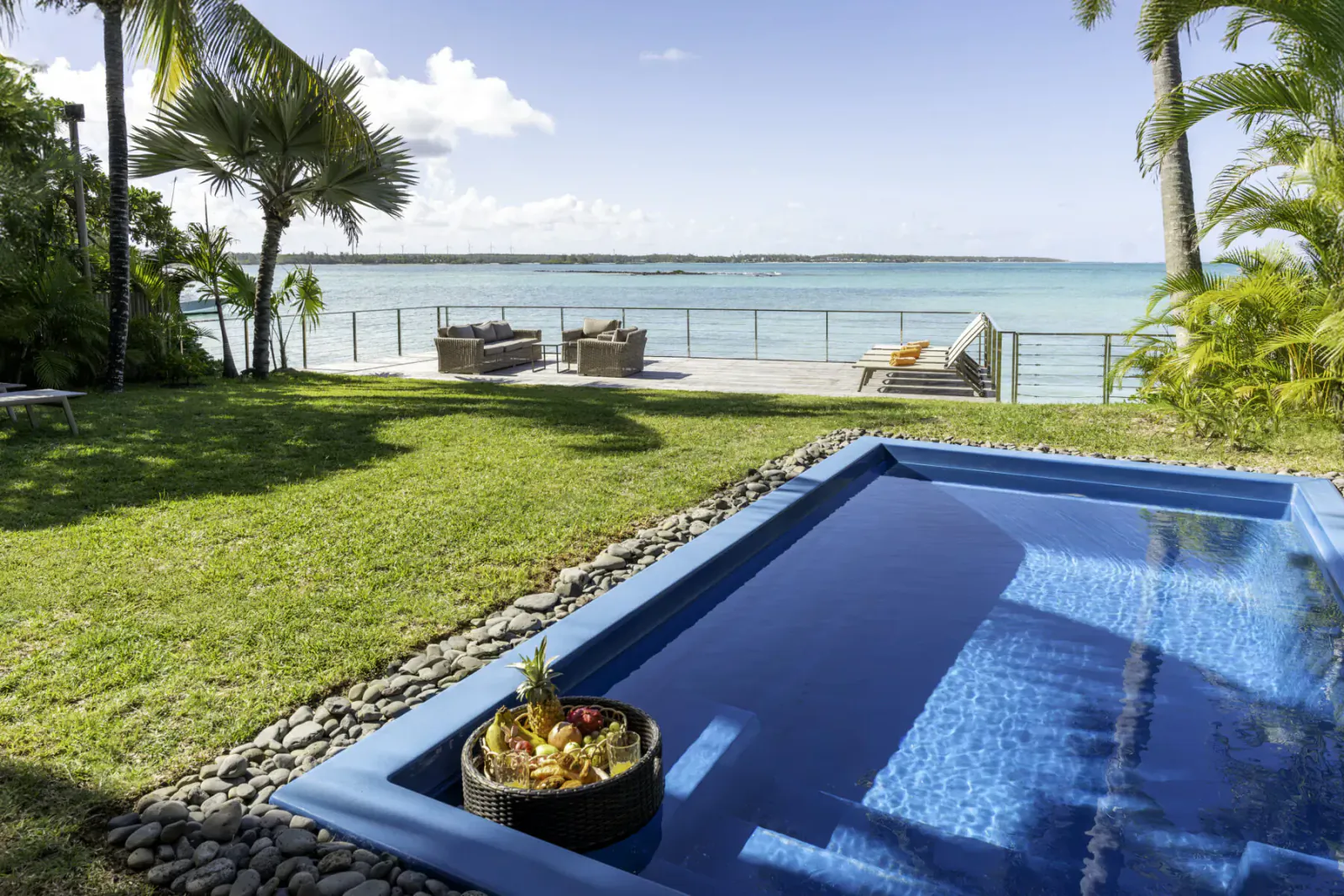
Each tent is named after the tree outside it, and the tree doesn’t just lend the name — it lends the room its identity. Our tent was Marula: leaf pattern behind the bed, bark-referencing tiles in the bathroom, a terracotta-and-green palette running through everything without becoming insistent about it. Outside, an outdoor shower open to the bush and a private plunge pool that made the midday heat not just bearable but something to look forward to — still warm from the morning drive, slightly salty from the sun, a cold drink arriving without having to ask. The personalised water bottles waiting on arrival. Nothing accidental. Someone had made careful decisions here, and that someone was Dev, who fought for the green tiles against resistance from several directions and won. She was right. The tiles are perfect.
Their path to this particular hill is the kind of story that makes more sense in retrospect than it sounds in the telling. A travel company started during COVID, two years of visiting lodges on site inspections with a question running quietly in the background — if we ever did this ourselves, what would we actually do differently? — and eventually, the courage to find out. The lion in the lodge’s logo was chosen with longer ambitions in mind: something that could grow with them, adapt to new contexts, carry the same identity if the vision one day extends beyond this particular hill. That longer thinking is present in everything from the branding to the building.
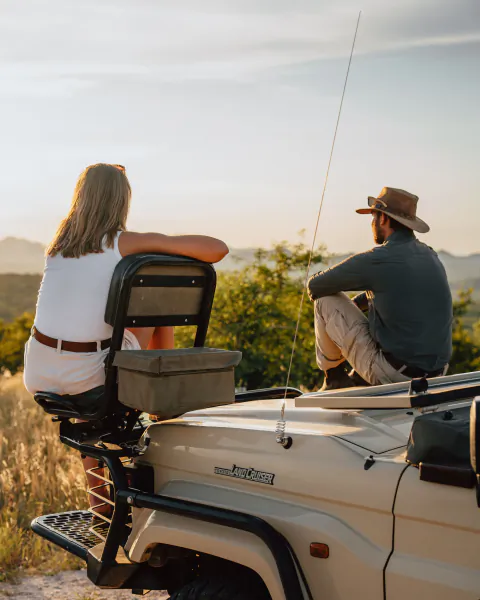
The property on the hill came later. They stood on the bonnet of a car to see over the bush — there was nothing there yet, just thick vegetation and the idea of it — and found, at the highest point by a tree, a view that made the whole thing feel like the obvious answer to a question they’d been carrying for years. That was the spot. That was where the main area would go, and the pool, and the deck. It wasn’t meant to get as big as it did. But here they are.
What 18 On The Hill has that is harder to describe in the language of a safari feature is the feeling of its people — and specifically, the feeling of people who chose this place before they knew how it would turn out.
Many of the team were here before the lodge was finished. Some helped build it — arrived before there were guests, before there were reviews, before the air conditioning was reliably working. They hold a piece of it in a way that cannot be manufactured after the fact. Jesse is deliberate about this: people are hired for fit and character alongside experience, with the belief that the right person in the right place will grow into something extraordinary — and that getting that first call right matters more than any CV.
It shows — not in any single moment you could point to, but in the accumulation of them. In the way Nikita the Manager moves through the space, always a step ahead of what you need, and never performing it. In the way the team gathers at the vehicle when you return from a drive, drinks already poured, genuinely interested in what the bush gave you. On our first morning, a trainee guide rode with us — learning the same ground Dan knows by muscle memory, beginning to build the same fluency. In the Ranger’s Coffee that appears on every morning drive — coffee and hot chocolate with an Amarula pour that Dan describes as generous and that I would describe as a policy decision. He is reliably heavy-handed. No complaints from me.
Lucky the chef came to the lodge from Hoedspruit with a reputation significant enough that when word got out he was leaving his previous job, the local Facebook community group mourned his departure in a post that gathered hundreds of responses before Dev replied publicly: don’t worry, we’ll take good care of him. He’s coming to our lodge. There is something in that story — in the loyalty it reflects, and in the instinct of owners who saw it and understood what it meant — that captures what 18 On The Hill is trying to be. The team, from the chefs to the guides to the people who remembered my tea order before I’d asked twice, seem to understand that they are not working at this lodge. They are, in some meaningful sense, part of it.
“We call it love on the hill,” Jesse says when asked how to describe the feeling among the team. I think that’s about right, with no elaboration needed.
The lodge has a pink cap tradition: whoever does something silly wears it for the day. Dan wore it on the last evening because he’d put his name tag on upside down earlier in the morning (to be fair – it was a 4.30 am start). He carried it off with real dignity and just enough self-awareness to make it funnier than if he’d fully owned it. It is a small, specific, entirely unteachable thing — and it tells you more about this place than any amount of description.
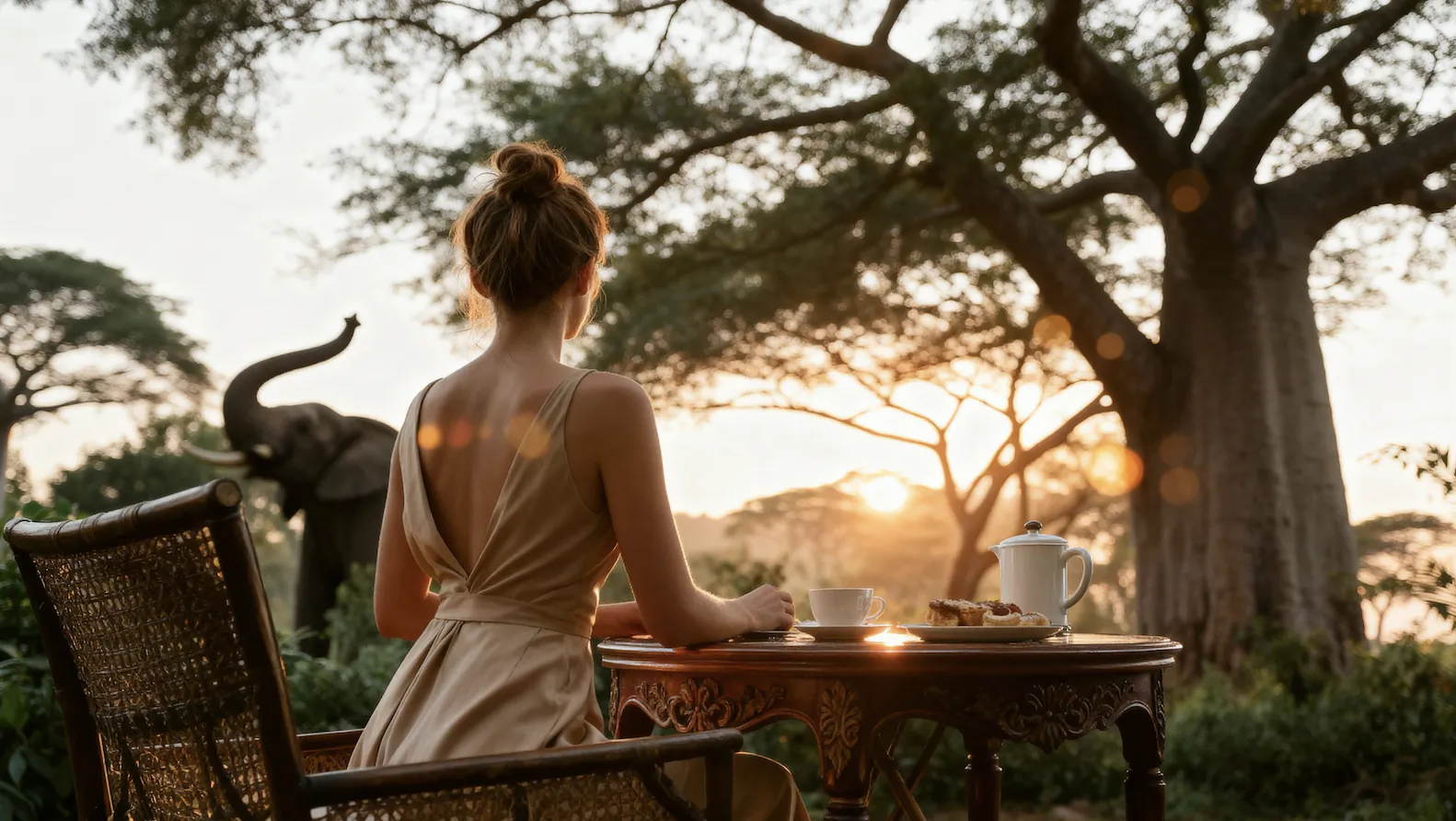
The main pool overlooks the bush in a way that makes it hard to leave. One afternoon, Savanna cider in hand – cold, light, tasting of exactly the hour it is – I sat on the edge and watched the land roll out below in the heat — the undulating hills of Maseke, the haze over the distant treeline, the particular stillness of the bush in the middle of the day when the animals have found their shade and the light has gone flat and white. You feel the scale of what you’re sitting inside. Then lunch was ready, and we went in for it, and the food was as good as everything else.
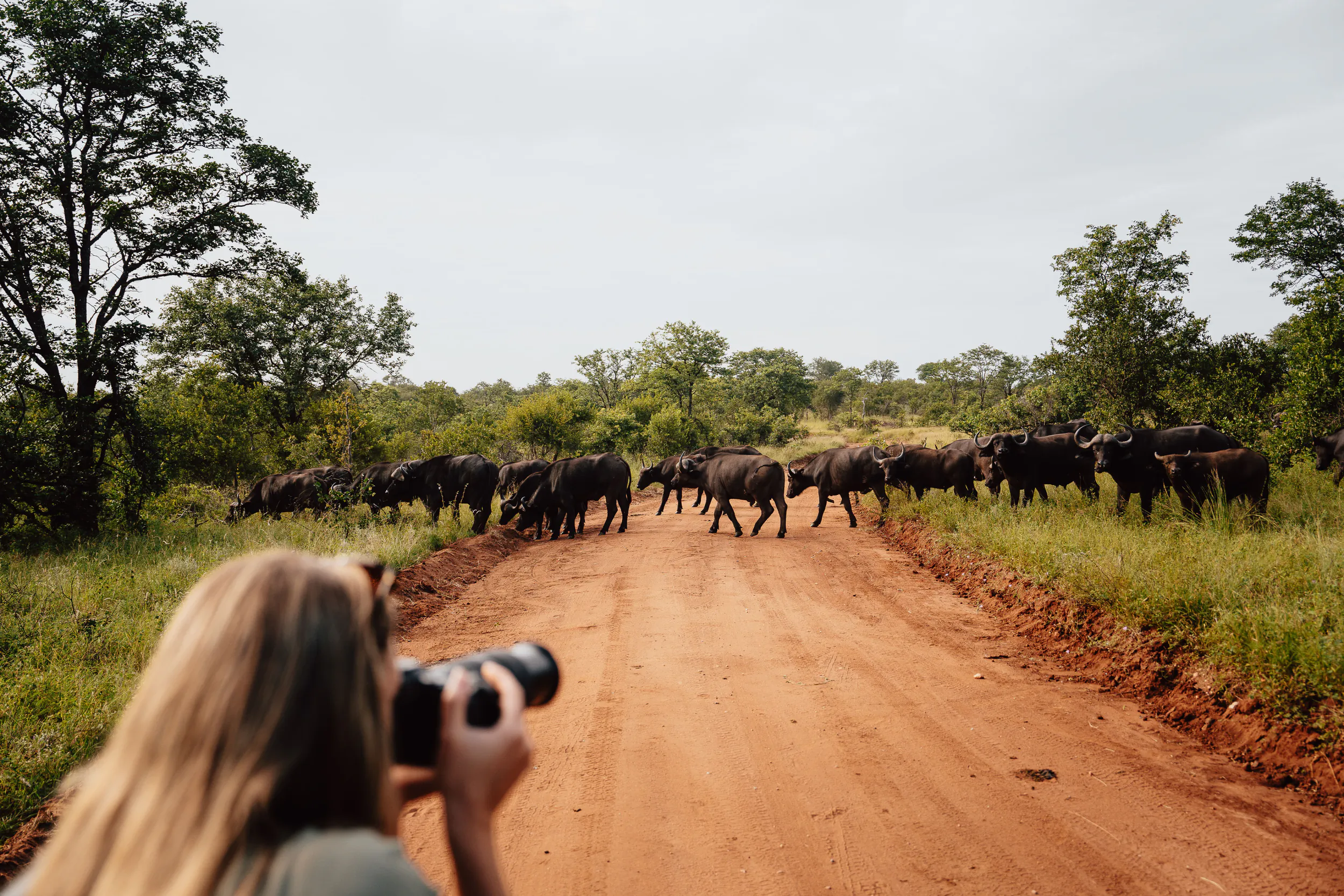
The buffalo came on the second afternoon in the kind of golden light that makes the bush look like it was composed rather than discovered. First a handful crossing the road, then more, then the realisation that the bush on both sides was full of black shapes moving in one direction — and they just kept coming. Dust rising slowly from a hundred sets of hooves. The old bulls bringing up the rear with the battered, unhurried authority of things that have absorbed every season this landscape has thrown at them and are still here. We sat in complete stillness. Nobody spoke. Dan watched with the quiet pleasure of someone who has never, he says, got used to it. He said it again now. “It never gets old. It never does.”
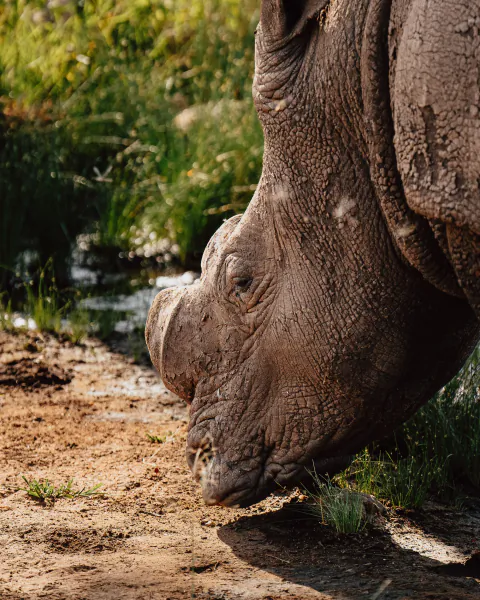
A little later, a rhino at a waterhole — standing in the same golden wash of afternoon light, perfectly composed, and visibly, deeply irritated by the oxpeckers cleaning his ears. He bore it with the dignity of someone who has tolerated this indignity many times before and has accepted that it will not stop. The image was so precisely arranged it looked staged. It was not staged. He was just that annoyed by the birds.
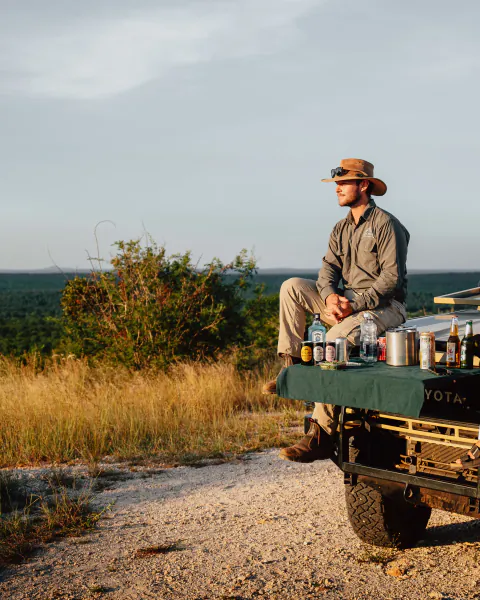
On the third afternoon, we found a hilltop with the Drakensberg just visible in the distance and the kind of light that makes you want to stay until it’s completely gone. Savanna first — always Savanna first — then gin. The sundowner ritual of safari: drinks cold, the bush going amber around you, the day loosening into something unhurried. Dan had just poured a second round when he set the bottle down and said, with the complete calm of someone noting a change in weather: “We must go.”
He’d heard it before I had. A lion, in the middle distance.
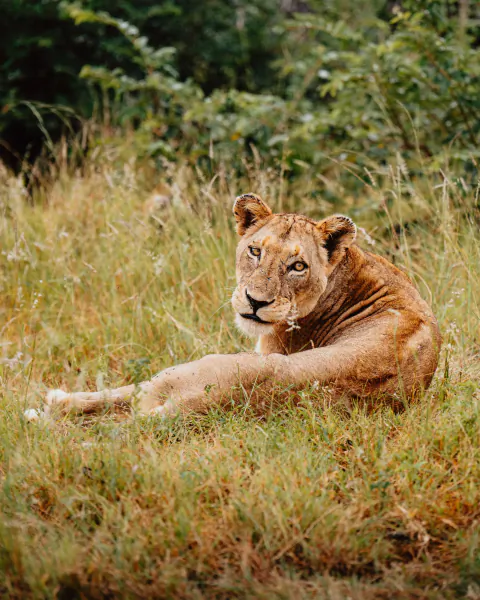
We got back in the vehicle with our drinks still in hand — pragmatically sensible, genuinely thrilling — and drove into the deepening bush trying not to spill our G&Ts while also projecting some semblance of composure. We did not fully succeed on either count. The bush tightened around the headlights. We found where she had been, which Dan read from the ground and the flattened grass with the patience of someone who has made his peace with the difference between what you ask the bush for and what it decides to give you. We drove back in the dark, talking and laughing. The next morning, two females — stretched out in the early light, entirely unbothered — gave us what the night hadn’t.
The bush gave what it gave — a leopard missed but then later found, a lion heard and then properly seen, a hundred buffalo in golden light, a rhino stoic under the weight of irritating birds, a feather that told a whole story, the Ranger’s Coffee still warm in your hands as the sun comes up over Maseke, a marula fruit that tasted of the afternoon it came from — and none of it arrived on demand. It arrived because we were paying attention. Because someone had spent three days teaching us how.
This was a recalibration of how I hold my days on safari – less scanning for what wasn’t there, more sitting with what was. It’s not the sightings, not the sundowners, not even the lion in the dark — though I’ll be honest, the gin helped. It is the specific, quiet pleasure of having learned to read something you didn’t know was legible. Of having stopped, for once, at the right moment. Of having been, for three days on a hill in the Greater Kruger, exactly where you were.
Written by Emma Blunt
Image credits: Lochie Fuller Photography on socials @lochie.shoots