What Modern Research Says About Dental Anxiety Treatment
Everybody has their own fears and phobias, but you’d be surprised that dental anxiety is quite common and affects hundreds, if not thousands, of people worldwide. Oftentimes, the mere sound of a dental drill is enough for them to reschedule or, worse, ditch their dental appointments altogether. Although some experience mild nervousness before their checkup, others have it worse to the point that they avoid dental care for decades. Thankfully, dental care has significantly improved over the years. We’ve come a long way from simply telling patients to “relax” in the dental chair, since we now have evidence-based strategies that rewire our experience. Now, we’ve got top-of-the-line tech distractions and tailored psychological tools to help make your next dental appointment worry-free and manageable.
Understanding dental anxiety: why do we get so anxious?
Believe it or not, dental anxiety isn’t always about fear of pain or the dentist, for that matter; it’s actually deeply rooted in two psychological triggers, namely unpredictability and loss of control.
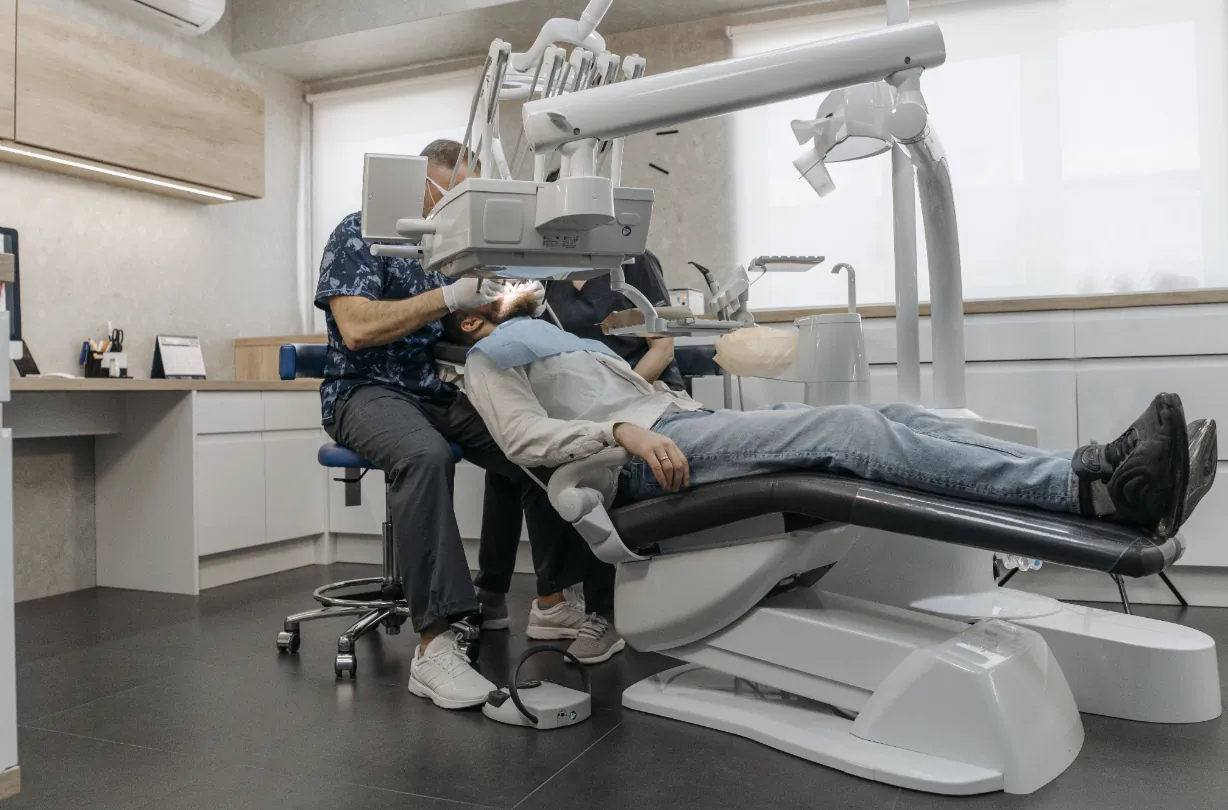
It’s pretty understandable, because think of it this way: you lie down flat in the dental chair, and suddenly, everything is up to the dentist. You have no idea what they’re doing, and you’re in no position to speak up. This feeling of vulnerability activates your body’s “fight-or-flight” response, increasing your heart rate and making your brain highly alert.
When severe anxiety or patients who need extensive dental work require more than the usual laughing gas or oral sedation, this is where sedation dentistry steps in. Administered intravenously by a qualified anaesthetist, it puts the patient in a relaxed twilight state. This way, the patient remains conscious but won’t even remember the treatment once it’s over. Per Australian and New Zealand College of Anaesthetists guidelines, IV sedation should only be done by certified practitioners in a properly equipped facility, which is why it’s important to check your provider’s credentials before booking. Most importantly, this approach condenses what would have been six or seven separate appointments into a single visit, allowing you to get the work done rather than delay it for years. Afterwards, you just need a ride home and a few good hours of rest, with most patients usually describing the experience as similar to a long, relaxing nap.
What does science say about the latest treatments?
Lucky for us, modern treatments are guaranteed to work because they help restore a patient’s sense of control, thereby lowering the brain’s alarm system. Plus, today’s clinical trials and systematic reviews have steered toward combining smart technology, psychological techniques, and targeted comfort measures.
The Gold Standard: Cognitive Behavioural Therapy (CBT)
If you’ve been suffering from dental anxiety for a while now and have almost every mental health awareness tip to address it but to no success, then it’s time to consider undergoing cognitive behavioural therapy (CBT). Highly considered as one of the most effective long-term solutions for dental anxiety, CBT helps patients identify negative thought patterns and replace them with sensible expectations.
Through this method, the root of your dental anxiety is addressed through gradual exposure. You may start by just sitting in the dental chair, listening to the equipment, before you gradually progress to the actual procedures done. It may sound simple enough, but studies show how CBT allows patients who have been so terrified of dentists to finally receive dental care they’ve been avoiding, providing lasting relief without relying on heavy sedation.
Utilising virtual reality and distraction through immersive technology
On top of cognitive behavioural therapy, modern researchers have also discovered that high-engagement distraction also works to help address a patient’s anxiety.
Now, there are virtual reality (VR) headsets offered in select clinics after clinical trials show that patients wearing this equipment during procedures experience lower subjective anxiety and physiological stress. The VR headsets show them a calming scenery, such as exploring the ocean or taking a stroll through the forest, distracting them from the actual procedure.
On top of VR headsets, there are those who also use noise-cancelling headphones paired with preferred music. This audio-visual distraction is also proven to lower a patient’s stress and anxiety, since it masks uncomfortable sensory triggers. Similar to VR headsets, the clinic uses curated music to play, and some even use certain TV shows as another option.
Incorporating patient control systems
Another wonderful result of extensive research for patient care is the introduction of patient control systems. Studies indicate that a patient’s physiological stress significantly drops whenever they can stop a procedure at any given time. As such, modern dentists have taken it upon themselves to use explicit signalling protocols like the “hand raise” rule. As the name suggests, this is a simple pre-procedure signal wherein the patient raises either of their hands, informing the dentist to stop the procedure immediately. Additionally, there’s also the “tell-do-show” method wherein the dentist will explain what will happen and show the equipment used for the procedure before performing it. This way, the element of surprise – one of the roots of dental anxiety – is eliminated.
Using AI-guided pre-care and preparation
Artificial intelligence (AI) has also contributed to the continuing improvement of dental care. Studies reveal that when a patient learns what to expect through interactive digital guides before their appointment, it decreases their anxiety.
Simple tips you can use for your next dental visit
If you have a scheduled dental appointment soon and your nerves are getting the better of you, here are a few simple tips you can do to ease your worry.
Be open about your fear. For things like these, it’s better to come clean and open up about your dental anxiety to the dental clinic. By exercising open communication, you are building trust with your dental care provider, and they will, in turn, match your pace to tailor to your needs.
Set a “stop” signal. It’s also important to establish a nonverbal cue with your dentist before the procedure, so you can retain control of the situation.
Bring your own audio. Bringing your own headset equipped with your favourite playlist, if not your noise-cancelling headphones, can help block out the clinic noise so you won’t get triggered.
Practice box breathing. Box breathing, wherein you inhale, hold, and exhale for four seconds each, is a proven way to lower your heart rate. This deep-breathing exercise counteracts your fight-or-flight hormones, so you can remain calm.
All in all, modern dental care has progressed tremendously over the last few decades, so no patient has to grin and bear it alone. Matching modern technology with transparent care in today’s dental practice is a sure way to provide a calmer and less stressful experience for patients.