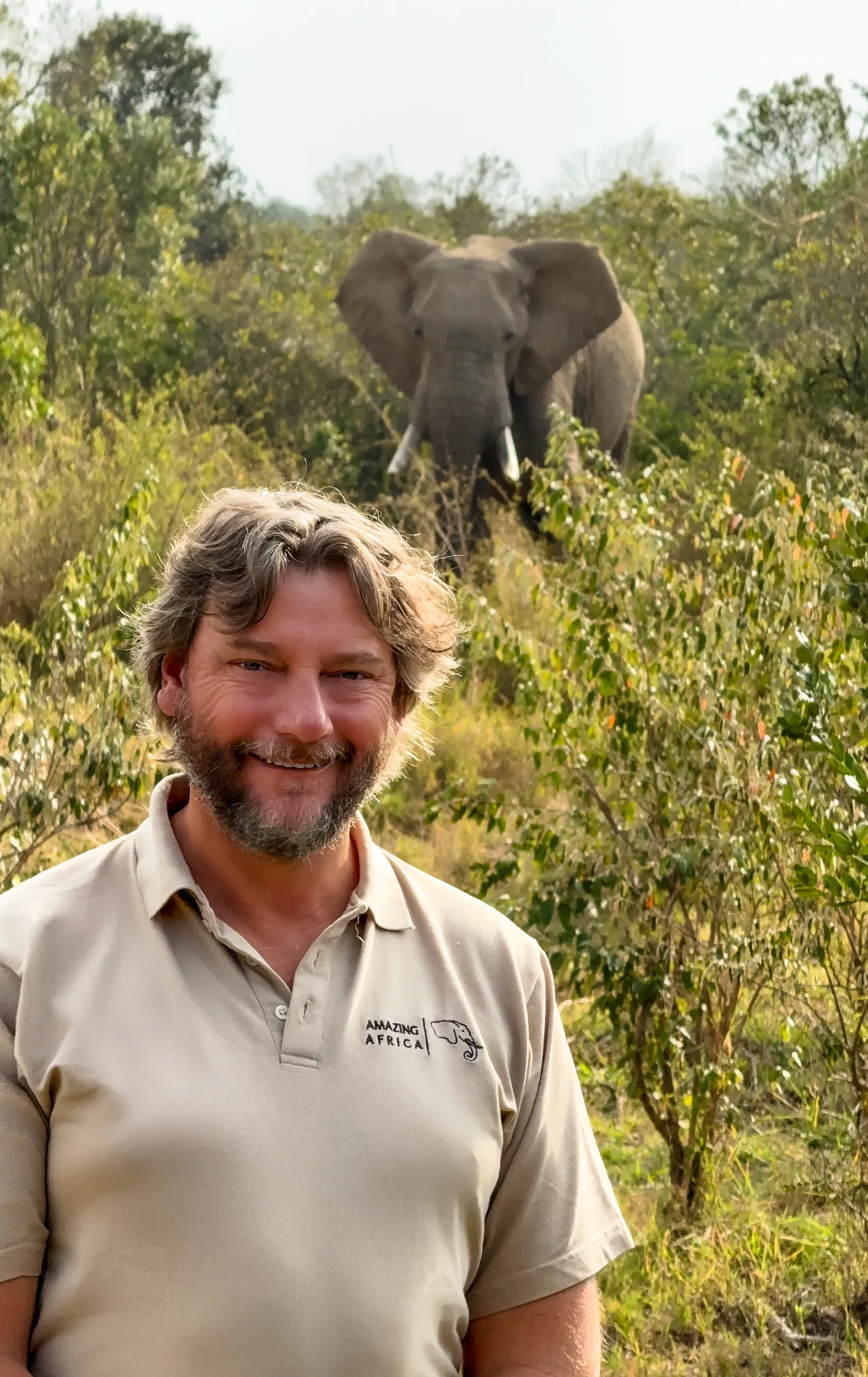
Luxuria Lifestyle interviews Geoff Mayes of Amazing Laikipia Camp
Geoff Mayes, owner of Amazing Laikipia Camp, is creating a different kind of safari experience, one where luxury, wilderness and genuine responsibility go hand in hand. At this incredible safari camp, this family-run camp puts conservation, community, staff welfare and sustainability at the heart of tourism.
Let’s dig deeper and find out what makes Geoff tick:
What first inspired you to create Amazing Laikipia Camp, and what did you want to do differently from a conventional safari lodge?
During COVID, my team and I found ourselves jobless, and rather than submit my CV and look for another position in tourism, my wife and I took a risk and set up our own company, Amazing Kenya Camps. We eventually found ourselves building a safari camp in the Maasai Mara, which was very successful. But we felt that the “give back” to wildlife conservation wasn’t strong enough. When we sold the camp in the Mara in 2025, we specifically targeted private conservancies as our next step. This new camp, Amazing Laikipia Camp, is the fruit of our labours and combines luxury with nature in a very unique way. Between using solar power, sustainably sourced building materials, locally grown produce for the kitchen and recycling and upcycling materials across camp, we really are trying to be as eco-conscious as we can be, without using this philosophy as a marketing angle.
You describe Amazing Laikipia as an ethical and responsible operation. What does “ethical tourism” mean to you and the team in day-to-day practice?
Across Africa right now, there is an issue with tourists “ticking boxes”, and guides have embraced this negative trend by pushing the boundaries of ethics to a level where the wildlife is being pressured, and a lot of safaris turn into an excursion to see as many animals or species as possible without actually taking the time to observe and be immersed in the amazing landscape around you. At Amazing Laikipia Camp, we work closely with our guides, and the emphasis is on a “slow safari”. This is also why we encourage guests to stay for longer at our camp. This gives you the opportunity to sit and watch a herd of elephants frolicking at a waterhole for an hour or even more, or to slowly and discreetly follow a pride of lions on their morning walk rather than feel the need to rush off to look for something else in fear of “missing out”.
Your team members are not only employees but also profit-sharing shareholders in the business. Why was it important to give your staff a genuine stake in the camp’s success?
Some of our team have been with us for more than 10 years. We’ve gone to their family events; they attended our wedding. They are part of our family now. Giving these team members a sense of ownership encourages them to be more creative with problem-solving and cost-cutting without diminishing or affecting the overall product. This improves efficiency, and these team members feel every success and failure in their own pocket. Since rolling out this exciting new scheme, we have seen breakages and damages around camp vastly reduced and, at the same time, staff productivity has improved immensely.
Amazing Laikipia sits within the 33,000-acre Ol Maisor Wilderness Area. How does operating in such a huge, open wilderness change the way you think about conservation and the guest experience?
Amazing Laikipia Camp is the first safari camp to be built on Ol Maisor. As an active cattle ranch with agricultural projects as well, wildlife, whilst plentiful, can be a rather destructive nuisance at times. Now, with tourism on the property, the lions, elephants and multiple other species are effectively paying back the landowners for damage caused through tourism revenue. Being involved in this evolution from the very beginning is very exciting. From a guest experience point of view, seeing and understanding the challenges that human-wildlife conflict offers (and sometimes being able to suggest unique ways of handling this) is part of the immersive experience. And the luxury of having incredible wildlife sightings all to yourself is truly magical.
What are you doing to lessen the camp’s footprint, and where do you still think there is room for improvement?
The biggest challenge with any sort of accommodation or tourism facility is recycling of waste. At Amazing Laikipia Camp, we have already removed single-use plastic water bottles from our camp. We have numerous water stations all through the camp, and every guest is given their very own aluminium water bottle upon arrival. Simply by removing the small single-use water bottles, we have reduced our footprint by over 1000 water bottles a month!!! But between ourselves as a camp, and our government, there is so much more that can easily be done. As a camp, we are already exploring the use of electric safari vehicles, but the cost of this method of safari is currently more than 30% more than using a conventional internal combustion engine safari car.
How important is the relationship between the camp and the local communities, and how do you make sure that tourism creates benefits for people living within wildlife?
Incorporating the local communities into our camp business model is very important to us. When building the camp, we hired local community members. We have already engaged with the community for essential and easy-to-grow vegetable products and will soon be initiating a beehive project. Many of our guests want to help, and we have an active project already ongoing with a local clinic and school; once donors have been found, we will implement a scholarship program. We do need to be careful that any project we initiate is able to be sustained, and this is always tricky, and donations and camp funds for these projects are not always guaranteed.
Your approach includes sourcing local produce and growing some of your own herbs and vegetables. How do you combine sustainability with the needs of a luxury safari guest?
“From farm to table” has become a catchphrase that we fully endorse. Of course, it is important that quality is maintained, but in Kenya, it is easy to grow organically, and with these farming methods, we are always assured that all meals that we prepare are full of flavour!
What have you learned from running your previous safari operations that has influenced the way you have managed Amazing Laikipia Camp?
Amazing Laikipia Camp is now the fourth camp that we have built. And with each new project, you are able to learn from your mistakes or to refine an idea. Starting from a completely blank canvas is both exciting and daunting. We have refined how the camp layout affects both the guest and staff experience – the camp design allows staff to easily get around to clean and prep rooms, whilst ensuring guests have privacy and the ability to relax when in camp. The biggest refinements have actually been behind the scenes. We have worked heavily on our kitchen design to make it more comfortable for our chefs, and our staff area was a key design area to ensure that our staff were able to be both comfortable and safe in an unfenced camp.
Looking ahead, how do you see Amazing Laikipia Camp evolving in terms of business, and for the wildlife, the landscape, the team and the local community?
We do hope that the trend with international and regional tourists will move back towards appreciating the whole safari experience, and as that happens, then products such as ours will become more sought after. We are already working with the ranch to enhance the safari experience, building more water points for wildlife, expanding the road network, and a hide and fly camp is already being planned for 2027.
W: Amazing Laikipia Camp
E: Reservations: Amazing Kenya Camps
Social media
Facebook @amazingkenyacamps
Instagram @amazinglaikipiacamp