Hotel Du Vin Poole History: The Very Beginning
The wealth of Poole in the 18th and early 19th centuries came from the profits of the Newfoundland trade. Poole merchants organised the fishing for cod off Newfoundland and sold vast quantities in the countries bordering the Mediterranean. This trade had begun for Poole as early as 1551, but it was not until the 1720’s that it started its greatest period of prosperity. One of the leading families in the trade in the 18th century was the Lesters.
Issac Lester (1718-1778), a shrewd, industrious but sharp-tongued man, took charge of the family’s interest in the Poole end of the Newfoundland trade. His younger brother, Benjamin, spent much of his time in Newfoundland, supervising the fishing, the drying of the codfish, and its dispatch to the European markets. Issac lived in a small house in Thames Street, but by the 1770’s he found this too cramped for a man of his standing in the town. He played a leading role in town politics, and when important men, like Charles James Fox, the famous politician, came to call on him, he wanted to entertain them in something better than what he called “this old hut.”
By 1776 he was able to start building his new house – The Mansion House. He brought the house next door to his existing house and commissioned a Poole builder, John Swetland, to pull it down and replace it with a much grander building. By March 1777 the scaffolding had been erected, and Issac was able to clamber up it to see the view from the top. Cartloads of bricks – as many as 1100 in one consignment were brought over from Lymmington, and craftsmen from other Dorset towns were employed in the work. A Mr Carpenter came from Blandford to build the new ‘chamber ‘, and its chimney under Issac’s watch full eye. Issac blamed two of his rivals amongst the Poole merchants for putting the jury up to making the complaint, but the matter was soon settled. He summoned the Mayor of Thames Street, and since he owed his election to Issac’s, he very readily agreed that the Jury had behaved improperly. A small adjustment to the pavement outside the house ended the dispute.
But as Issac brought new furniture and fittings for his new home, his health was failing, and he was destined never to see the building finished.
He died on the 20th September 1778, just a few weeks before the exterior of the building was completed on the 7th November.
It was left to Benjamin Lester to complete the Mansion House and move into it. He had returned home from Newfoundland for good in 1770 and now took over the family’s business and political interest in Poole. He found time in 1779 not only to get himself elected Mayor but also to finish the house. The corporation Alderman walked across from St. James Church after the mayoral service to take ‘coffy’ with Lester on 1st October – it was very likely the first time guests had been entertained in the Mansion House. Work was continuing in the house. Stonemasons were there in 1780 and may well have been installing the dining club.
Busy to virtually the end of his life with trade and politics, Benjamin Lester died on 25th January 1802 and was carried the short distance across Thames Street to St James Church. He left the Mansion House and control of his business to Garland, but much of his fortune went to his grandson. Benjamin Garland, who now took the name Lester Lester. Garland watched over the trade during the Napoleonic War when the demand for Newfoundland cod reached a new peak.
With the coming of peace after the Battle of Waterloo, the trade slumped, and the wiser Poole merchants like Garland realised that it was unlikely to recover much of its prosperity in the changed conditions of the post-war world. Benjamin Lester, his son, refused to interest himself in the family business. He had become one of the Poole members in 1800 and preferred the life of a gentleman, although he too served a year as Mayor of Poole in 1815. Thus Garland reduced the family interest in the trade and left The Mansion House for one of his country houses, Stone, near Wimborne, and Lesson House near Swanage.
His sons continued to live in the Mansion House: again, in 1824 and 1830 there were celebrations at the house to mark the election of two more of the Garland family as mayors of Poole. But by this time the Newfoundland trade was but a shadow of what it had been. Property values in the town were falling fast. Politicians bickering over parliamentary and municipal reform brought bitter divisions amongst the townspeople. Garland’s children began to find Poole a petty, tedious and depressing place to visit – let alone live in.
They moved out into the country. Benjamin Lester had no further need to live in Poole when he retired from Parliament in 1835 after twenty-eight years’ service. His younger brother, John Bingley Garland, who came home to Poole after serving as the first speaker of the Newfoundland House of Assembly, was the last member of his family to live in the Mansion House. He left it soon after 1836.
Despite the passage of time, there are still many mementoes of the Lesters and the Garlands to be seen in Poole and Dorset. St James Church has a memorial to the Lesters, and the organ (now much rebuilt) was originally presented to the church by Benjamin Lester in 1799.
Poole cemetery (off the Ringwood Road) was presented to the town by J.B Garland in 1854. The gatepost bears the Garland coat of arms and inside is a memorial chapel to the Garlands. One of George Garland’s country houses, Stone House overlooking Wimborne, is still a private house. Leeson House in Langton Matravers, near Swanage, is maintained by the Dorset County Council as a field studies centre. One of the Lester’s country residences still stands at Lychett Minster. This is Post Green, the home of Sir Thomas and Lady Lees.
Portraits of the Lesters and Garlands may be seen in the Guildhall Museum, Poole, together with some of their personal effects like Benjamin Lester’s spectacles. A painting of the Lester’s fishing station at Trinity, Newfoundland, is in the Dorset County Museum, Dorchester.
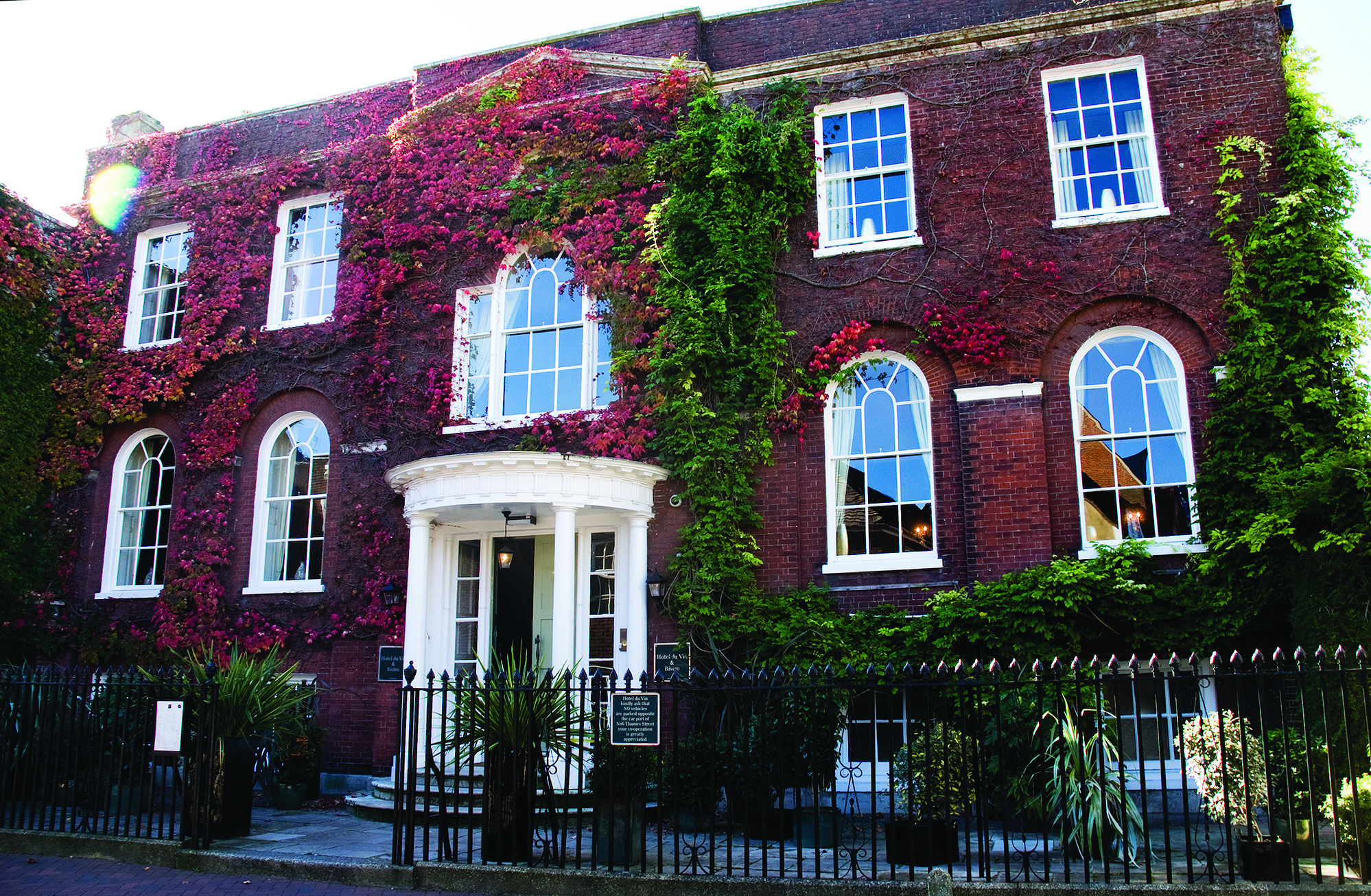
The Mansion House itself must take pride of place, however. After many vicissitudes, including a period during the Second World War when it became a Seaman’s mission, the house has now regained its grandeur and elegance.
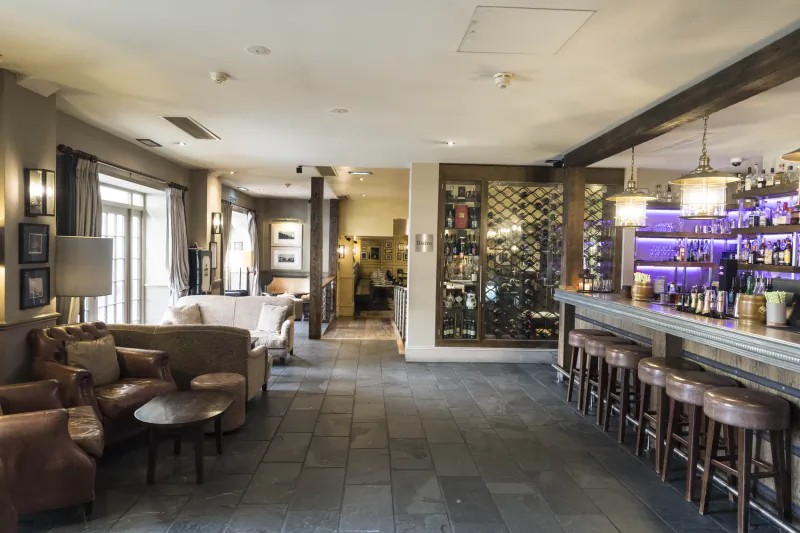
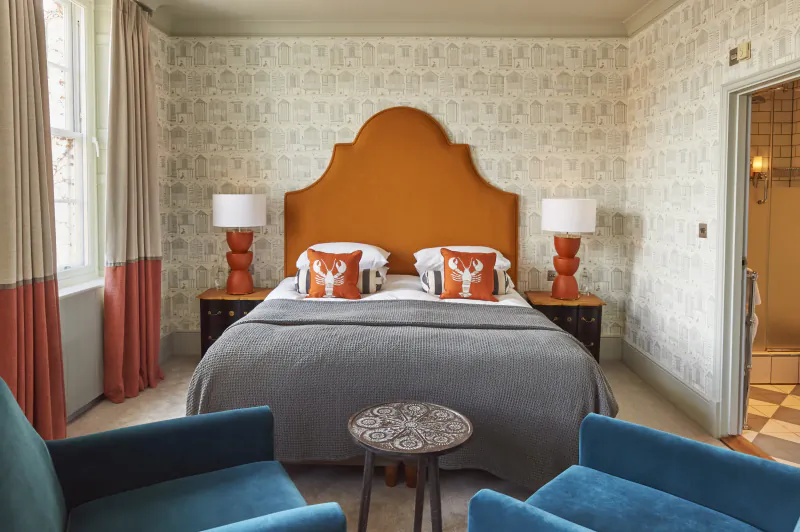
Robert & Val Leonard purchased The Mansion House in 1979; they refurbished The Mansion House into a hotel, which took them many months to clear the restaurant alone. The Mansion House eventually had 32 individually decorated bedrooms, with their own themes. All the bedrooms were named after famous authors, poets and people: for instance, Queen Victoria, Charles Dickens, Emma Hamilton, Lord Byron, to name a few. The Dining club sat to maximum of 90 guests and took on a cruise ship feel, as it had no natural light and had Cherry wood panelling throughout.
The restaurant and service had also been awarded 2 rosettes by the AA. In 2002, Jackie and Gerry Godden brought the Mansion House and carried on with the work they previously built up over the years through their employment by Robert Leonard.
In May 2007, The Mansion House was then acquired by Hotel Du Vin. After 11 months’ refurbishment, the Hotel was ready to open its doors for business once again.
A: Thames Street, The Quay, South West, England BH15 1JN
T: 01202 785570
W: Hotel du Vin Bookings