48-Hour Luxury Weekend Escapes Across the UK
With only 48 hours for a UK escape, the destination must justify the journey. A city with direct rail connections or a rural retreat within a manageable drive leaves more time for private tours, unhurried meals and the accommodation itself. For travellers based in the UK or arriving through a major airport, a well-planned weekend should focus on one compact area instead of attempting to cover an entire region.
From the historic residential squares of central London to the slate sea cliffs of Cornwall, each destination below supports a different kind of two-day escape. Arranging private guides and restaurant reservations in advance leaves enough time for cultural visits or coastal walks without making the weekend feel rushed. This guide sets out the key landmarks, routes and experiences for five well-planned UK getaways.
Exploring Culture and Historic Architecture in Bloomsbury, London
Bloomsbury contains notable examples of neoclassical and Georgian urban planning. Developed from the 17th century onwards, the district has symmetrical garden squares framed by brick terraces, stucco detailing and wrought-iron railings. The location is convenient for travellers staying at a Bloomsbury hotel, with the British Museum on Great Russell Street within easy walking distance. A privately guided morning visit can provide context for the collections in the Enlightenment Gallery.
Farther west, Bedford Square contains residential terraces built between 1775 and 1783 and remains one of London’s best-preserved Georgian squares. Cultural visits can continue at Sir John Soane’s Museum in Lincoln’s Inn Fields, where the architect’s collection of classical antiquities is displayed throughout his former home. Booking is advisable for guided visits and any limited-capacity entry arrangements.
In the evening, visitors can reserve a private dining room along Charlotte Street in Fitzrovia or travel west for a chamber performance at Wigmore Hall. Keeping the itinerary within central London reduces transfer time and leaves enough room for both scheduled visits and an unhurried dinner.
Relaxing in Thermal Waters and Georgian Streets in Bath
Bath sits in the Avon Valley and is known for its natural geothermal springs and honey-coloured Bath stone architecture. Much of the city’s urban layout reflects 18th-century British classical design, shaped by architects John Wood the Elder and John Wood the Younger. The Royal Crescent displays a sweeping Ionic façade overlooking Royal Victoria Park, while the nearby Circus forms a circular enclosure inspired by the Roman Colosseum.
A 48-hour itinerary can include a pre-booked session at a city-centre thermal spa, where an open-air rooftop pool overlooks Bath Abbey. Visitors can also tour the preserved Roman Baths complex, where spring water emerges at around 46°C before flowing through the site. Fine-dining restaurants across the city serve multi-course tasting menus featuring West Country produce, accompanied by regional cider or English sparkling wine.
A walk across Pulteney Bridge, designed by Robert Adam and completed in 1774, provides views of the horseshoe-shaped weir on the River Avon. The short route connects the central shopping streets with the residential area of Bathwick.
Discovering Coastal Trails and Sandy Beaches in Portreath, Cornwall
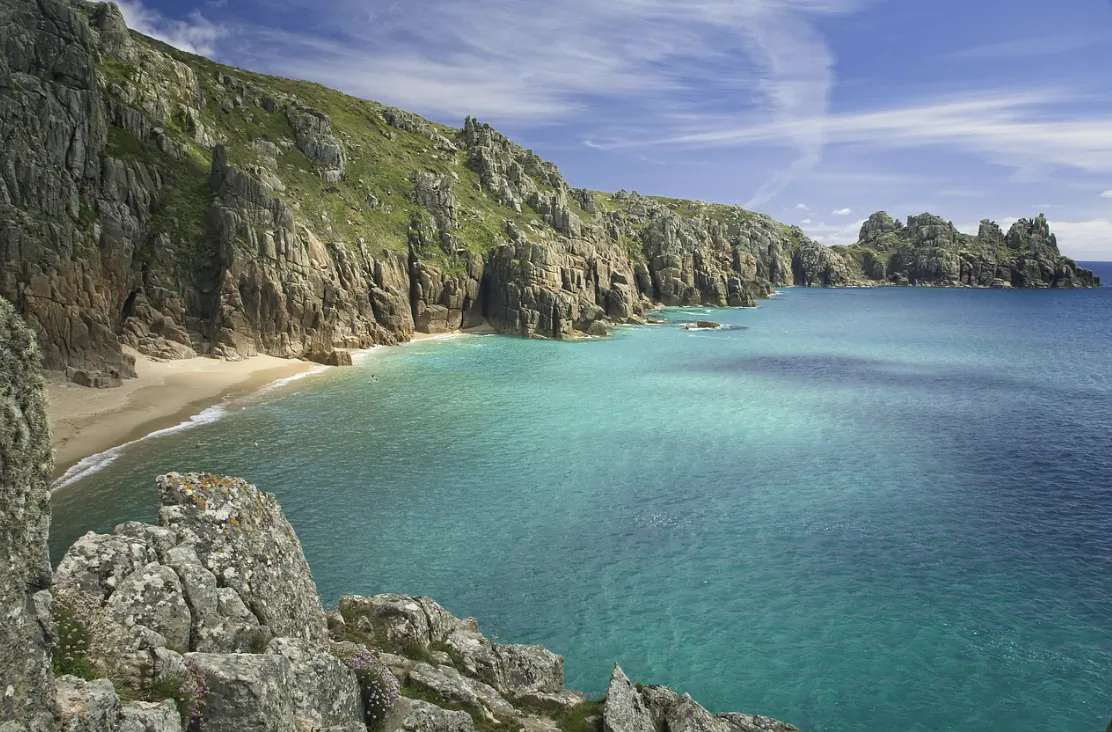
Situated on Cornwall’s north coast, Portreath has an industrial maritime heritage and direct access to the South West Coast Path. The harbour developed as a mining port from 1760, when copper ore from the Camborne and Redruth district was shipped to South Wales for smelting. Historic features include granite harbour basins, jetties, the Pilot’s Lookout and cast-iron capstans.
Walkers can follow the coast path across the slate cliffs towards Basset’s Cove and North Cliffs. A 4.6-mile circular route links this stretch of coast with the woodland trails of Tehidy Country Park, although it includes several steep climbs. Elevated hot tub cottages in the UK can be booked around Portreath, with some self-catering properties overlooking the harbour or Atlantic coast. This allows walkers to stay close to the trail while retaining private outdoor space.
Restaurants in Portreath and nearby coastal towns serve Cornish seafood, including crab, oysters and turbot when available. Some serve these dishes alongside white wines from Cornish vineyards, creating a distinctly regional dinner after the coastal walk.
Experiencing Lake Views and Fine Dining in Windermere, Lake District
Windermere sits within Cumbria’s Lake District National Park, a UNESCO World Heritage Site shaped by glacial ribbon lakes and fell topography. Measuring 10.5 miles in length, Windermere is England’s largest natural lake, surrounded by oak woodland and steep slate hills. Private skippered launch charters can be arranged from Bowness Bay, allowing guests to visit quieter stretches of the lake and landings along the western shore.
The area’s culinary scene extends well beyond traditional pubs and tearooms. Fine-dining restaurants around Windermere and nearby Cartmel serve multi-course menus based on seasonal Cumbrian ingredients, including Herdwick lamb and locally foraged mushrooms. Sommelier-selected wines can accompany each course, while private dining rooms provide a quieter setting for longer tasting menus.
An afternoon walk can lead to Orrest Head, where Alfred Wainwright completed his first Lake District ascent in 1930. The one-mile return route climbs approximately 400 feet from central Windermere and provides views across the lake towards the Langdale Pikes on clear days. Its short distance makes it practical within a 48-hour itinerary.
Touring Royal History and Historic Streets in Edinburgh
Edinburgh presents a clear architectural contrast between the medieval Old Town and the 18th-century Neoclassical New Town. The Royal Mile runs from Edinburgh Castle, built on an extinct volcanic plug, to the Palace of Holyroodhouse near Arthur’s Seat. A privately guided morning tour of the castle can cover the Crown Room and St Margaret’s Chapel, the oldest surviving building in the Scottish capital.
From the Old Town, a short walk leads into the New Town, planned by James Craig in 1767 to alleviate overcrowding. Charlotte Square contains Georgian townhouses designed by Robert Adam, including Bute House, the official residence of Scotland’s First Minister. Private whisky tastings can also be arranged in the New Town, with specialists explaining the differences between regional single malts and individual cask expressions. Some tastings include Scottish cheeses selected to accompany the whiskies.
A late-afternoon walk up Calton Hill provides views across the Firth of Forth, Edinburgh’s Old Town and the surrounding Lothian landscape. Its Neoclassical structures include the National Monument, which was modelled on the Parthenon in Athens.
Which of these UK destinations will you select for your next 48-hour luxury escape?
Compact destinations work particularly well for weekend itineraries because they reduce the time spent travelling between activities. Bath, Bloomsbury and Edinburgh suit culture-led trips, while Windermere and Portreath place lakeside or coastal routes within easy reach. Each destination offers enough to fill two days without overcrowding the schedule.
Making the most of a weekend calls for reservations at restaurants, guided visits and attractions with timed admission. Private transport is useful for reaching rural accommodation and trailheads around Windermere or Portreath, while walking and rail connections are more practical in the cities. Staying close to the planned activities also saves time. With those arrangements in place, an independent 48-hour itinerary in the UK can cover architecture, regional cuisine and privately guided experiences without feeling rushed.