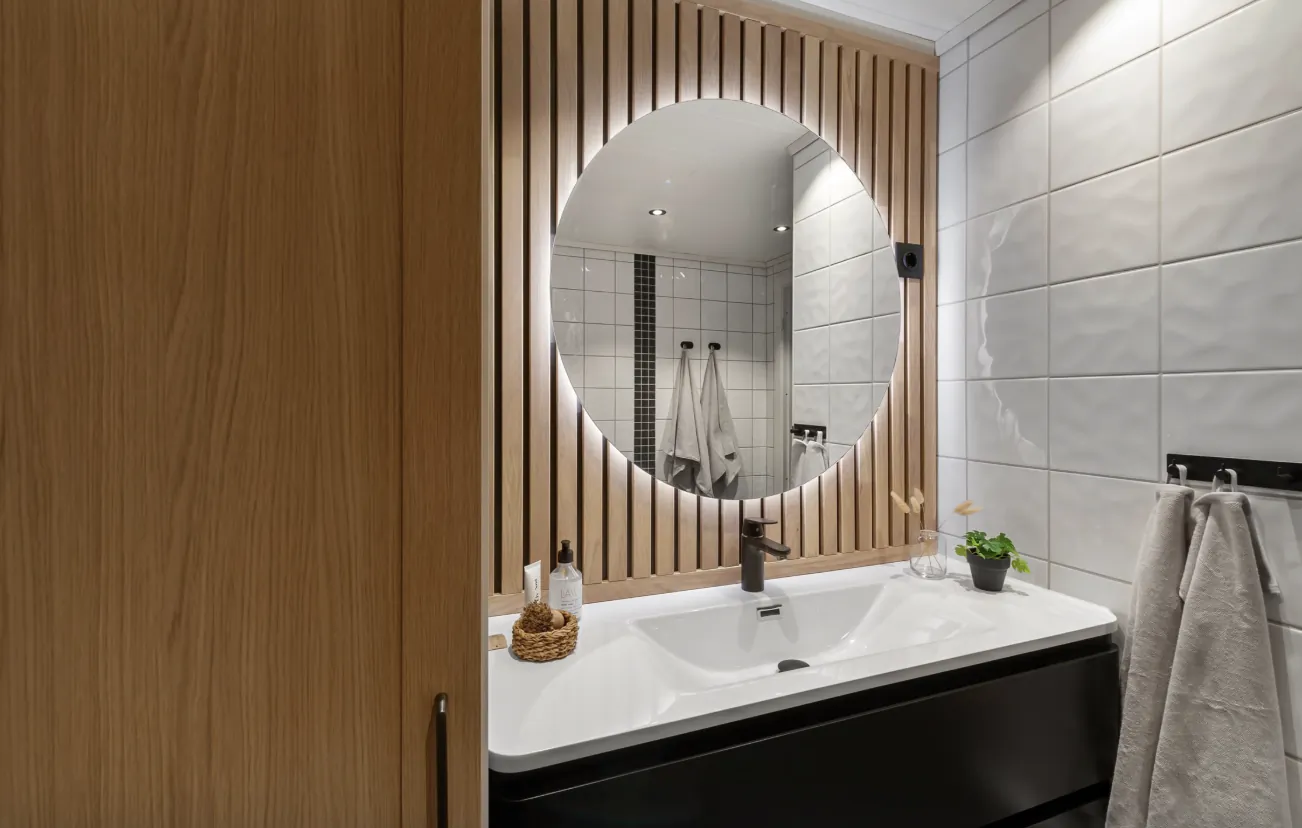
Bathroom Luxury: LED Mirrors are a Signature Design Feature
Luxury bathroom design is changing.
For years, the idea of a high-end bathroom was built around obvious statements: freestanding baths, stone surfaces, designer tapware, oversized showers and premium cabinetry. These elements still matter, but the definition of luxury is becoming more refined.
Today, the most sophisticated bathrooms are not necessarily the ones with the most expensive materials. They are the ones where every detail feels intentional.
Lighting, atmosphere, comfort and ease of use now matter just as much as marble or brass.
That shift has brought new attention to one of the most frequently used features in the room: the bathroom mirror.
An illuminated mirror is no longer simply a practical upgrade. In many contemporary interiors, it is becoming part of the overall luxury language of the bathroom.
For homeowners creating a more considered vanity area, a luxury LED bathroom mirror for a contemporary vanity space can combine integrated lighting, modern styling and practical functionality in a single design feature.
The result is a bathroom that feels more polished, more atmospheric and more in tune with the way people now use the space.
Luxury Is Becoming More Experiential
Modern luxury is increasingly about experience.
A beautiful bathroom should not only look impressive in photographs. It should feel good to use at seven in the morning and again at ten at night.
That means lighting needs to work across different moments of the day.
Bright, clear illumination is useful for grooming, shaving or makeup. Softer lighting is more appropriate when the bathroom becomes part of an evening wind-down routine.
An LED mirror can support both.
Instead of relying only on a ceiling fixture, integrated mirror lighting brings illumination closer to the face and the vanity area. This makes the bathroom feel more layered and more considered.
The effect is subtle, but that is often what modern luxury does best.
The Vanity Wall Has Become a Design Feature
In many bathrooms, the vanity wall is the visual anchor.
It combines the basin, tapware, mirror, storage and lighting. If these elements feel disconnected, the room can look unfinished even when expensive materials are used.
An LED mirror can help bring those pieces together.
Its clean lines and integrated lighting create a strong focal point without adding visual clutter.
This is particularly effective in minimalist bathrooms, where the design depends on restraint.
A single illuminated mirror can replace the need for decorative sconces and reduce the number of separate elements on the wall.
The result feels cleaner.
And in luxury interiors, visual calm is often more powerful than excess.
From Functional Light to Atmospheric Light
Bathroom lighting used to be mostly practical.
The room needed to be bright enough to use safely and clearly.
That is no longer enough.
In contemporary interiors, lighting is also used to create atmosphere.
Backlit mirrors are especially useful for this because they create a soft halo around the glass. Instead of producing a flat wash of light, they add depth to the wall.
This can make the vanity area feel more architectural.
Front-lit mirrors, on the other hand, provide stronger task lighting.
In more advanced designs, both effects can be combined.
This flexibility allows the mirror to shift between practical and ambient roles throughout the day.
That is one reason illuminated mirrors fit so naturally into luxury bathroom design.
Wellness Has Changed Bathroom Expectations
The bathroom has increasingly become a wellness space.
People want it to feel calm, private and restorative.
This is visible in the popularity of spa-inspired design, natural materials, soft lighting and uncluttered surfaces.
LED mirrors contribute to this shift because they can help shape the mood of the room.
Dimmable lighting, for example, allows the space to feel brighter and more energising in the morning, then softer later in the day.
This kind of flexibility turns the bathroom into more than a functional zone.
It becomes part of a daily ritual.
Luxury, in this context, is not about extravagance.
It is about making routine experiences feel better.
Smart Features Without Visual Clutter
One of the challenges of smart-home design is making technology feel invisible.
Too many screens, controls and devices can make a room feel over-engineered.
The best technology is often integrated into something that already belongs in the space.
The mirror is a perfect example.
Touch controls, demister pads, dimmable lighting and colour temperature options can all be built into the mirror itself.
The result is smart functionality without adding extra objects.
This is especially suited to luxury interiors, where clean surfaces and visual simplicity are often part of the design language.
Technology works best when it supports the experience quietly.
Anti-Fog Functionality Adds Everyday Luxury
Some features feel luxurious because they remove small frustrations.
An anti-fog mirror is a good example.
After a hot shower, a standard mirror may become unusable until the steam clears or the glass is wiped down.
A demister function helps keep the mirror clearer and ready to use.
It is not a dramatic feature.
But it improves a routine that happens every day.
That is exactly the kind of detail that separates a basic bathroom from a more carefully designed one.
True luxury often appears in the moments where things simply work better.
LED Mirrors Suit a Range of Luxury Styles
One reason illuminated mirrors have become popular is their versatility.
They can work with many different bathroom aesthetics.
A round mirror can soften a minimalist vanity.
A rectangular mirror can reinforce clean architectural lines.
An arched design can introduce a more decorative, elegant shape.
Frameless models suit contemporary interiors, while darker-edged designs can complement black tapware or stronger material palettes.
This means the LED mirror does not need to define the entire room.
It can adapt to it.
That flexibility makes it especially useful in high-end design, where the goal is often cohesion rather than novelty.
Small Bathrooms Can Still Feel Luxurious
Luxury is not dependent on square metres.
A compact ensuite can feel just as refined as a large master bathroom if the proportions, lighting and materials are handled carefully.
In smaller spaces, mirrors become even more important.
They reflect light, increase the sense of depth and reduce visual heaviness.
An illuminated mirror can make a small vanity wall feel more complete without adding bulky fittings.
This is especially valuable in apartments, townhouses and boutique developments where space is limited but design expectations remain high.
A smaller bathroom can still feel premium if the details are well resolved.
Hotel Design Continues to Influence the Home
High-end hotels have long understood the importance of the bathroom experience.
Guests notice soft lighting, well-positioned mirrors and bathrooms that feel calm rather than purely functional.
Those cues are increasingly moving into residential design.
Homeowners are borrowing from hospitality interiors by choosing floating vanities, frameless glass, layered lighting and illuminated mirrors.
The goal is not to make the bathroom feel like a hotel.
It is to recreate the sense of ease and polish that good hotel bathrooms provide.
LED mirrors fit naturally into that transition.
The Mirror Should Be Planned Early
Although the mirror may appear to be a finishing detail, it is better treated as part of the original design plan.
Its size affects the vanity proportions.
Its lighting influences the electrical layout.
Its shape changes the visual balance of the wall.
Its position affects daily usability.
Leaving these decisions until the end can create compromises.
A mirror that is too small may weaken the vanity wall.
One that is too large may clash with cabinetry or fittings.
Electrical connections may also become more complicated if they were not planned in advance.
In a luxury bathroom, those details matter.
The finished space should feel seamless.
The Value of Quiet Design
The most successful luxury bathrooms often do not feel showy.
They feel calm.
Materials are coordinated.
Lighting is layered.
Storage is hidden.
Technology is integrated.
Nothing looks accidental.
An LED mirror works well in this environment because it does several jobs without demanding too much attention.
It reflects.
It provides light.
It can offer smart features.
It creates a focal point.
And it can do all of this within a single surface.
That is a strong example of quiet design.
Luxury Is About How the Room Works
There is a temptation to define luxury through materials alone.
Stone, brass, timber and bespoke cabinetry can all create a high-end look.
But if the bathroom is poorly lit, difficult to use or visually cluttered, the experience will still feel compromised.
Good luxury design considers both beauty and function.
That is why illuminated mirrors are becoming more significant.
They help solve practical problems while also contributing to the atmosphere of the room.
The most desirable products increasingly do both.
A Signature Feature for the Modern Bathroom
Every well-designed room needs a focal point.
In the bathroom, the mirror is perfectly positioned to become one.
It sits at eye level.
It is used every day.
It reflects the rest of the room.
And when illuminated, it also contributes to the lighting scheme.
This gives it a unique role.
The mirror is no longer simply mounted on the wall after the rest of the bathroom is finished.
It can become part of the design concept from the beginning.
That shift explains why LED mirrors are increasingly being treated as signature features rather than optional extras.
Final Thoughts
The language of bathroom luxury is becoming quieter, smarter and more focused on experience.
Luxury is no longer only about expensive materials or dramatic statements.
It is about how the room feels to use.
How the light changes.
How the vanity functions.
How technology supports the routine without getting in the way.
How every detail contributes to a sense of calm.
LED mirrors fit naturally into this new approach.
They combine lighting, reflection, smart functionality and visual balance in one of the most important areas of the bathroom.
For the modern luxury interior, that makes them more than a mirror.
It makes them part of the design identity of the space.