Garden Sauna: Why the Home Wellness Retreat Is Moving Outdoors
For years the sauna was something you travelled for: a spa weekend, a ski chalet, a hotel with a thermal suite. Now it is quietly becoming part of the British garden. Timber barrel saunas sit beside swimming ponds in the Cotswolds, glass-fronted cabins look out over lawns in Surrey, and the ritual of heat, cold and rest that Finland has practised for centuries is turning into a daily habit at home.
A private retreat, a few steps from the back door
The appeal is simple. A sauna at the end of the garden gives you the best part of a spa day without the booking, the drive or the other guests. Twenty minutes of dry heat after a long day, a cold shower or plunge, then a few quiet minutes wrapped in a robe outdoors. Owners often say the walk across the garden is part of it: you leave the house, the phone and the to-do list behind.
It also earns its place all year round. A sauna is arguably at its best on a frosty January evening, which makes it one of the few garden investments that works as hard in winter as it does in summer.
Barrel, cabin or something more architectural
Most outdoor saunas fall into two families. Barrel saunas are the classic choice: the curved shape heats quickly and evenly, sheds rain naturally and has a charm that suits a country garden. Cabin-style saunas look more like a small garden room, with straight walls, more headroom and often a covered porch or a changing area. Larger designs add a panoramic
window or a separate lounge, which turns the building into somewhere to spend an evening rather than a quick session.
The quality of the timber matters more than almost anything else. Slow-grown Nordic spruce and thermally treated wood cope well with repeated heating and a damp British climate, and thicker wall sections hold heat for longer. If you are comparing garden saunas, look closely at wall thickness, the glazing and how the roof is finished, as these are the details that
decide how the building looks and performs in ten years.
Electric or wood-fired
The heater sets the character of the sauna. An electric heater is the convenient option: switch it on and the room is usually ready in well under an hour. Some can be controlled from a phone, so the sauna is warm when you get home. It will need its own electrical supply, installed by a qualified electrician.
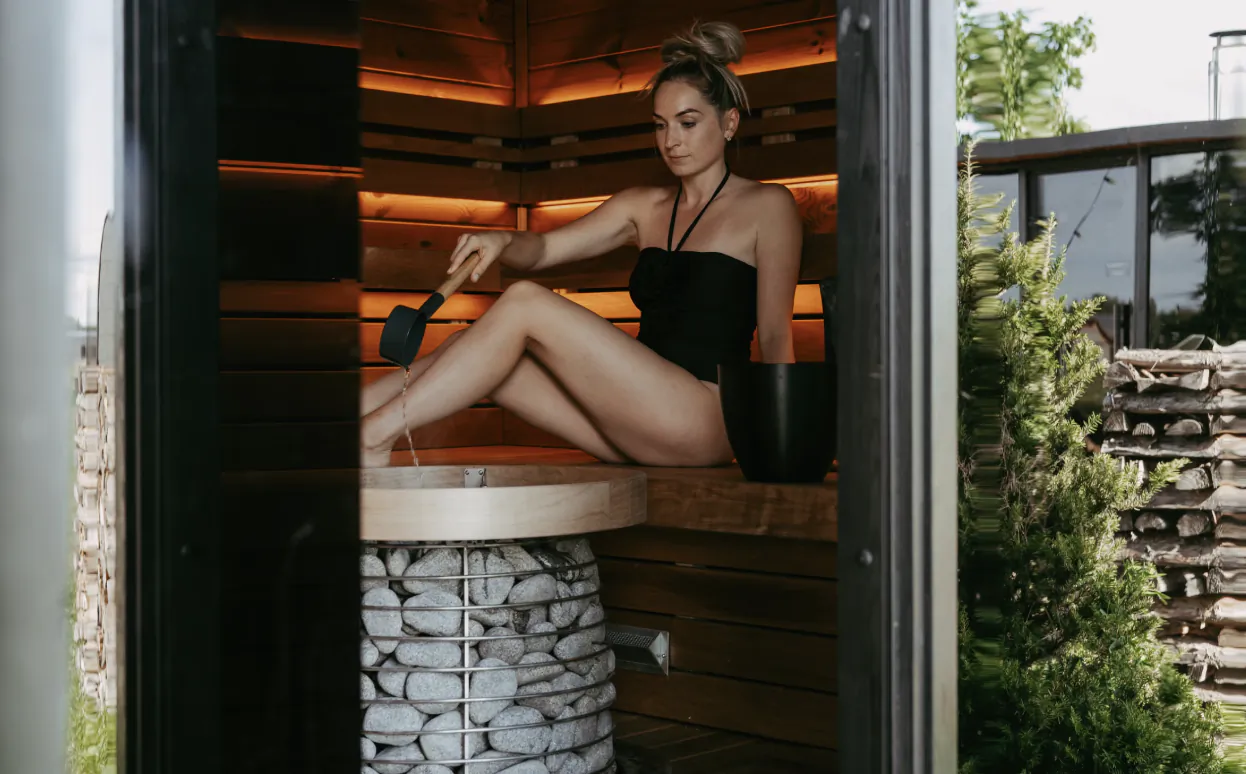
A wood-burning heater is slower and more hands-on, and for many people that is the point. Lighting the fire, the smell of the wood and the soft heat it gives are hard to replicate, and it suits gardens where running a power cable would be difficult. Whichever you choose, pouring water over hot stones to create steam is what turns a hot room into a proper sauna.
What to think about before you buy
Start with the position. A level, well-drained base is essential, and it is worth thinking about the view from the bench, privacy from neighbours and how far you will be walking in a towel in February. Leave room nearby for a cold shower, a plunge tub or simply a bench for cooling down.
In many cases a garden sauna can be built without planning permission, in the same way as other garden outbuildings, but the rules depend on its size, height and position, and they are stricter for listed buildings and in conservation areas. A quick check with your local planning authority before ordering avoids any surprises.
Finally, allow for delivery and assembly. Many saunas arrive as a kit that two capable people can build over a weekend, while larger cabins are better left to a professional installer.
A lasting addition
Trends in garden design come and go, but the sauna has centuries of use behind it. Chosen well and looked after, it becomes a place the whole household uses, a reason to go outside in the darkest months and a small daily luxury that asks for nothing more than a little time.