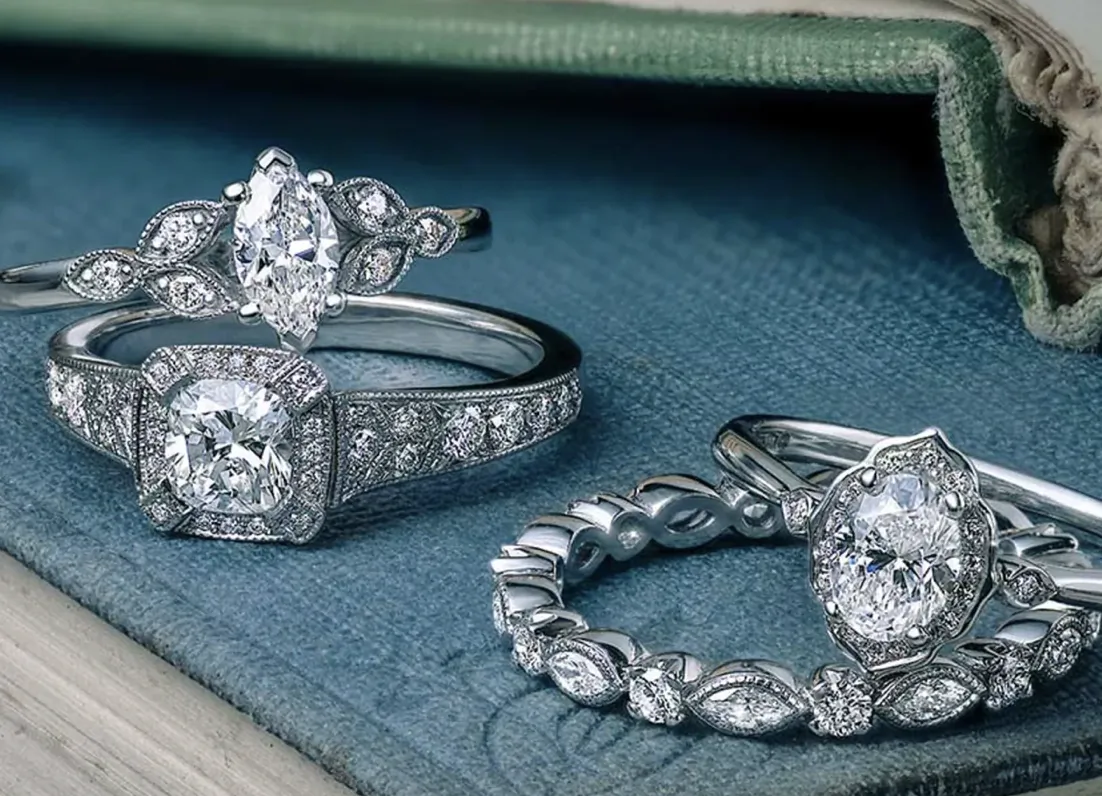
How much does a custom engagement ring cost in the UK?
Ask a jeweller what a custom ring costs, and the honest answer usually starts with “it depends”. That isn’t evasion. Unlike a ring chosen from a display case, custom engagement rings are priced from the ground up, so the final figure is built from the stone, the metal and the hours of skilled work your design needs, rather than read off a price tag.
That makes budgeting harder than it should be. This guide sets out the price ranges UK bespoke jewellers publish, what each part of a ring actually costs, where the less obvious extras sit, and how to get the design you want without the total drifting out of reach.
The short answer
UK bespoke jewellers’ published price guides commonly place custom engagement rings somewhere between around £2,000 and £8,000. Simpler designs set with a lab-grown diamond or a smaller natural stone can come in under £2,000, while commissions built around a large natural diamond or a rare coloured gemstone can pass £10,000.
For context, Bridebook puts the average UK spend on an engagement ring of any kind at around £2,247. A custom ring doesn’t have to sit far above what the average couple already pays – where it lands depends on the choices you make.
What does a custom engagement ring cost at different budgets?
These bands are a guide to what UK workshops typically quote, not fixed prices. The same budget can buy very different rings depending on where you put the money.
Under £2,000: A simple solitaire or minimal setting in 9ct or 18ct gold, usually with a lab-grown diamond, a smaller natural stone or a coloured gemstone such as a sapphire. Setting-only prices at many UK bespoke workshops start somewhere between roughly £850 and £1,500 before a centre stone is added, so the stone choice decides most of what’s left.
£2,000-£4,000: Room for 18ct gold or platinum, a lab-grown diamond of a carat or more, or a natural diamond of around half a carat. Shoulder stones, a hidden halo or a trilogy layout start to become realistic here.
£4,000-£8,000: The range where many natural one-carat diamond rings sit, along with more detailed settings such as pavé bands, halos or hand-finished vintage-style details.
£8,000 and above: Larger or higher-grade natural diamonds, rare coloured stones, and designs with a lot of handwork. At this level, the stone usually accounts for most of the price.
Where does the money actually go?
A custom ring’s price is the sum of a few distinct parts. Understanding them makes a quote far easier to read.
The centre stone: Almost always the highest single cost. Carat weight, cut, colour and clarity all move the price, and natural diamonds rise steeply as they get bigger. Two stones of the same carat weight can differ in price by thousands depending on their grades.
The metal: Platinum and 18ct gold cost more than 9ct gold, and the weight of metal matters as much as the type. Gold has traded at record levels in recent years, so a chunky band costs noticeably more than a slim one. It’s worth asking for quotes in more than one metal before deciding.
The setting: A solitaire uses fewer stones and less setting time than a halo, pavé band or cluster. Every small stone has to be sourced, set and secured by hand, which adds both materials and labour.
Design time: Sketches, CAD renders and revisions take time. Some jewellers build this into the final price, others charge separately (more on that below).
Making and finishing: Casting, assembling, setting, polishing and hallmarking. Intricate hand details such as engraving or milgrain edging add bench hours.
Is a custom engagement ring more expensive than buying off the shelf?
Not necessarily. Like for like – the same stone, the same metal, a similar style – a custom ring often costs about the same as a ready-made one, because the expensive components cost the same whichever route you take.
Made-to-order workshops can sometimes work out cheaper, because they aren’t paying for stock that sits in a display case waiting to be sold, and you can direct the budget towards the parts that matter to you. Custom becomes more expensive when the design itself gets complicated: unusual shapes, multiple stone layouts, heavy hand engraving or several rounds of redesign all add hours.
Ready-made rings still have real advantages. You can see and try the finished piece before paying; it’s available straight away, and high street sale periods can bring genuine reductions. The right choice depends on whether a specific design matters more to you than speed and certainty.
Natural or lab-grown: how much difference does the stone make?
Choosing between natural and lab-grown is usually the single biggest lever on the total price of a custom ring.
Lab-grown diamonds are real diamonds, with the same chemical and physical properties as mined stones, and they typically cost considerably less than a natural diamond of the same size and grade. On a fixed budget, that usually means a noticeably larger or higher-grade stone. Natural diamonds, on the other hand, carry rarity and geological origin that many buyers value, and they have a more established resale market.
Whichever you choose, ask for an independent grading report from a recognised laboratory such as GIA or IGI, and check that the report number matches the stone you’re buying. Lab-grown stones should always be clearly disclosed as such.
Coloured gemstones are another route. A sapphire can give a ring real presence for less than a comparable diamond, though softer stones such as opal or amethyst need more care for everyday wear.
Do jewellers charge a design fee?
It varies, and it’s one of the first things to ask. Broadly, UK bespoke jewellers take one of three approaches:
Design included: Consultations, sketches and CAD are free, and the cost is built into the final price of the ring.
Fee credited back: An upfront design fee, part or all of which is deducted from the final ring price if you go ahead.
Fee non-refundable: A design fee that covers the jeweller’s time whether or not you commission the ring.
Also check how many rounds of revisions are included, whether a wax or resin model is part of the process, and what happens to the price if you change the design or the stone after the CAD has been approved.
How the process works and how long it takes
Most custom rings follow a similar path, whichever jeweller you use:
Consultation: A conversation about style, lifestyle, budget and the stone, either in person or online.
Sketches and CAD: The design is drawn, then built as a computer model so you can see proportions and stone placement before anything is made.
Wax or resin model: Many workshops produce a physical model so you can check scale on the hand.
Casting: The approved design is cast in your chosen metal.
Setting and finishing: Stones are set, and the ring is polished and checked.
Hallmarking: The ring is sent to an assay office and stamped to confirm its precious metal content.
Some independent workshops keep every stage under one roof. Mitchel & Co, a family-run jeweller in Birmingham’s Jewellery Quarter, for example, works through sketches, CAD and wax models before casting and finishing each ring in its own workshop.
UK jewellers typically quote somewhere between three and eight weeks from design sign-off. If you’re working towards a proposal date, allowing two to three months from the first consultation leaves room for revisions, stone sourcing and any delays.
Extra costs worth planning for
The quote for the engagement ring isn’t always the whole picture.
A matching wedding band: Rings with low-set stones or curved designs often need a shaped wedding band to sit flush, which can cost more than a plain one.
Engraving: Some jewellers include a short inscription; others charge for it, particularly for hand engraving.
Resizing: If you’re buying for a surprise proposal and guessing the size, check whether resizing is free and whether the design can be resized at all. Fully diamond-set bands are harder to adjust.
Valuation and insurance: Insurers often ask for a professional valuation before covering high-value jewellery, and any added or specialist cover is an ongoing cost.
Changes after sign-off: Altering a design once the CAD has been approved, or swapping the stone, can add to the bill.
How to keep a custom engagement ring within budget
A few choices make a big difference to the total without changing how the ring looks on the hand.
Buy just under carat milestones: A 0.90ct diamond can look almost identical to a 1.00ct stone, but prices tend to jump at round carat weights.
Prioritise cut: A well-cut stone reflects more light. Slightly lower colour or clarity grades are often invisible to the naked eye, while poor cut is not.
Keep the band slimmer: Less metal means a lower price, especially in platinum or 18ct gold.
Consider multi-stone designs: Three smaller stones adding up to one carat usually cost much less than a single one-carat diamond.
Reuse a family stone: If you have an heirloom diamond or gemstone, building a new setting around it removes the highest single cost. Reusing old gold is possible with many jewellers, but the savings tend to be smaller than people expect, since the labour cost stays the same.
Be upfront about your budget: A good jeweller uses it to steer you towards the right stone and setting, not to reach your ceiling.
What to check before you pay a deposit
A custom ring is a significant purchase, so it’s worth getting a few things in writing first.
An itemised quote: Stone, metal, setting, design and any extras listed separately, with VAT included.
The grading report: For diamonds, the laboratory name and report number, matched to your stone.
Hallmarking: Under UK law, precious metal items above set weights must be hallmarked – 1g for gold and 0.5g for platinum – so almost every engagement ring band should carry one.
Payment and cancellation terms: Goods made to a customer’s specification are exempt from the usual 14-day cancellation right under the Consumer Contracts Regulations, so deposits are often non-refundable once work begins. Make sure the payment schedule and refund position are clear.
Aftercare: Warranty length, free cleaning or claw checks, and what resizing costs later.
Frequently asked questions
How much does a custom engagement ring usually cost?
Published price guides from UK bespoke jewellers commonly put custom engagement rings between £2,000 and £8,000. Simple designs with a lab-grown diamond or smaller stone can come in under £2,000, while rings with large natural diamonds can pass £10,000.
Is it cheaper to custom make an engagement ring?
It can be, but not always. Like for like, a custom ring often costs about the same as a ready-made one, because the stone and metal cost the same either way. It becomes more expensive when the design is complex or goes through many revisions.
How long does a custom engagement ring take to make?
Most UK jewellers quote between three and eight weeks from the point the design is signed off. Allowing two to three months from first consultation gives time for revisions and stone sourcing.
Is £2,000 enough for a custom engagement ring?
Yes. A £2,000 budget can cover a simple solitaire in gold with a lab-grown diamond, a smaller natural diamond or a coloured gemstone. Keeping the setting simple puts more of the budget into the stone.
Can I have a custom engagement ring made with my own diamond?
Yes, most bespoke jewellers will design a new setting around an existing stone. They will usually inspect it first to check its condition and confirm it can be safely reset.
The bottom line on custom engagement ring costs
Going by UK jewellers’ published price guides, a custom engagement ring will commonly cost somewhere between around £2,000 and £8,000, with plenty of room either side. The stone sets most of the price, the metal and setting shape the rest, and a clear brief to your jeweller is the best way to keep the total where you want it. Get the quote itemised, check the paperwork, and the ring you end up with should be worth every pound.
This article offers general guidance only and is not financial or purchasing advice. The price ranges, timelines and averages mentioned are indicative and based on published figures at the time of writing – actual quotes vary between jewellers, stone grades, metals and designs, and precious metal and diamond prices change regularly. Before committing to a custom ring, ask for a written, itemised quote, confirm the stone’s grading report and the ring’s hallmark, and check the jeweller’s deposit, cancellation, resizing and aftercare terms.