Inside the £2,000 Coffee Table Comeback
Something is shifting in Britain’s most considered living rooms, and it isn’t the wallpaper. It isn’t the art. It isn’t even the sofa, which has been quietly refusing to change for three years now.
It’s the coffee table.
Specifically, the marble coffee table, which for most of the past decade sat in a well-mannered corner of the interior conversation, occasionally referenced but rarely specified. In 2026, it has come back properly. Interior designers working across London and beyond are quietly replacing glass, chrome and low-slung timber pieces with hand-crafted marble at the £2,000 mark, and the shift is genuine enough that Britain’s most considered living rooms are being visibly rearranged around it.
The coffee table, of all pieces of furniture, has become the room’s most talked-about specification decision.
What’s actually changed
The mid-2010s luxury interior conversation was defined by transparency. Glass coffee tables. Lucite. Acrylic. Chrome legs. Low-profile timber pieces that receded politely into the room. The intent was to keep the eye on the sofa, the rug, the artwork.
The 2026 luxury interior conversation is defined by presence. Considered materiality. Objects that hold the room rather than disappear into it. Marble, in this shift, has become the material that best carries the intent.
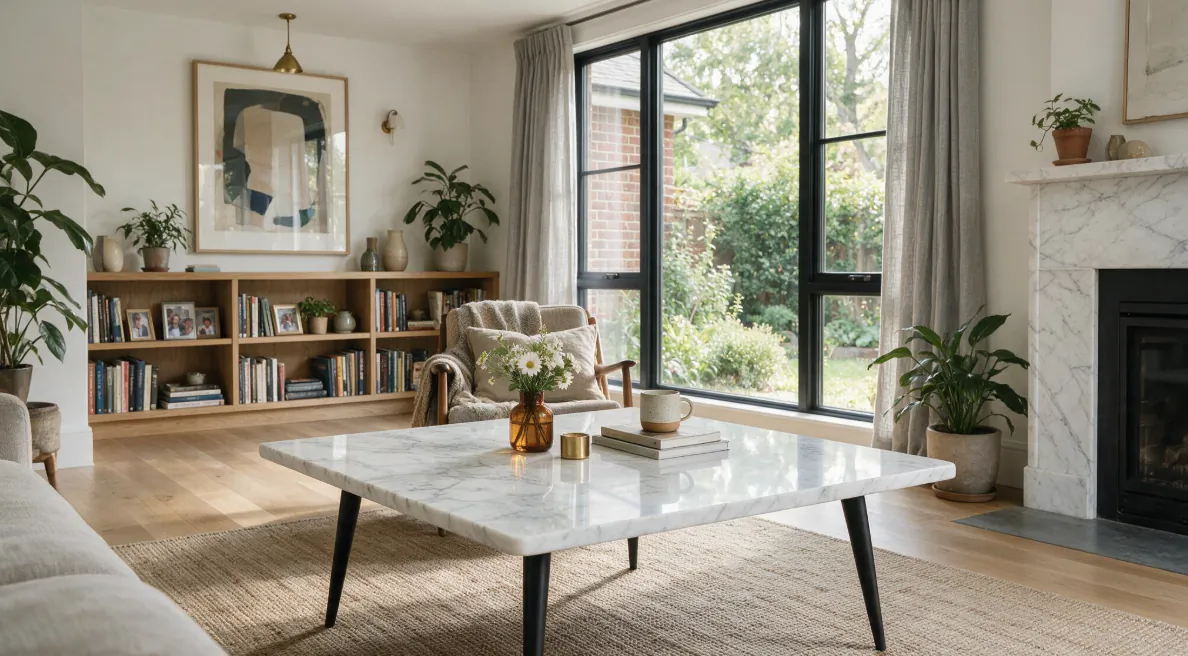
A hand-crafted marble coffee table doesn’t recede. It anchors. The natural stone brings genuine weight, both visual and physical. The specific marble variety brings colour, movement and character that engineered materials cannot replicate. The considered edge profile, the honed or polished finish, the specific dimensions, all become considered specification decisions rather than off-the-shelf choices.
The result is a coffee table that reads as a proper piece of considered interior specification rather than a functional afterthought. In a room where the sofa, the rug and the artwork have been carefully considered, the coffee table now expects to be part of the conversation.
The £2,000 mark
The £2,000 range is where the shift is playing out most visibly. Below the £2,000 mark, the market remains dominated by engineered materials, imported factory production and off-the-shelf choices that continue to serve a broad interior audience.
At £2,000 and above, the material shifts. Hand-crafted British marble coffee tables in the £700 to £2,700 range increasingly define the considered specification decision, with the £2,000 mark sitting at the specific point where genuine natural marble, considered craftsmanship and specific design engagement start to become the material offer rather than the exception.
Hand-crafted British marble at this price point genuinely competes with imported alternatives at materially higher price points, and Britain’s most considered living rooms are, quietly, working this out. The premium interior designer’s tendency to default to imported pieces from Milan, Como or specific European studios has softened materially as British hand-crafted marble specification has matured through 2024 and 2026.
Where the specification decisions are actually being made
The considered marble coffee table specification decision runs across four practical questions. Interior designers working with clients at the £2,000 mark are asking these questions at the outset rather than at the point of purchase.
The marble variety question. The default choice remains Carrara, which continues to hold its status as the considered classic. But 2026 has seen coloured marbles arrive properly in the mainstream luxury interior conversation. Steve Bristow Furniture offers hand-crafted marble coffee tables across a range that reflects the current specification breadth, from the classical Carrara and Nero Marquina through Breccia Sarda, Calacatta Viola with its distinctive purple veining, Verde Alpi, Blue Roma, Rosso Levanto and Arabescato Corchia. The specific variety carries specific character, and the considered specification decision matches the marble character to the room character rather than defaulting to the market standard.
The shape and dimension question. Rectangular, square, hexagonal, round, oval. Low or standard height. Single piece or nested duo. Fixed dimensions or bespoke. The considered specification decision matches the piece to the sofa arrangement, the room proportion and the way the room actually gets used, rather than accepting the off-the-shelf standard.
The edge profile question. The considered marble edge profile decision is genuinely material. A crisp mitred edge reads differently from a curved bullnose. A bevelled edge reads differently again. The considered edge profile decision reflects the room’s wider language and considered design intent.
The craftsmanship question. The choice between imported factory production and hand-crafted British specification carries material implications for finish quality, dimensional accuracy, considered material selection and long-term specification integrity. British hand-crafted marble specification, from studios that work directly with the client and with interior designers, produces materially different outcomes from factory-produced imports at similar or higher price points.
Why interior designers are actually specifying it
The considered specification move to marble reflects several parallel shifts in the wider luxury interior conversation.
The considered material shift, from engineered materials toward natural stone and considered timber, has been building across kitchens, bathrooms and living rooms for several years. Marble coffee tables extend this considered material specification into the living room in a way that engineered coffee tables cannot.
The considered longevity shift, from disposable interior specification toward genuine long-term investment pieces, favours marble specifically. A hand-crafted marble coffee table at £2,000 is genuinely an investment piece that outlasts most soft furnishings by decades. The specific longevity argument, which felt indulgent five years ago, has become considered mainstream luxury interior thinking.
The considered character shift, from uniform luxury interior specification toward considered individual expression, favours natural stone specifically. Every hand-cut marble surface is genuinely unique. The specific veining, the specific tonal variation, the specific character marks all reflect the natural material rather than a factory finish. The considered specification decision reads as considered character rather than considered uniformity.
The considered British craftsmanship shift, from imported specification toward British-made luxury interior pieces, has been reinforced by the wider luxury audience recognition that British craft studios genuinely compete with, and often outperform, imported European alternatives at similar and higher price points.
The rooms it’s actually going into
The marble coffee table specification decision in 2026 is showing up across identifiable room types.
Considered London townhouse living rooms, where the wider interior specification has moved toward considered material presence over the past three to five years, are increasingly finishing the room with a marble coffee table specification decision at the £1,500 to £2,700 mark.
Considered country house sitting rooms, where the wider specification allows for genuine weight and considered material presence, are increasingly specifying larger marble coffee tables in coloured varieties such as Rosso Levanto, Verde Alpi or Calacatta Viola.
Considered new-build luxury apartments, where the specification decision runs across every room from the outset, are increasingly including marble coffee tables in the initial specification schedule rather than treating the coffee table as a later purchase.
Considered hospitality specification, from London boutique hotels to considered private members’ clubs, is increasingly favouring hand-crafted marble coffee tables in reception, lounge and adjacent spaces where considered material presence supports the wider brand register.
What the specification decision actually says
The marble coffee table specification decision, at the £2,000 mark, says several considered things about the specifier.
It says the room has moved past the transparency era. The coffee table is no longer expected to disappear into the room. It’s expected to hold the room.
It says the wider interior specification is considered rather than assumed. The specifier has thought about material, shape, dimension, edge profile and craftsmanship, rather than accepting the off-the-shelf standard.
It says the specifier values longevity over specification churn. A hand-crafted marble coffee table is a piece the room will keep for decades, not a piece the room will replace in five years.
It says the specifier engages with British craftsmanship as considered specification rather than as a compromise. British hand-crafted marble specification is chosen for what it genuinely offers, not because imported alternatives were unavailable.
The £2,000 mark and beyond
The comeback isn’t limited to the £2,000 mark. Above £2,000, considered specification decisions extend into larger pieces, bespoke commissions and nested duo arrangements that carry materially further specification and craftsmanship investment.
Below £2,000, the market continues to serve broader interior specification, but the £2,000 mark increasingly defines the point at which considered natural marble, considered craftsmanship and considered specification engagement start to become the material offer rather than the exception.
Britain’s most considered living rooms in 2026 are quietly rearranging themselves around the marble coffee table specification decision, and the shift is genuine enough that the wider luxury interior conversation has started to notice.
What comes next
The marble coffee table comeback isn’t a passing 2026 moment. The considered material shift, the considered longevity shift, the considered character shift and the considered British craftsmanship shift all continue to reinforce the specification decision. Interior designers working with considered clients at the £2,000 mark and above will continue to specify marble coffee tables as central specification decisions rather than as functional afterthoughts.
The wider luxury interior conversation, still dominated by soft furnishings, lighting and art, will increasingly find the coffee table asking for its own place at the specification table. Britain’s most considered living rooms have already worked this out. The wider conversation is catching up.
The £2,000 marble coffee table isn’t just a piece of furniture. It’s a specification statement, and Britain’s most considered living rooms are, quietly, making the statement one carefully chosen marble variety at a time.