Planning Your Exciting African Safari
An African safari might just be the best holiday you can give yourself, as the exceptional experiences that the continent offers are truly unforgettable adventures.
Once you set foot on its shores, Africa takes hold of you. The epic scale of wide open spaces is inspiring, the diversity makes every moment special, and the rhythm and sounds of the bush play with your senses as every day brings a deeper sense of enchantment.
What is a Safari?
The word safari conjures up images of wildlife, vast African savannahs, wide skies and 4×4 vehicles gliding across the plains.
Safari means “journey” in Swahili, the language of East Africa, and is synonymous with Africa. It is a journey into the wilderness to observe free-roaming wildlife, with no hunting involved.
African safari travel typically provides revenue for local conservation projects and game parks, helping to protect habitats and wildlife. Safaris also play an important role in education and creating awareness about wildlife conservation, as well as benefiting local communities.
Where to Go on Safari
When planning a trip to Africa, there is so much to look forward to, but choosing the type of safari experience can be quite daunting.
There are 54 countries in Africa, 9 of which are renowned for world-class wildlife viewing including superb birding and photographic opportunities: Botswana, Kenya, Namibia, Rwanda, South Africa, Tanzania, Uganda, Zambia, and Zimbabwe.
Types of Safari Experiences
Game Drive
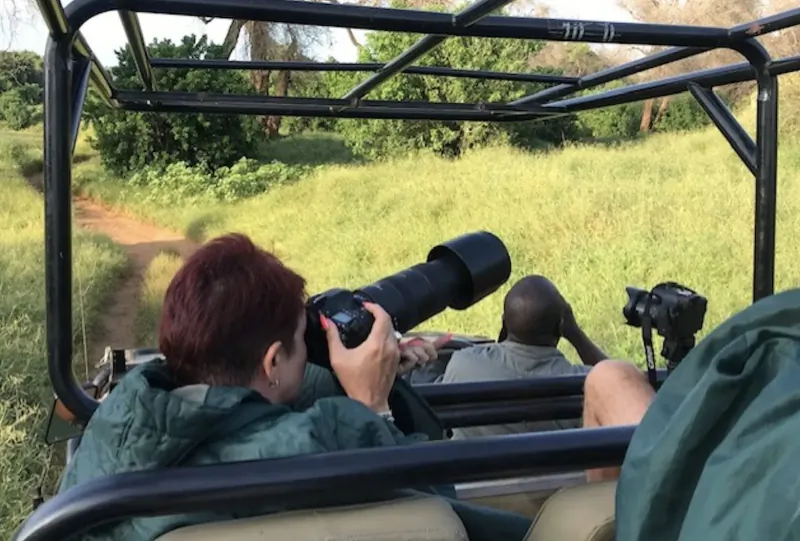
You cannot visit Africa without doing a game drive. It is the epitome of an African experience and you should do as many as you can, as they are the foremost activity of every African adventure. While a safari is the entire journey, a game drive is a specific activity viewing wildlife in the comfort of a 4×4 open-sided vehicle. They are offered by every lodge in Africa and are led by qualified, experienced rangers who take you as close as is deemed safe to see the animals without disturbing them in their natural habitat.
Some of Africa’s Greatest Wildlife Viewing Activities
Walking Safaris
There is no African bush activity as riveting as an on-foot safari. Walking safaris offer the closest connection to the wilderness and animals possible. Walking slowly through Big 5 areas gives you a different perspective compared to being in a game vehicle. You will learn about the many signs and tracks of the bush—how to tell lion spoor from leopard footprints, and even how to determine the freshness of elephant dung. Walking in the wilderness is an experience of feeling the African bush come alive.
Although there are many places to do walking safaris around Africa, the two destinations below are well known for their four to eight-day trails.
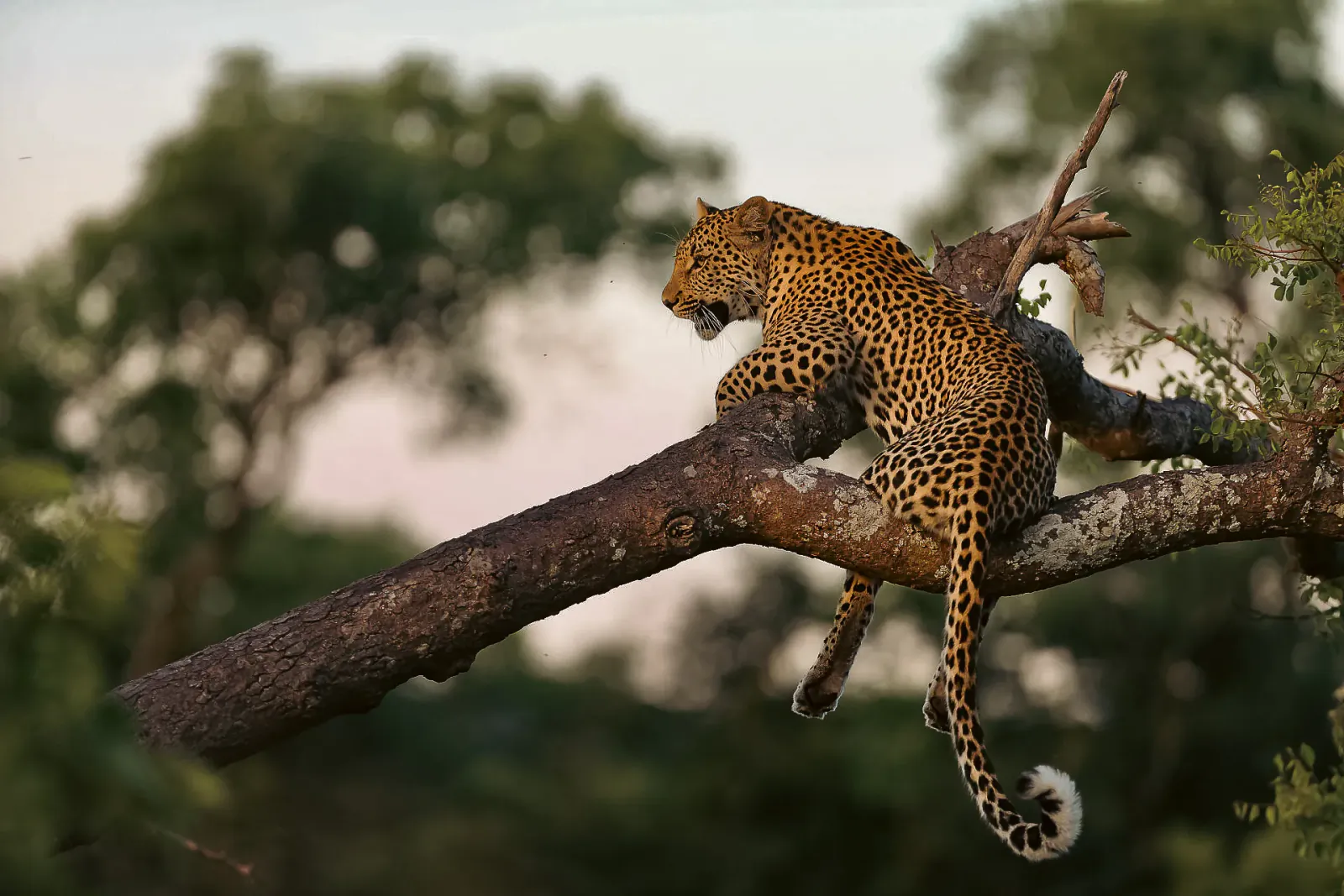
Zambia – South Luangwa National Park is Africa’s premier walking safari destination and is where walking trails originated. This remote location gives you a unique wilderness experience because when you walk in the wild you become part of the environment. This national park is centred around the Luangwa River and its tributaries, with signs of leopards and other predators almost guaranteed. Untouched by man, the river’s natural ebb and flow of flooding makes most of the park inaccessible by road, which keeps it a sanctuary for the large concentration of game. As activities focus on the rivers, where the game congregates—especially during the drier months—walking safaris are often combined with boat trips to reach the more remote areas.
Walking trips are best from April to October, as after that the temperatures rise considerably. There are numerous, comfortable accommodation options along the river including mobile walking safaris with bush camps. All offer a fascinating experience with each day bringing new scenes and a different experience for everyone. The guides are knowledgeable as Zambia has strict guiding examinations and consistently high standards.
South Africa – Kruger National Park is a world-renowned African safari destination with only a fraction of it accessible by vehicle. There are seven different walking trails within the remote areas of the park where visitors walk out each day—in the morning for about four hours and again in late afternoon—accompanied by experienced rangers. Walking close to elephants and buffalo herds and among the majestic baobab trees is an exhilarating experience.
“After a few hours of walking, we had the hair-raising experience of a leopard roaring as it leapt out of the bush towards us. The rangers’ rules were so quickly obeyed as we ducked behind him and his weapon. The emotion of that thrilling encounter stayed with me for years.”
You can encounter changing landscapes, from bushveld to riverine forests and perennial pans which attract an array of spectacular animals and birds. There is no hard climbing or rough walking through difficult terrain, but relative fitness is recommended. The walking trails stretch over four days, and each night is spent at a base camp in cosy huts where tales of the day are shared around a campfire.
Other Walking Areas
• Tanzania – Nyerere National Park (formerly Selous), Ruaha National Park, Serengeti National Park, Katavi National Park
• South Africa – Hluhluwe-Umfolozi Park, Marakele National Park, Phinda Reserve
• Zimbabwe – Mana Pools, Hwange National Park
• Botswana – Okavango Delta, Mashatu Game Reserve, Makgadikgadi Pans
• Ethiopia – Simien National Park, Bale National Park
• Namibia – Damaraland, Namib Desert
• Malawi – Nkhotakota Wildlife Reserve
• Kenya – Chyulu Hills National Park
Gorilla and Chimpanzee Trekking
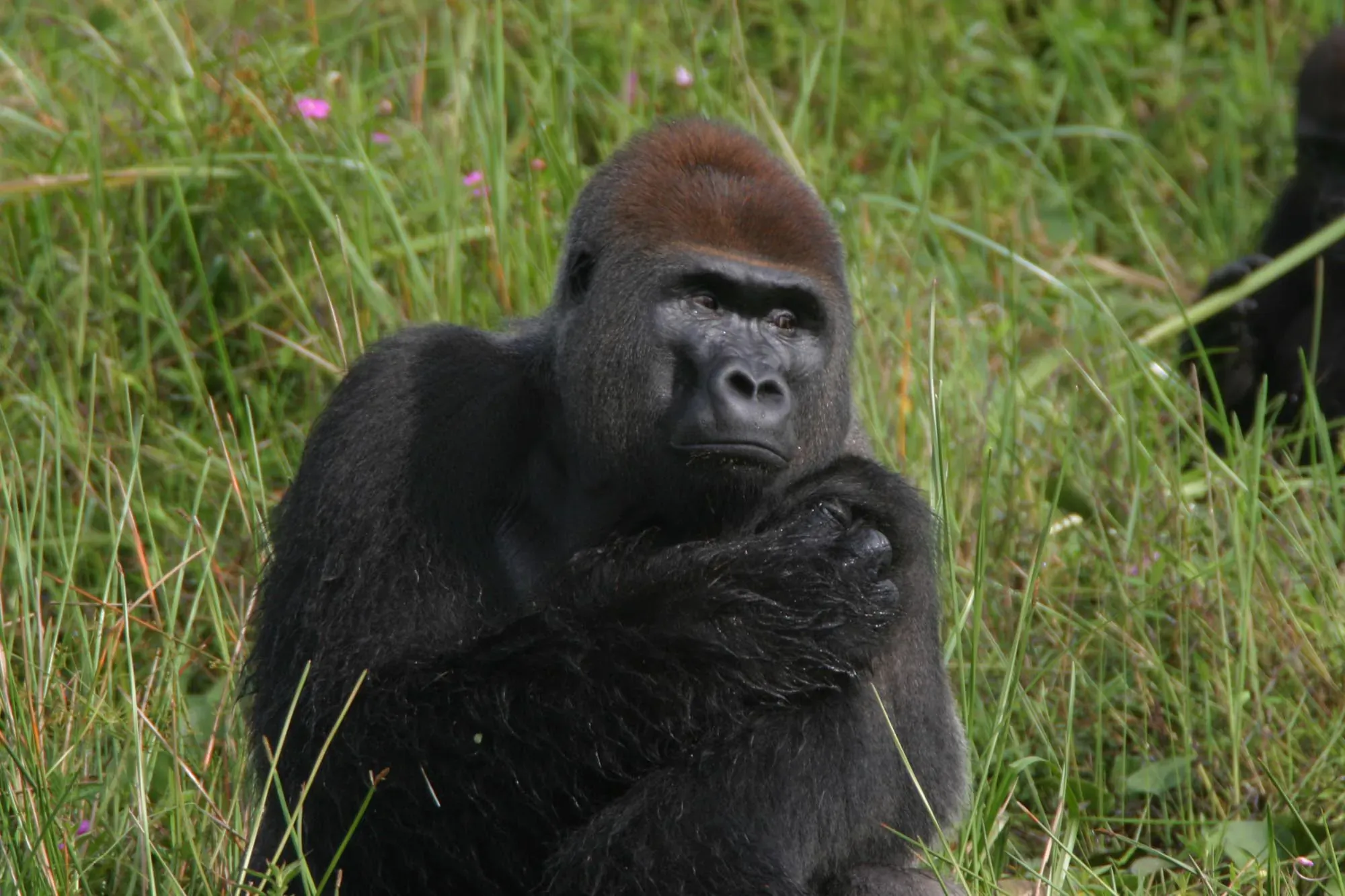
The forested mountains of Uganda, Rwanda and the Congo are home to the world’s last remaining mountain gorillas. More than half live in the Virunga Mountains, a range of extinct volcanoes that border Rwanda, Uganda, and the Democratic Republic of Congo. The remainder live in the Bwindi Impenetrable National Park in Uganda.
Uganda and Rwanda have leading conservation and sustainable programmes around gorilla and chimpanzee trekking adventures that offer awe-inspiring experiences, as well as excellent jungle retreats in some of the remotest parts of Africa. Coming face to face with an intelligent and thoughtful primate so closely related to us is unlike any other animal encounter in Africa.
These critically endangered animals are protected within national parks where organised, guided treks allow controlled visits.
To join a gorilla trek, you will need to be fit and equipped for the humid, muddy conditions of an equatorial rainforest hike—it is tough terrain. You also need to be in good health, as gorillas are susceptible to human illnesses but do not have human immunities. Something as common as a cold can be deadly to a whole gorilla family.
The trek is led by a professional guide and tracker through the thick vegetation of the forest’s secret paths, following clues that eventually lead you, suddenly, into the midst of a gorilla family. It can take anywhere from 30 minutes to four hours to find a troop. Although so large, they are incredibly quiet, so it comes as a genuine surprise to find yourself among a family group. Gorillas have been nicknamed “gentle giants” because of their nonchalant demeanour—they live quietly and forage in small patriarchal groups led by dominant silverback males.
“We had been trekking in the Bwindi Impenetrable Forest and were resting when the tree next to us rustled and a large silverback male came slithering down. He got up and walked nonchalantly past us to his family group. It took everything not to shout: It’s a gorilla! Right here!”
Rules of no flash photography and a maximum of only one hour with the gorillas are strictly adhered to. Other rules—such as maintaining distance from the primates, not mimicking their sounds, avoiding eye contact with the alpha male, and having no direct contact—are important and can make or break a trekking experience.
Differences and Similarities Between Gorilla and Chimpanzee Trekking
Chimpanzee trekking is not much different, as both apes live in similar areas and share the same traits, although chimpanzees can only be found at lower elevations and even on the rainforest floor. The same rules apply, although slightly larger groups are permitted with chimpanzees than with gorillas.
The enormous difference is the trekking permit cost. A half-day gorilla trek in Uganda’s mountain forests costs $700 per person, compared to a chimpanzee permit in the lower tropical forests at $200. The same gorilla trek permit costs $1,500 per person in Rwanda’s volcanic area.
If undecided, it is highly recommended to do both. They each offer different, breathtaking experiences and are worth the spend.
Chimpanzee trekking is exhilarating and exhausting in equal measure. Being omnivores, chimpanzees are much more active—especially during a hunt—as they swing effortlessly through the forest canopy. They are easier to find than gorillas, as they have loud personalities: they grunt, hoot and scream, making for exciting trekking. They are hyper-active while foraging, so once you find them, you can keep up with them on foot. They are known to be intelligent, social, and at times dangerous and volatile.
“While quietly following a troop through the trees, one of the males suddenly picked up a rock and threw it overhand with such force that it bounced on the ground and hit my daughter’s ankle. Luckily no damage—just shock at this sudden behaviour.”
Chimps are the only species known to create and use tools—to pry insects from tight spaces or crack nuts and hard fruits with rocks. Chimpanzees share 98.7% of their DNA with humans and share many of the same traits.
Places to See Wild Chimpanzees
• Uganda – Kibale Forest, Budongo Forest Reserve and Queen Elizabeth National Park
• Rwanda – Nyungwe National Park
• Tanzania – Gombe Stream National Park and Mahale Mountains National Park
The chimpanzees of Tanzania were made famous through the studies of Dr Jane Goodall at the Gombe Stream National Park on the northern reaches of Lake Tanganyika—a very special place to trek chimpanzees, with very few visitors other than occasional researchers.
The Wildebeest Migration
Few travel experiences compare to encountering the legendary wildlife of the Serengeti and the Masai Mara.
The annual wildebeest migration from the Serengeti in Tanzania to the Masai Mara in Kenya is recognised as one of the “Seven Wonders of the Natural World” and is one of the most sought-after experiences for wildlife and nature enthusiasts.
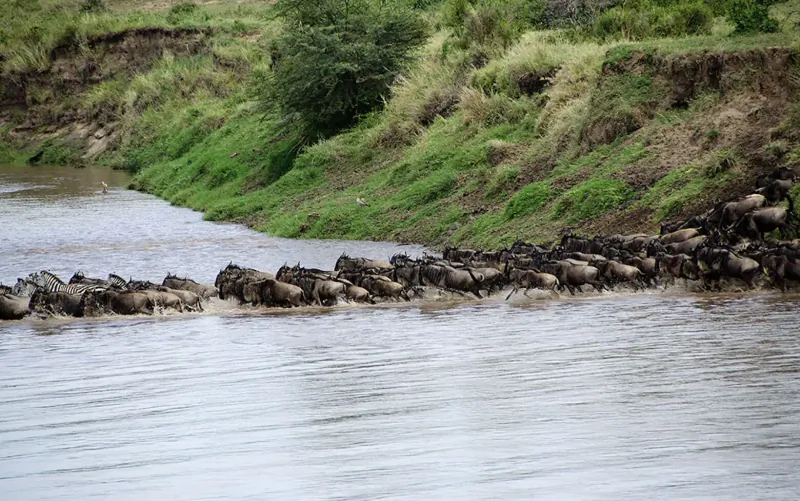
Many people think the Great Migration happens only once a year; however, it happens throughout the year, with each season offering a unique wilderness experience. The migration is a constant circular movement of over a million animals across the Serengeti-Mara ecosystem. The 1.5 million wildebeest are joined by thousands of zebras and gazelle, following an age-old route in search of fresh grass and water. After the calving season in the southern Serengeti, the annual migration northwest begins at the end of the rainy season—usually in May or June. They travel towards Kenya’s Masai Mara Reserve, arriving anytime from July and staying until late October before returning towards the end of the year.
Along the way, high drama is always present, as thousands of animals are taken by predators or drowned in dramatic river crossings. Thousands more are born later in the year, replenishing the numbers and sustaining the circle of life.
Can the Migration and River Crossings Be Predicted?
Any wildebeest migration safari is very exciting, but it is also one of nature’s great mysteries: timing is vital but there is no way to predict the animals’ movements. Everyone knows that the wildebeest—along with a smattering of zebra and gazelle—will cross the Mara River, but no one knows exactly when. It is also known that rain will trigger the wildebeest to move onto fresh grazing, but nobody knows exactly when the rain will fall.
Once on the move, not even the wildebeest know when they are going to cross. Some arrive and swim over immediately; some arrive and spend days grazing before crossing; and some arrive and turn back entirely. No one can predict the crossings, which is why it is best to have as much time on safari as possible if you hope to witness a river crossing—though it is never guaranteed. Your best chance may involve spending an entire day at a site where the wildebeest have massed.
“Crossings are unlike anything you’ve ever seen before. When they do decide to enter the river, it is an unbelievable and chaotic sight. The air crackles with suspense and we were all willing them to get across before the crocodiles appeared.”
Both the Serengeti and the Masai Mara are unique ecosystems with rolling plains, abundant wildlife, and enormous wide-open landscapes, making them wonderful year-round safari destinations. The astonishing density of wildlife—elephants, buffalo, giraffes, hyenas, and the big cats of lion, leopard, and cheetah—combined with mild climate and never-too-dense vegetation, means animals are always visible.
Kenya is where “going on safari” began in 1895 when the British Empire established the East Africa Protectorate. Nowhere in Africa has a more professional safari industry, and with that comes a combination of infrastructure and service excellence. There are hundreds of beautifully outfitted lodges and tented camps in both Kenya and Tanzania, with well-mastered logistics for moving visitors between national parks, allowing you to witness one of nature’s greatest spectacles on the endless plains of the East African savannah.
Other Safari Options Around Africa
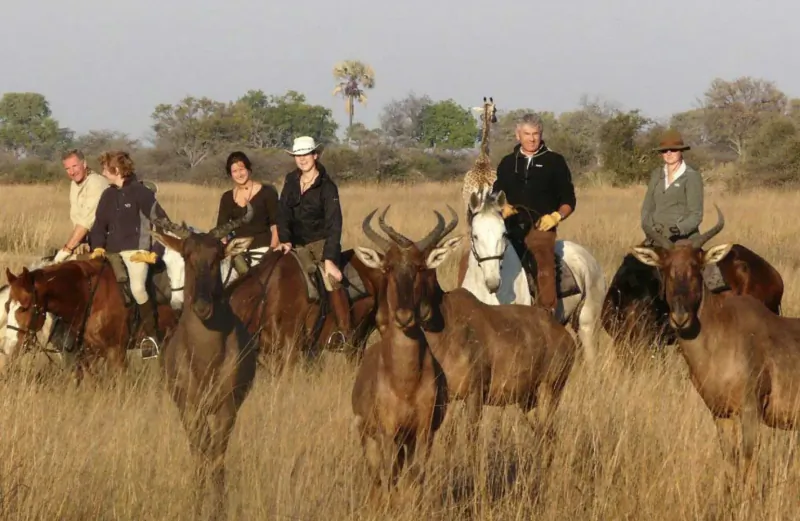
Horseback safaris – There is a special kind of exhilaration that comes with game viewing while atop a horse or galloping alongside a herd of wild antelope. For horse lovers, these multi-day horse trails through the African wilderness are truly remarkable experiences, as you make your way between camps or head out on different trails from a base camp. Excellent safaris are offered in Botswana, Kenya, Tanzania, Zimbabwe, and South Africa.
Water-based safaris allow you to visit places that are inaccessible by land, focusing on finding and getting close to water-dwelling animals. These safaris are far more calming and quieter than game drives and hikes. Sunsets on the water are usually spectacular and bird viewing is excellent. Some of the best destinations include the Okavango Delta in Botswana, Bangweulu Wetlands, Liuwa Plains and Lower Zambezi National Park in Zambia, Mana Pools in Zimbabwe, Niassa Reserve in Mozambique, and Liwonde National Park and Cape Maclear in Malawi.
Embarking on an African safari is literally escaping into another world—whether by foot, by vehicle, or even by canoe. African safari holidays engage all your senses, as the animal and bird orchestra never quiets down. This all adds to an unforgettable experience and draws you away from everyday routines and demands. Welcome the silence and solitude as you immerse yourself in the moment and let the unexpected astound you.
Regardless of age and preference, there is a safari that suits everyone. Come and be humbled by the majesty of the African savannah.
Written by Diane McLeish