The gold standard: why gold still signals luxury, from hallmarks to hotel lobbies
Gold still reads as precious for two reasons: chemistry and proof. The metal resists tarnish, so it keeps its colour, and it can be hammered into leaf so thin that a breeze can carry it off. But its purity can’t be judged by sight or touch, so English law has set a standard for gold for more than 700 years, and the tiny stamp on a ring, the hallmark, still tells you what the metal really is.
A metal that keeps its colour
A 1975 dossier on gold, compiled by the Institute of Geological Sciences and published by HMSO, describes it as soft, malleable and one of the most chemically inert elements. Gold, it notes, remains untarnished by any atmospheric or corrosive attack, while silver readily tarnishes.
Pure gold is soft, so jewellery gold is usually alloyed with other metals to harden it, and that is where carats come in. A carat is a twenty-fourth: pure gold is 24 carat, and 18-carat gold is 18 parts gold in 24, or three-quarters. The added metals change the colour, too. Copper gives a reddish alloy, and palladium can be added to make white gold.
The hall in ‘hallmark’
In the goldsmith’s trade, a “standard” is a legal fineness, and the gold standard has moved over the centuries. A statute of Edward I in 1300 required gold to be of the “touch of Paris”, or 19.2 carats, and sent wardens from shop to shop to test it, with a leopard’s head as the mark. The standard rose to 22 carats in 1576; 18 carat returned in 1798, and 9, 12 and 15 carat followed in 1854.
From 1478, Goldsmiths’ Hall in London was home to a permanent assay office, and the Goldsmiths’ Company Assay Office says that is probably where the word “hallmark” comes from. Birmingham and Sheffield gained assay offices in 1773, and today there are four. The Cambridge Dictionary also defines a hallmark as “a typical characteristic or feature of a person or thing”.
Reading the marks
A UK hallmark has three compulsory marks. The sponsor’s mark, two or more letters in a shield, shows who submitted the piece. The fineness mark gives the metal content in parts per thousand, inside a shape that shows which metal it is. The assay office mark shows where the piece was tested: a leopard’s head for London, an anchor for Birmingham, a Yorkshire rose for Sheffield and a castle for Edinburgh.
For gold, the fineness numbers run from 375 to 999: 375 is 9 carat, and 750 is 18 carat. Optional extras include a crown, the traditional symbol for gold, and a date letter that changes every 1 January.
Under the Hallmarking Act 1973, it is an offence for a trader to describe an unhallmarked item as gold unless it is exempt, for example because it weighs under one gram.
Gold leaf, from Pliny to Piccadilly
Gilding makes a little gold go a very long way. Gold leaf is made by hammering pure gold into a thin sheet, and the 1975 dossier says it has been used to gild wood and plaster for 5,000 years, citing Pliny’s account of Romans beating 31 grams of gold into 750 leaves. Because the leaf sticks to steel, gilders use special tools, picking it up with a brush called a gilder’s tip, usually charged with static by being passed through the hair.
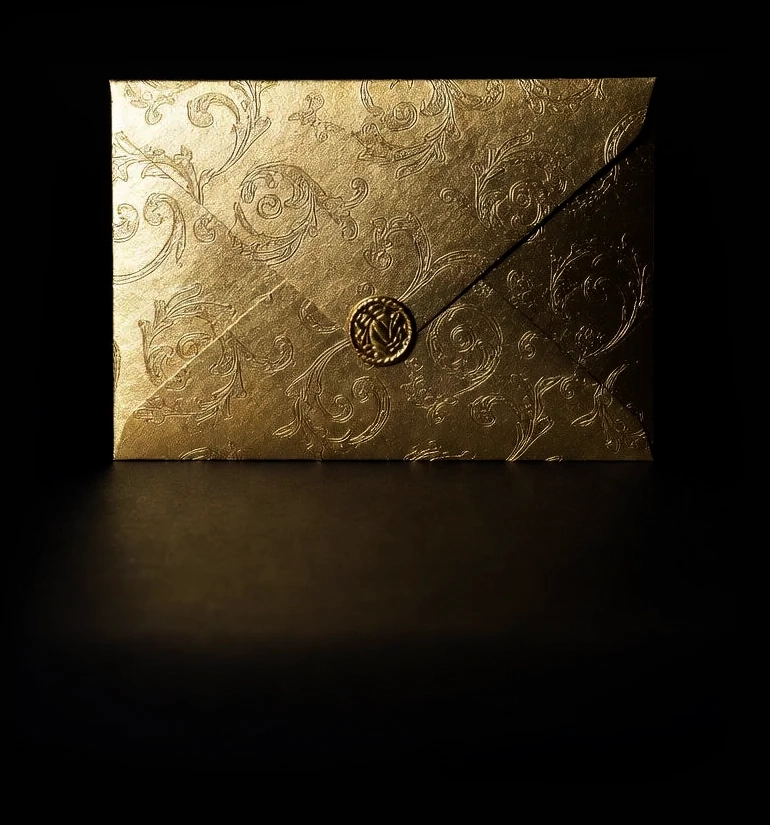
Walk through the Ritz in Piccadilly, which César Ritz opened in 1906, and, in the hotel’s own words, “there is gold everywhere you look”, from carved wall and ceiling decorations to the statues in the Palm Court. Its Louis XVI-style interiors are kept up by an in-house gilder who, the hotel says, has worked there for more than 20 years. The Palm Court’s fountain is entirely gilded in 24-carat leaf, and the headboard in one suite is touched up every two weeks.
His advice is to keep out dust and draughts. The slightest breeze can blow the leaf away, and touching it with your fingers can make it disintegrate.
Gold without the metal
Plenty of gold in design contains no gold at all. A trader can’t describe a base-metal watch as a “gold watch” just because of its colour; the assay offices’ guidance suggests “gold tone” or “gold coloured” instead.
Gold turns up as a theme on screens, too. The Gold Blitz slot guide at Fortune Games, a site run under a Gambling Commission licence, explains how one gold-themed game from Fortune Factory Studios and Games Global works, from its six-reel grid to its choice of two bonus rounds. It is a game for adults aged 18 and over, and the gold on its reels is only artwork: every result is random, and the odds favour the house.
“All that glisters is not gold,” reads the scroll in the gold casket in The Merchant of Venice. For the real thing, a hallmark is how you tell the difference: look for the shield, the number and the town mark.
18+ only. Treat any game as paid entertainment, never a way to make money. Free, confidential help 24/7: National Gambling Helpline, 0808 8020 133.