The Round Brilliant: Why the Classic Cut Still Sets the Standard
Trends in engagement rings come and go. Pear shapes surge, emerald cuts return, and bold colored stones have their moment. Yet through every cycle, one shape keeps its place at the top of the list. The round brilliant has remained the benchmark for generations, and there are good reasons it hasn’t been dethroned.
For anyone starting a ring search, understanding why round engagement rings endure is a useful way to make sense of every other option. The shape sets the standard against which other cuts are judged, so knowing what it does well helps you decide whether it’s the right choice for you.
What Makes the Cut Special
The round brilliant is engineered for light. A typical stone has 58 facets arranged in a precise pattern, designed to return as much light as possible through the top. That geometry is what creates the lively sparkle people associate with a classic engagement ring.
Proportions matter enormously. The ideal proportions have been studied for more than a century, and today’s best-cut stones still draw on that work. Small variations in depth, table size and symmetry can change how a stone looks in everyday light.
Why It Works With Almost Any Style
The symmetry of a round stone makes it remarkably adaptable. It looks equally at home in a few distinct settings:
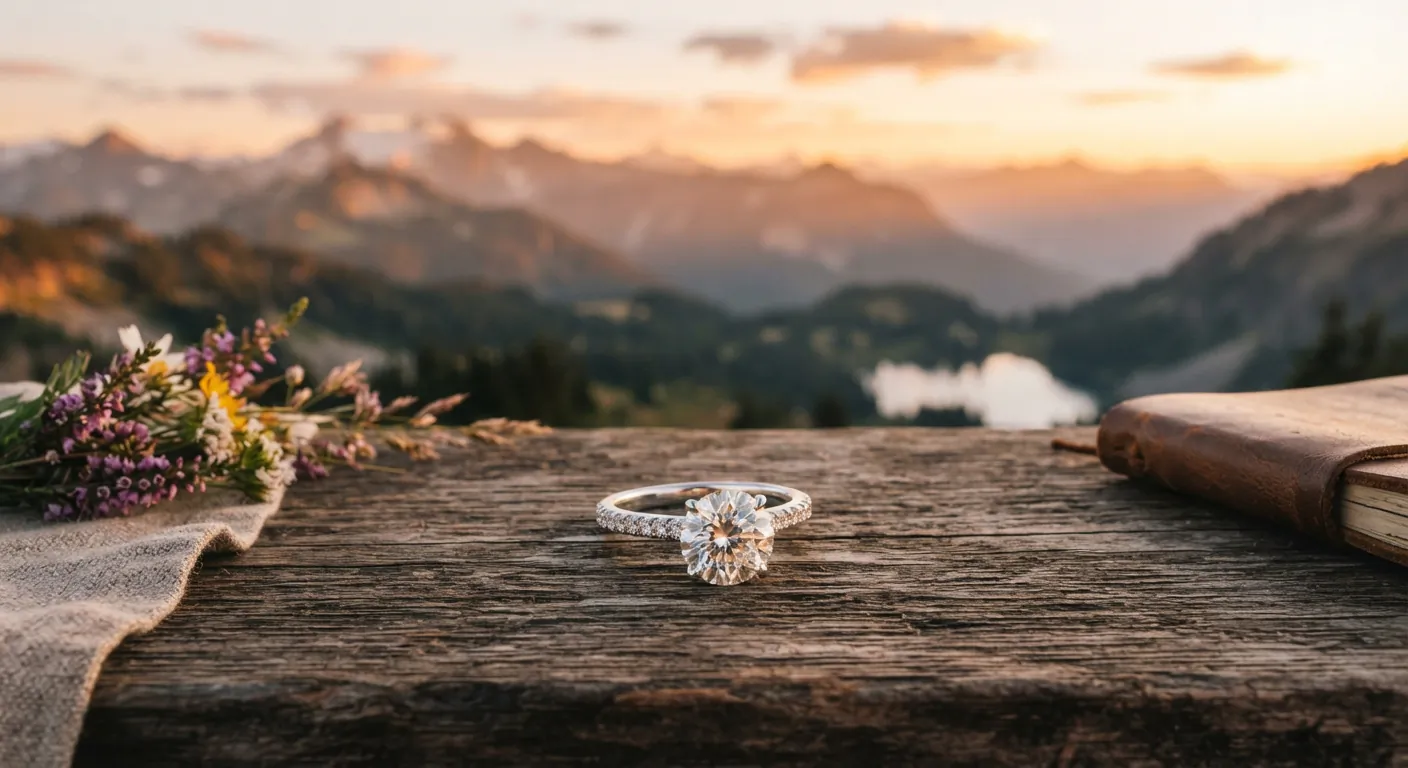
Solitaire: The purest expression of the shape. A slim band and simple prongs keep the focus on the stone.
Pavé band: Tiny stones along the shank add brilliance and a polished, refined finish.
Bezel: A metal rim gives a clean, modern look and extra protection for active wearers.
Halo: A circle of smaller stones increases the visual size and adds glamour.
Because the shape has no direction, it also avoids the alignment questions that come with elongated stones. There’s no top or bottom to get wrong, and no point to protect.
How to Judge Sparkle in Person
Numbers on a certificate only tell part of the story, so it’s worth looking at a stone with your own eyes. View it under a few kinds of light: a bright jewellery counter, a window and a softer indoor lamp. A well-cut stone stays lively in all of them, while a poorly cut one can look dull or patchy in at least one.
Tilt the ring slowly and watch how the flashes of white and colour move across the surface. You’re looking for an even, energetic sparkle with no large dark areas. If you’re shopping online, ask for a video of the ring in motion, since still photos can flatter almost anything.
Choosing the Stone Itself
Round stones are available in more options than ever. Natural and lab-grown diamonds, moissanite and cubic zirconia are all cut in the round brilliant style, and each comes with its own balance of price, hardness and fire. Natural diamonds in this shape typically cost more per carat than fancy shapes, because more of the rough crystal is lost in the cutting process.
If cost is a concern, other materials let you choose a larger or higher-quality look for the same budget. Whatever you choose, ask how the stone was cut and graded, and look at it in different kinds of light before you decide.
Metals and Finish
The metal sets the character of the ring. Yellow gold gives a warm, traditional feel, while white gold, platinum and silver-toned finishes read cooler and more contemporary. Rose gold sits in between, with a softer, romantic glow.
Consider how the metal will wear. Plated finishes can wear over time with daily use, while solid metals last longer but cost more. If you love the look of a particular colour, ask what the finish is made of and how it can be maintained.
Sizing and Comfort
A beautiful ring should be comfortable. Have your finger measured at the end of the day, when it’s at its most stable, and avoid sizing when you’re cold, as fingers shrink in low temperatures. If you plan to wear a wedding band alongside, ask about a profile that sits flush so both rings can sit together without rubbing.
Wider bands feel snugger, so you may need to go up half a size. A good jeweller will take this into account.
Caring for a Classic
Taking care of a round stone is straightforward. Soak it in warm, soapy water, brush gently behind the stone where dirt collects, and dry with a lint-free cloth. Avoid harsh chemicals, and take the ring off for heavy workouts, gardening and swimming in chlorinated water.
Have the setting checked once a year to make sure the prongs are secure. It’s a small habit that protects a meaningful piece for decades.
The Enduring Appeal
Trends will keep shifting, but the appeal of a round stone rests on something steady: balance, brilliance and a sense of timelessness. For many people, that’s exactly what an engagement ring should be. It’s a shape that doesn’t need to explain itself, and that’s perhaps the greatest luxury of all. Choose the one that feels right in your hand, and you’ll rarely look back.